
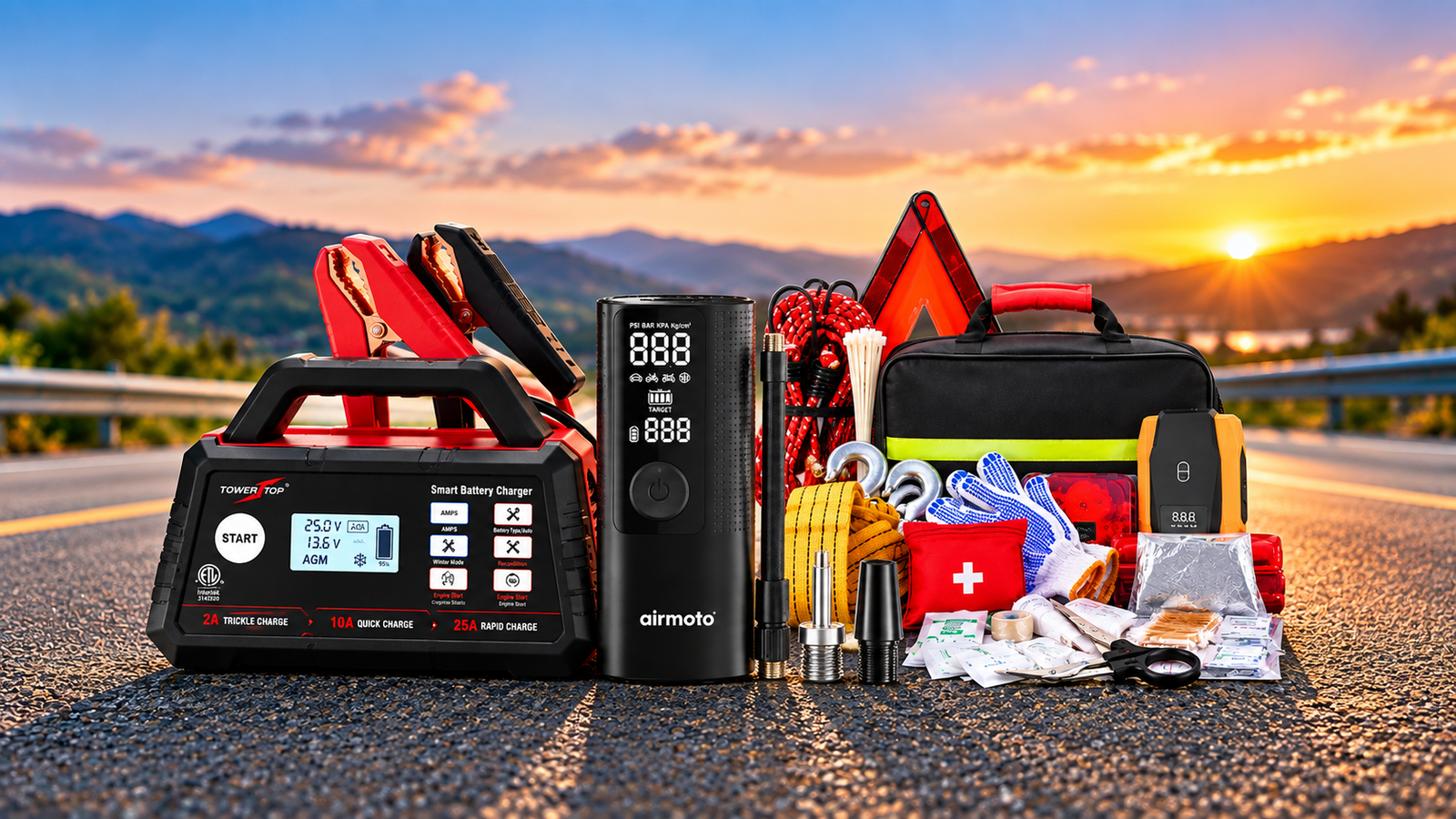
Unexpected vehicle problems can happen almost anywhere. A dead battery, low tire, breakdown, bad weather, or roadside emergency can quickly become more difficult when the basic equipment you need is not already in the vehicle.
A practical vehicle emergency kit does not need to fill the entire trunk. The goal is to carry useful equipment for common roadside problems while also keeping basic safety and emergency supplies available when professional assistance is not immediately nearby.
A useful vehicle emergency gear checklist should cover battery problems, tire inflation, roadside visibility, basic first aid, and general breakdown situations. A battery charger can help maintain a vehicle battery at home, a portable tire inflator can handle minor pressure problems on the road, and a complete roadside emergency kit can consolidate several important safety supplies into one package.
Essential Vehicle Emergency Gear
These three products cover different parts of vehicle preparedness and can form a useful starting point for building a more complete roadside setup.
Disclosure: The product links below are paid affiliate links. As an Amazon Associate I earn from qualifying purchases.
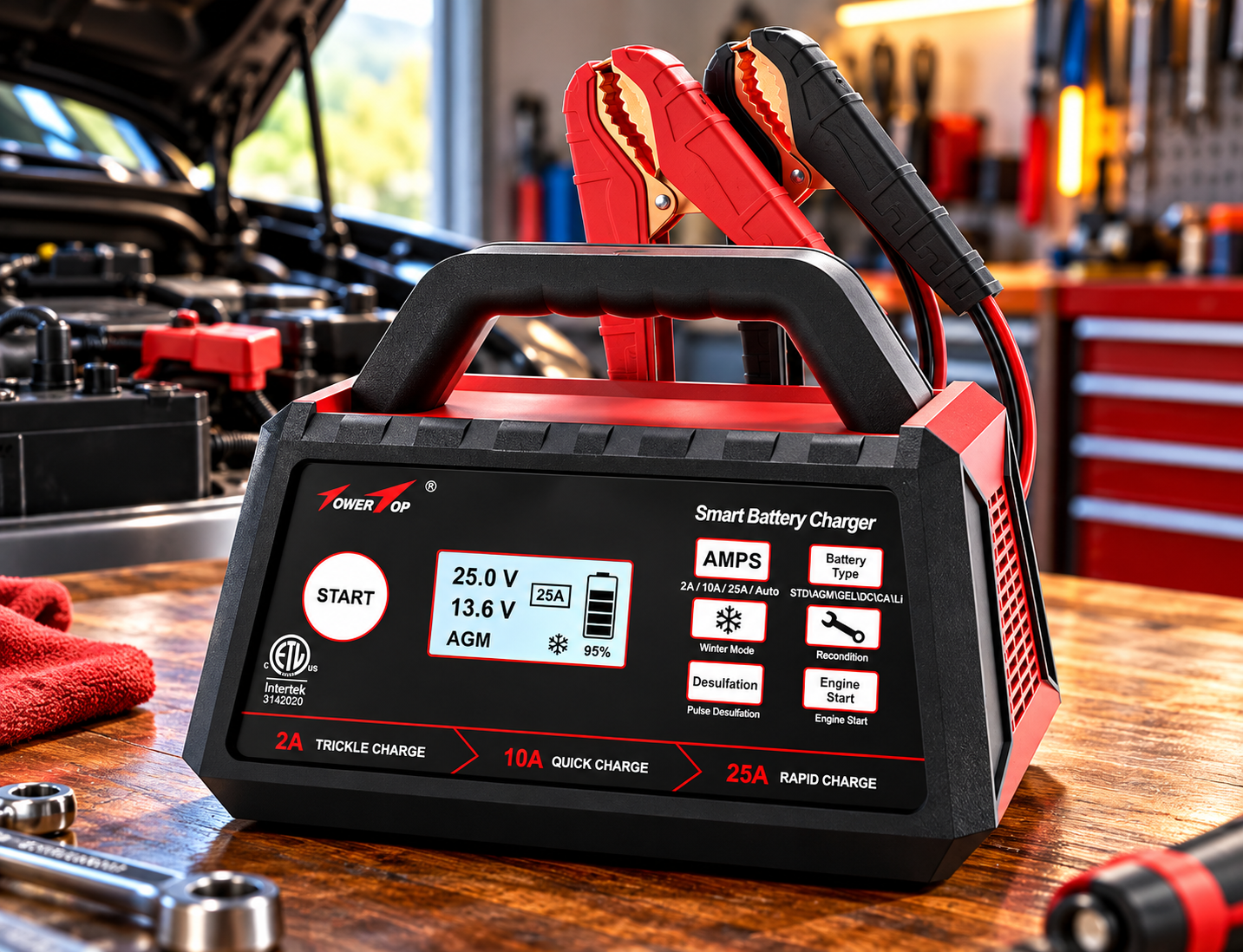
TowerTop 12V Smart Car Battery Charger
A smart battery charger and maintainer for keeping compatible 12V vehicle batteries charged and ready before a roadside problem develops.
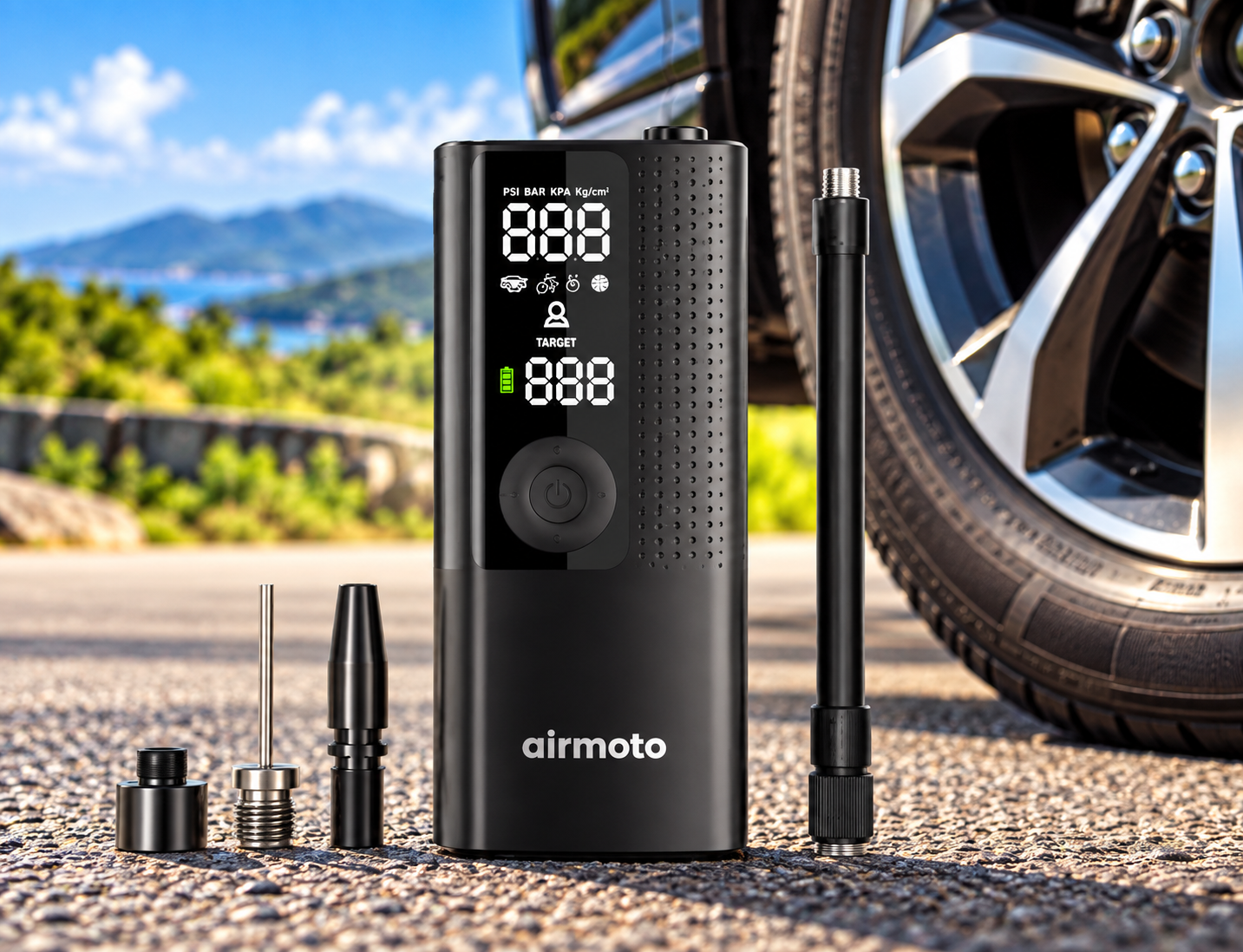
Airmoto Portable Tire Inflator
A compact cordless air compressor designed to provide portable tire inflation when tire pressure needs attention away from home.
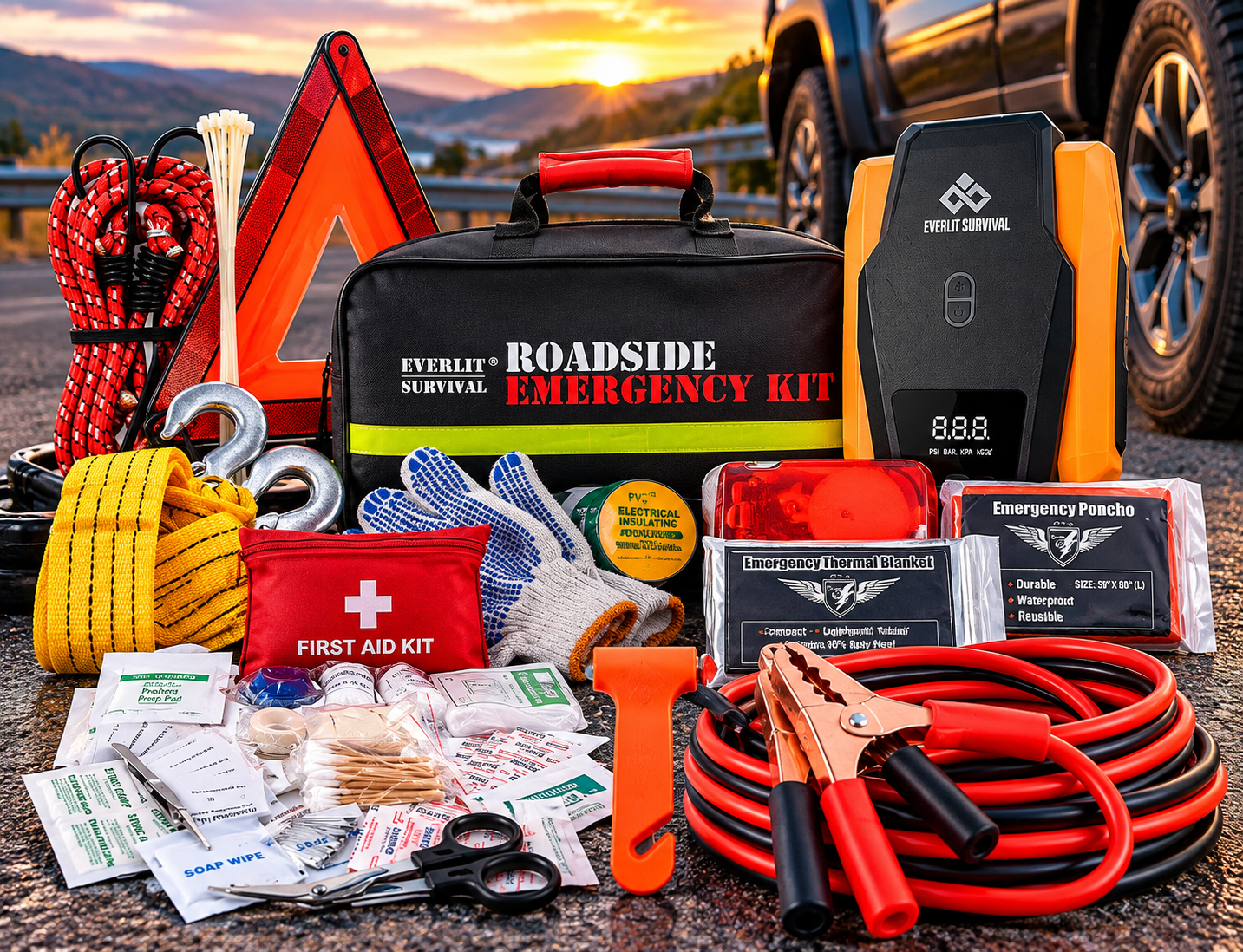
EVERLIT Survival Car Emergency Kit
A multi-purpose roadside kit that combines several emergency, visibility, first-aid, and vehicle-assistance items in one package.
Why Every Vehicle Should Have Emergency Gear
Roadside emergencies are unpredictable. Even a well-maintained vehicle can experience a punctured tire, discharged battery, electrical problem, overheating issue, or another situation that forces you to stop.
Emergency gear cannot solve every mechanical problem, but having the right equipment can make common situations easier to manage while you arrange repairs or roadside assistance.
Preparedness becomes particularly important during long trips, nighttime driving, severe weather, or travel through areas where services may be farther away.
1. Battery Equipment
A weak or discharged battery is one of the most familiar vehicle problems. Battery-related equipment therefore deserves a place in a broader emergency-preparedness plan.
The exact equipment you need depends on your objective. Battery chargers and maintainers are primarily useful before a trip or while the vehicle is parked near electrical power. Portable jump starters or jumper cables are more appropriate for restarting a discharged battery on the road.
The TowerTop charger featured here is best viewed as preventive equipment for the home garage rather than a replacement for a cordless roadside jump starter.
TowerTop 12V Smart Car Battery Charger
The TowerTop provides automatic charging functions for compatible 12V batteries and can be useful for vehicles that spend extended periods parked or batteries that need periodic maintenance.
Keeping the battery properly maintained before a long trip can reduce the possibility of discovering a discharged battery when the vehicle is needed.
For a complete emergency setup, consider combining a home battery charger with suitable jumper cables or a portable jump starter carried inside the vehicle.
2. Portable Tire Inflator
Correct tire pressure affects vehicle handling, tire wear, and everyday drivability. A portable inflator gives you a way to add air without immediately finding a service station compressor.
This can be particularly useful when a tire develops a slow pressure loss or the tire-pressure warning appears during a trip.
Airmoto Portable Tire Inflator
The Airmoto is a compact cordless inflator designed for portable use. Its small format makes it easier to keep inside a vehicle without occupying the space required by a larger garage compressor.
A portable inflator is not a substitute for repairing a damaged tire. If a tire is punctured, structurally damaged, or losing pressure rapidly, adding air should not be treated as a permanent solution.
3. Roadside Emergency Kit
A roadside emergency kit can simplify vehicle preparedness by placing several useful items into one organized bag rather than purchasing and storing everything separately.
Depending on the kit, this may include visibility equipment, jumper cables, first-aid supplies, gloves, basic tools, tow equipment, emergency blankets, and other roadside accessories.
EVERLIT Survival Car Emergency Kit
The EVERLIT kit combines a range of roadside and emergency supplies intended to address several different situations.
A bundled kit can be especially convenient for new drivers or anyone building an emergency setup from scratch because many of the smaller essentials are already organized together.
However, you should still inspect the contents when the kit arrives. Make sure you understand how each item is used and add anything required for your particular vehicle, climate, or travel conditions.
4. Jumper Cables or Portable Jump Starter
Even if you maintain the battery regularly, carrying a way to deal with an unexpected discharged battery is useful.
Traditional jumper cables require another suitable vehicle and correct connection procedures. A compatible portable jump starter provides another option because it contains its own power source.
Whichever approach you choose, follow the instructions supplied by the vehicle and equipment manufacturer. Incorrect connections can create electrical and safety hazards.
5. Tire Pressure Gauge
A tire pressure gauge is inexpensive, compact, and useful even when your vehicle has a tire-pressure monitoring system.
It allows you to check actual tire pressure before using an inflator and verify the result afterward.
Use the vehicle manufacturer’s recommended cold tire pressures rather than relying on the maximum pressure printed on the tire sidewall.
6. Warning Triangle and Reflective Gear
Visibility is an important part of roadside safety. If a vehicle becomes disabled, other drivers need enough time to recognize that something unusual is ahead.
Reflective warning equipment can help make a stopped vehicle or roadside situation more noticeable, particularly at night or in poor weather.
Where and how warning devices should be placed depends on the road, local requirements, traffic conditions, and whether it is safe to leave the vehicle.
7. Flashlight
A reliable flashlight can become one of the most useful items in an emergency kit after dark.
It can help when inspecting a tire, locating equipment in the trunk, checking under the hood, or signaling your location.
If the flashlight uses replaceable batteries, periodically inspect them. Rechargeable lights should also be checked regularly rather than being forgotten in the vehicle for months.
8. First-Aid Supplies
Basic first-aid supplies are useful for minor injuries that may occur during travel or while handling equipment around a disabled vehicle.
A kit may include bandages, gauze, antiseptic supplies, gloves, and other basic materials. Periodically inspect expiration dates and replace anything that has been used or damaged.
A basic first-aid kit is not a substitute for professional medical care when an injury is serious.
9. Work Gloves
Work gloves take very little space and can make roadside tasks more comfortable.
They may help protect your hands from dirt, rough surfaces, hot components, or sharp edges when accessing equipment or performing basic roadside tasks.
10. Emergency Blanket and Weather Protection
Vehicle problems do not always occur in comfortable weather. An emergency blanket, rain protection, and seasonally appropriate supplies can become important if you must wait for assistance.
The equipment that makes sense in a warm climate may differ considerably from what should be carried in areas with freezing temperatures or winter storms.
11. Phone Charging Equipment
A working phone can be essential for contacting roadside assistance, emergency services, family members, or a repair facility.
Keeping a compatible charging cable and vehicle charger in the car can prevent a minor vehicle problem from becoming more difficult because the phone battery is nearly empty.
A charged portable power bank can provide additional backup, but it should be checked periodically because stored batteries gradually lose charge.
12. Water and Basic Personal Supplies
For longer drives, carrying drinking water and a few basic personal supplies can make an unexpected wait more manageable.
The amount you need depends on trip length, number of passengers, climate, and how far you will be from populated areas.
Vehicle Emergency Gear Checklist
A practical starter checklist can include:
- Portable jump starter or jumper cables
- Portable tire inflator
- Tire pressure gauge
- Roadside emergency kit
- Warning triangle or reflective equipment
- Flashlight
- First-aid supplies
- Work gloves
- Emergency blanket or weather protection
- Phone charging cable and vehicle charger
- Portable power bank
- Drinking water
- Vehicle owner’s manual
- Roadside-assistance and insurance information
Emergency Gear vs. Regular Garage Tools
Garage tools and emergency gear serve related but different purposes.
Your garage may contain larger socket sets, battery testers, chargers, diagnostic equipment, jacks, and specialized tools. Emergency gear should emphasize portability, accessibility, and the problems you can reasonably address while away from home.
There is little value in filling the trunk with equipment that you cannot safely use on the roadside.
Where Should Emergency Gear Be Stored?
Emergency equipment should be secured so that it does not move freely around the passenger compartment or cargo area.
Frequently needed safety items should also remain reasonably accessible. An emergency kit buried underneath luggage may be difficult to reach when you actually need it.
Follow manufacturer instructions for products containing batteries, pressurized components, chemicals, or other items that may have storage-temperature requirements.
How Often Should You Check Your Emergency Kit?
Inspect the kit periodically and before major road trips.
Check rechargeable equipment, flashlight batteries, first-aid supplies, tire-inflator charge levels, cables, and anything with an expiration date.
Also replace equipment after it has been used. A roadside kit that is missing important components may provide a false sense of preparedness.
Frequently Asked Questions
What is the most important emergency equipment to keep in a car?
There is no single item that covers every situation. Battery-starting equipment, tire equipment, visibility gear, a flashlight, first-aid supplies, communication capability, and basic weather protection form a practical foundation.
Should I carry both a tire inflator and a spare tire?
A portable inflator and a spare tire solve different problems. An inflator may help with manageable pressure loss, while some tire failures cannot safely be corrected by adding air. Follow your vehicle manufacturer’s guidance regarding its spare tire or tire-repair system.
Is a battery charger useful for roadside emergencies?
A conventional AC-powered battery charger is primarily a home or garage tool because it requires an appropriate electrical power source. For roadside starting situations, jumper cables or a compatible portable jump starter are generally more practical.
Is a preassembled roadside kit enough?
It can provide a strong starting point, but you should inspect its contents and customize the kit for your vehicle, climate, passengers, driving habits, and typical travel distances.
Should emergency equipment stay in the vehicle all year?
Many basic emergency items can remain in the vehicle, but some products have storage-temperature limitations or require periodic charging and inspection. Follow the manufacturer’s storage instructions for each item.
Final Thoughts
A vehicle emergency gear checklist is ultimately about preparation rather than carrying as many products as possible.
Start with the situations drivers are most likely to encounter: battery trouble, tire-pressure problems, roadside visibility, minor injuries, communication needs, and unexpected delays.
The TowerTop battery charger can contribute to preventive battery maintenance at home, the Airmoto portable inflator adds compact tire-pressure capability, and the EVERLIT emergency kit consolidates a variety of roadside supplies into one organized package.
From there, customize your setup around your vehicle, local climate, typical driving conditions, and the distances you regularly travel.
Build Your Vehicle Emergency Kit
Use these three products as a starting point and add the additional safety equipment appropriate for your vehicle and driving conditions.
Disclosure: The product links below are paid affiliate links. As an Amazon Associate I earn from qualifying purchases.
TowerTop Battery Charger
Smart 12V charging and maintenance equipment for preventive battery care at home.
Airmoto Tire Inflator
Compact cordless inflation capability that is easy to keep available inside the vehicle.
EVERLIT Emergency Kit
Multi-purpose roadside supplies organized into a single vehicle emergency package.
Use the PickRightGear Gear Advisor to narrow down the type of automotive equipment that matches the job or situation you are preparing for.
Continue Learning
Build out your garage with Essential Garage Tools for Beginners, learn How to Test a Car Battery at Home, compare Best Car Battery Testers for DIY Mechanics, browse more Automotive guides, or use the PickRightGear Gear Advisor.
Affiliate Disclosure: As an Amazon Associate I earn from qualifying purchases.