
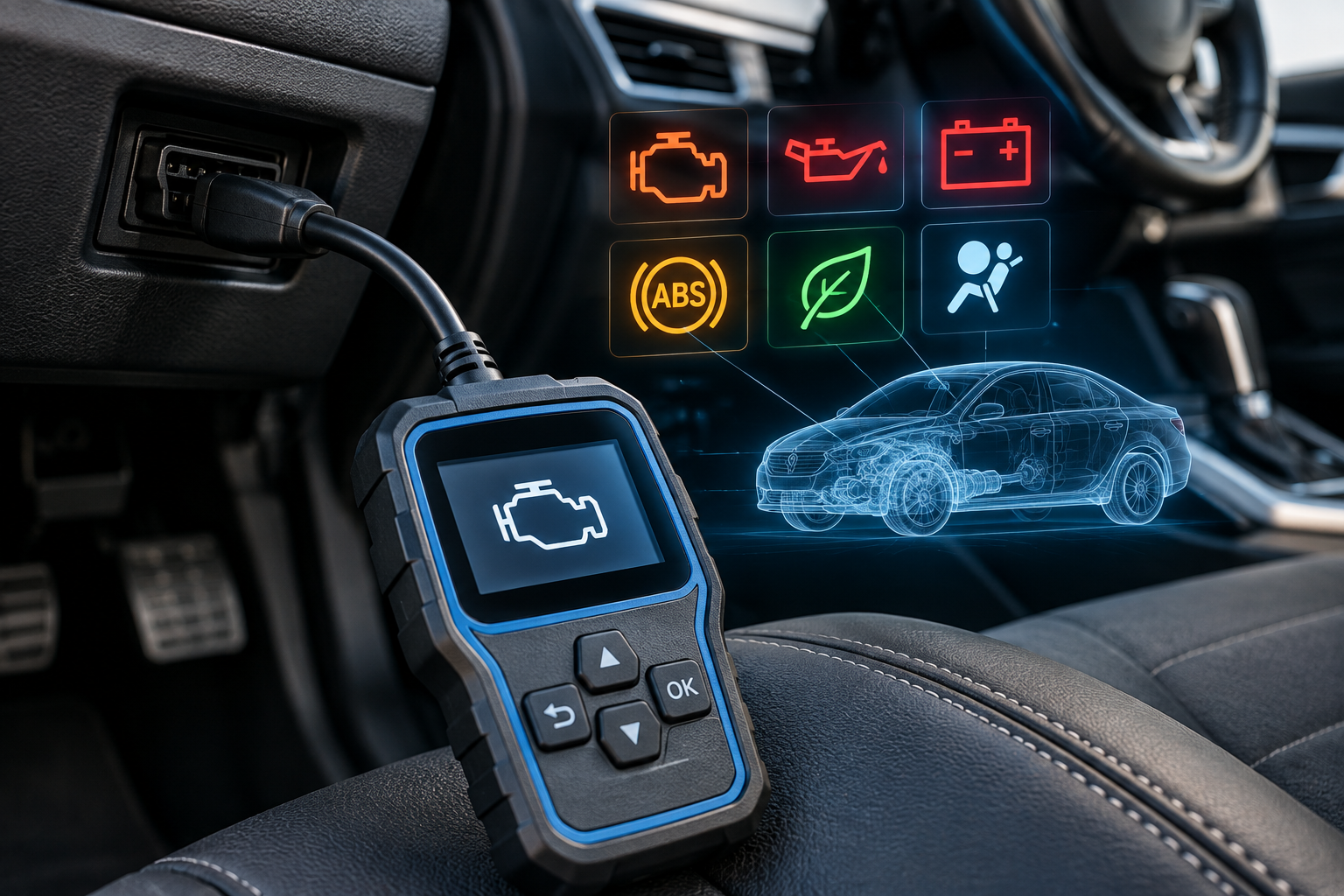
An OBD2 scanner can reveal useful information about why a vehicle’s check-engine light is on, but its capabilities depend heavily on the scanner and the vehicle. Basic models focus on emissions-related powertrain trouble codes, while more capable tools may access live data and additional vehicle systems.
What Does OBD2 Actually Diagnose?
OBD2, or On-Board Diagnostics II, is the standardized diagnostic system used on modern vehicles to monitor emissions-related components and many aspects of engine operation. When the vehicle detects a problem, it can store a diagnostic trouble code (DTC) that helps identify the system or circuit involved.
The important distinction is that a trouble code is a starting point for diagnosis, not necessarily proof that a particular part has failed. For example, a code involving an oxygen-sensor circuit can be caused by the sensor itself, wiring, an exhaust leak, or another condition affecting the readings.
Common Problems a Basic OBD2 Scanner Can Detect
Read stored powertrain diagnostic trouble codes that caused the malfunction indicator light to illuminate.
See certain faults the vehicle has detected before they mature into a confirmed code.
Identify codes involving systems that affect emissions, such as fuel control, ignition, oxygen sensors, and catalytic-converter monitoring.
Check whether supported emissions monitors have completed their self-tests after codes were cleared or battery power was disconnected.
Examples of OBD2 Trouble-Code Areas
OBD2 codes can point toward a wide range of engine and powertrain issues. Common areas include:
- Engine misfires and ignition-system faults
- Fuel mixture and fuel-trim problems
- Oxygen-sensor and air/fuel-sensor circuits
- Mass airflow and manifold-pressure sensor faults
- Evaporative-emissions (EVAP) system leaks or faults
- Catalytic-converter efficiency monitoring
- Throttle and engine-sensor circuit problems
- Some transmission-related powertrain codes
A code tells you where the vehicle detected an abnormal condition. Proper troubleshooting may still require inspection, testing, service information, and sometimes additional diagnostic equipment.
Can an OBD2 Scanner Show Live Data?
Many scanners can display live information reported by the vehicle’s computer. Depending on the vehicle and tool, this may include engine RPM, coolant temperature, vehicle speed, throttle position, oxygen-sensor information, fuel trims, intake-air temperature, and other supported parameters.
Live data can be especially useful when a problem is intermittent or when you want to see how a sensor behaves while the engine is running. However, the number of available parameters and how they are displayed varies by scanner and vehicle.
Can OBD2 Diagnose ABS, Airbags, TPMS, and Other Systems?
Not every OBD2 scanner can. The standard OBD2 functions people associate with inexpensive code readers primarily concern emissions-related diagnostics. Access to manufacturer-specific modules and systems can require a scanner with enhanced diagnostic capabilities.
Generic engine/emissions trouble codes, check-engine-light information, readiness monitors, and—in many models—basic live data.
ABS, airbag/SRS, body modules, electronic parking brake, advanced transmission data, TPMS functions, service resets, and manufacturer-specific diagnostics.
Coverage is not universal. A scanner may support an advanced system on one make or model but not another. This is why checking the manufacturer’s compatibility information is important before choosing a tool.
What an OBD2 Scanner Cannot Tell You by Itself
An OBD2 scanner is a diagnostic aid, not an automatic repair diagnosis. Even when it retrieves a code successfully, it generally cannot prove which physical component should be replaced without additional testing.
- It cannot guarantee that the component named in a code description is defective.
- It cannot detect every mechanical problem in a vehicle.
- It may not access every electronic module.
- It cannot replace visual inspection, electrical testing, mechanical testing, or manufacturer service procedures when those are needed.
Three OBD2 Scanner Formats to Consider
If you’re learning vehicle diagnostics, the best format depends on how much information you want and whether you prefer a standalone tool or a phone-based interface. These three examples represent useful starting points at different levels.
Disclosure: The product links below are paid affiliate links. As an Amazon Associate I earn from qualifying purchases.
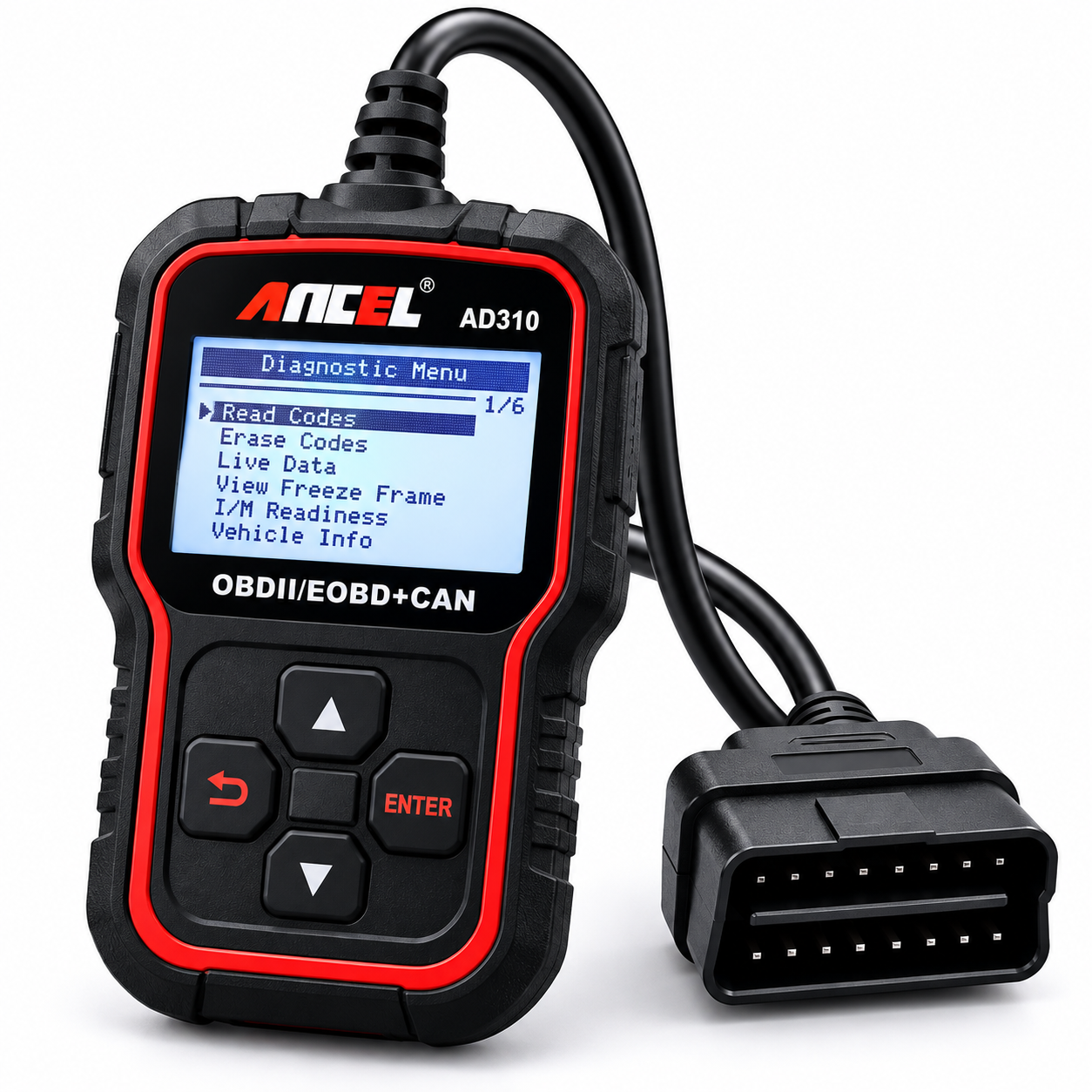
ANCEL AD310
A straightforward handheld code reader for drivers who primarily want basic OBD2 engine-code information without using a smartphone.
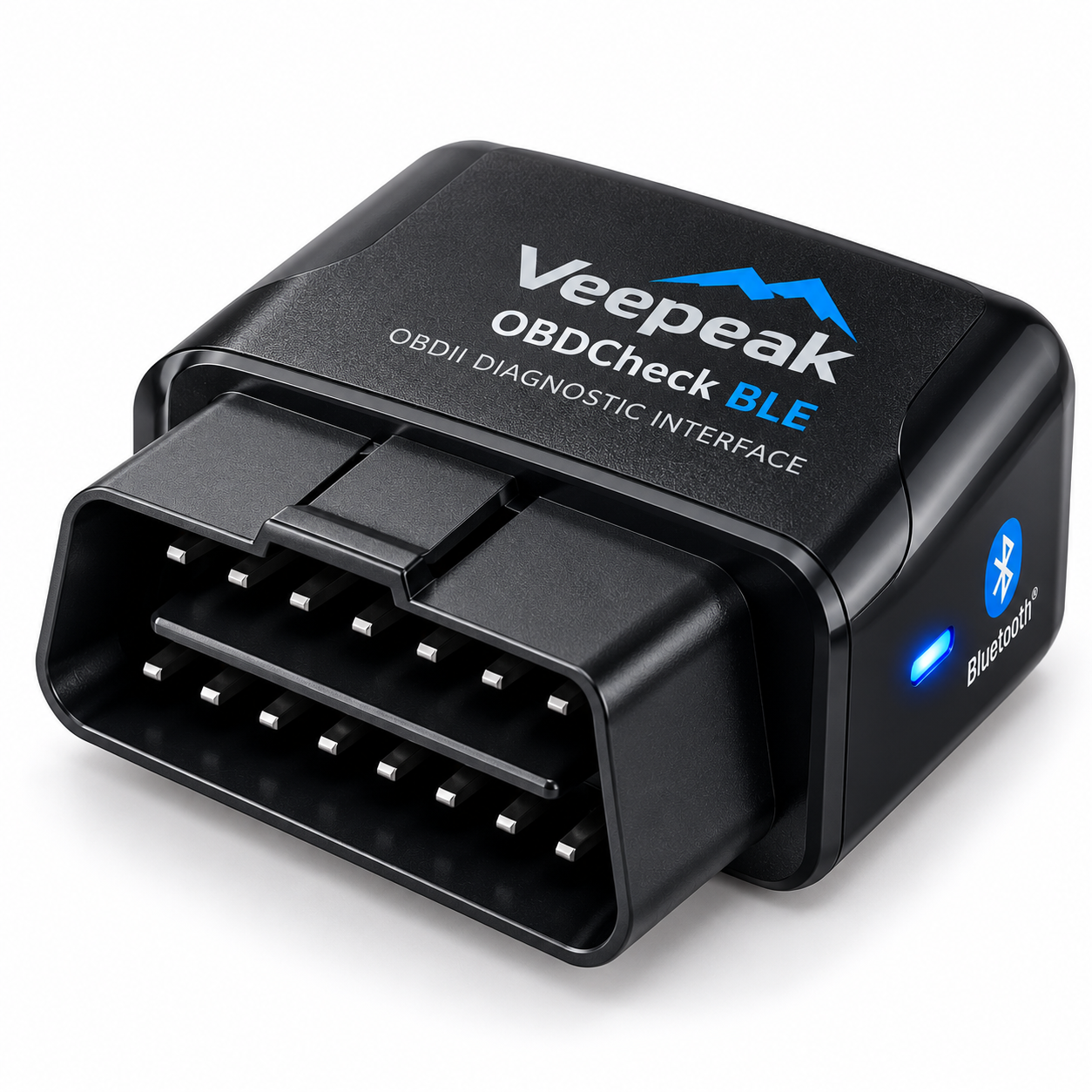
Veepeak OBDCheck BLE
A Bluetooth adapter format for users who prefer viewing compatible OBD2 information through a supported smartphone app.
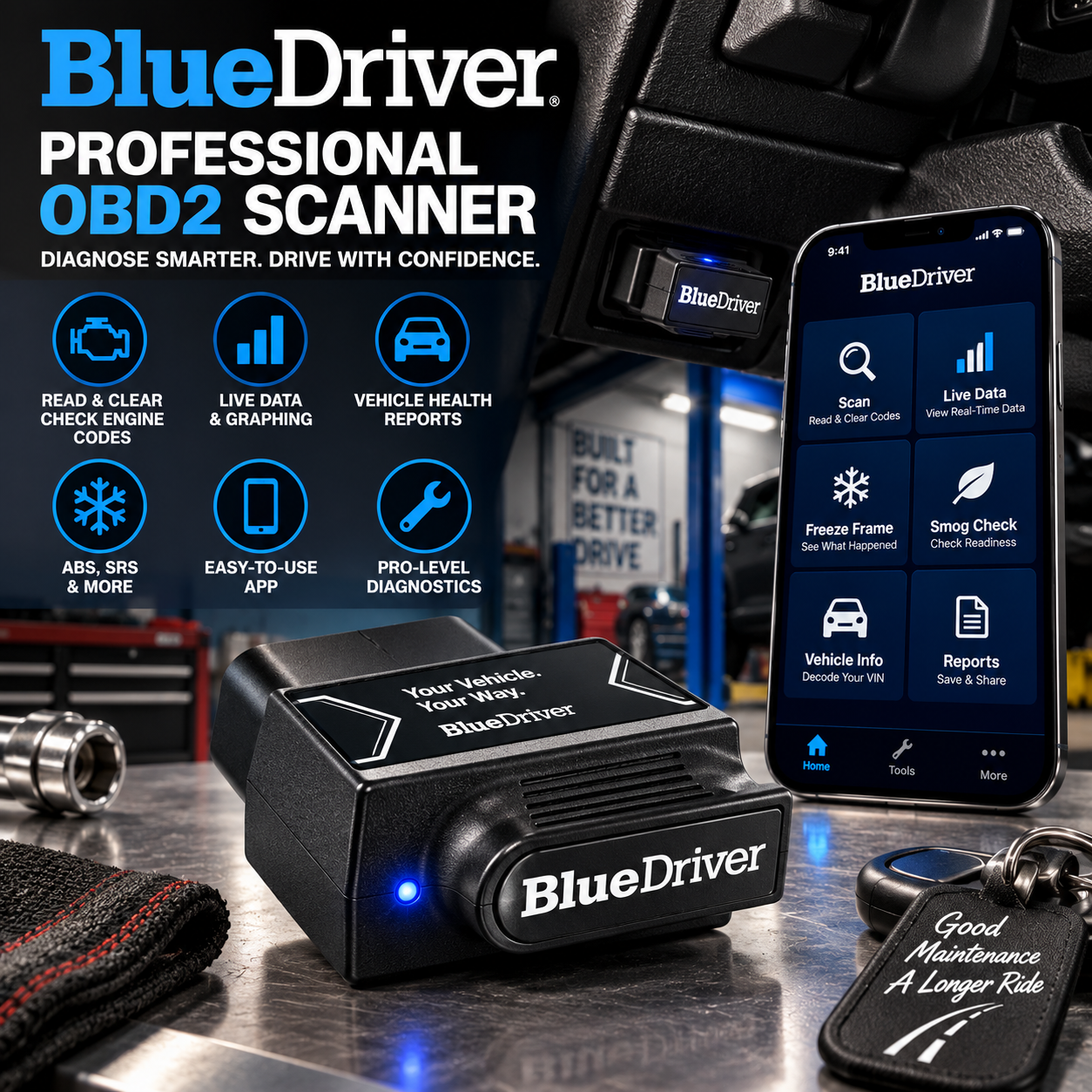
BlueDriver Pro
A phone-based diagnostic option aimed at users who want to explore more diagnostic information than a simple entry-level code reader provides.
How to Interpret an OBD2 Code Correctly
- Read the code. Record the exact DTC instead of immediately clearing it.
- Review available data. Freeze-frame or live data may provide context about when the fault occurred.
- Research the code for your vehicle. Generic definitions are useful, but manufacturer-specific information may be necessary.
- Inspect and test. Check related wiring, connectors, hoses, components, or mechanical conditions as appropriate.
- Repair the actual cause. Avoid replacing a part solely because its name appears in a code description.
Which Scanner Capability Do You Need?
If your main goal is understanding a check-engine light, a basic code reader may be enough. If you want to monitor live data regularly, a more capable handheld scanner or Bluetooth adapter can make sense. If you need access to multiple vehicle modules, bidirectional controls, service functions, or professional-level troubleshooting, you may need a diagnostic tablet or another enhanced scan tool.
For a deeper comparison of tool levels, read OBD2 Scanner vs. Diagnostic Tablet: Key Differences. If you’re deciding what features matter before buying, see How to Choose an OBD2 Scanner.
See our beginner-focused comparison of practical OBD2 scanner options and the differences that matter most when choosing your first diagnostic tool.
Continue Learning
Explore more Automotive guides, or use the PickRightGear Gear Advisor to narrow down the type of gear that fits your needs.
Affiliate Disclosure: As an Amazon Associate I earn from qualifying purchases.
1 thought on ““What Can an OBD2 Scanner Diagnose?””