
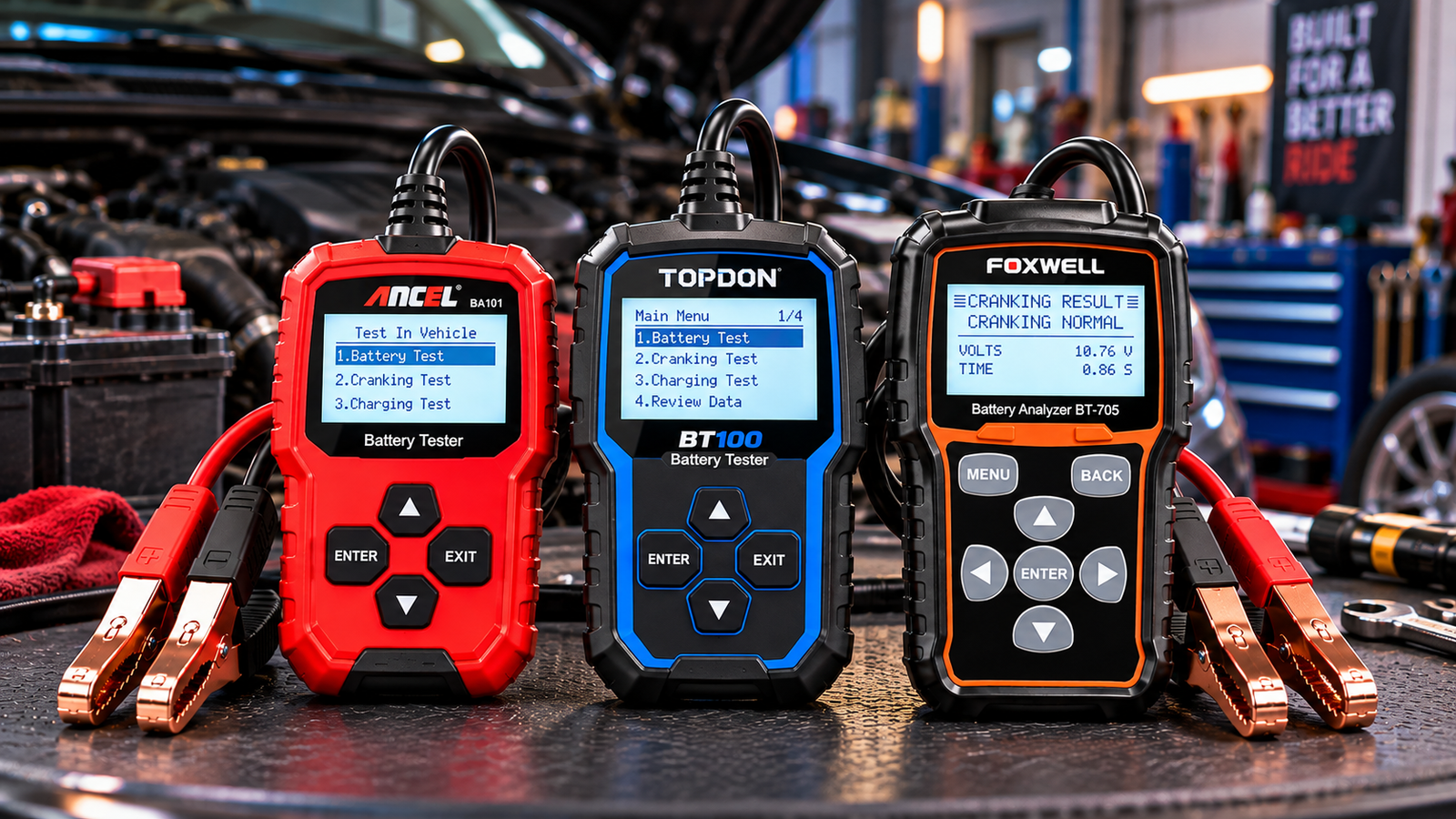
A weak car battery can create confusing symptoms, from slow engine cranking to intermittent electrical problems. A dedicated battery tester gives DIY mechanics a quick way to evaluate battery condition before replacing parts or calling for roadside assistance.
The best tester for you depends on how much information you want. A basic DIY tester may be enough for checking a 12V battery at home, while a more capable analyzer can also help evaluate cranking and charging-system performance.
For most DIY mechanics, a useful car battery tester should provide clear battery-health information, support the battery types you commonly service, and include cranking and charging-system tests. The ANCEL BA101 and TOPDON BT100 are practical 12V options for home garages, while the FOXWELL BT705 adds more advanced capabilities for users who want broader starting and charging-system coverage.
Our Top Picks
These three battery testers cover a useful range of DIY needs, from straightforward 12V battery testing to more advanced vehicle electrical-system analysis.
Disclosure: The product links below are paid affiliate links. As an Amazon Associate I earn from qualifying purchases.
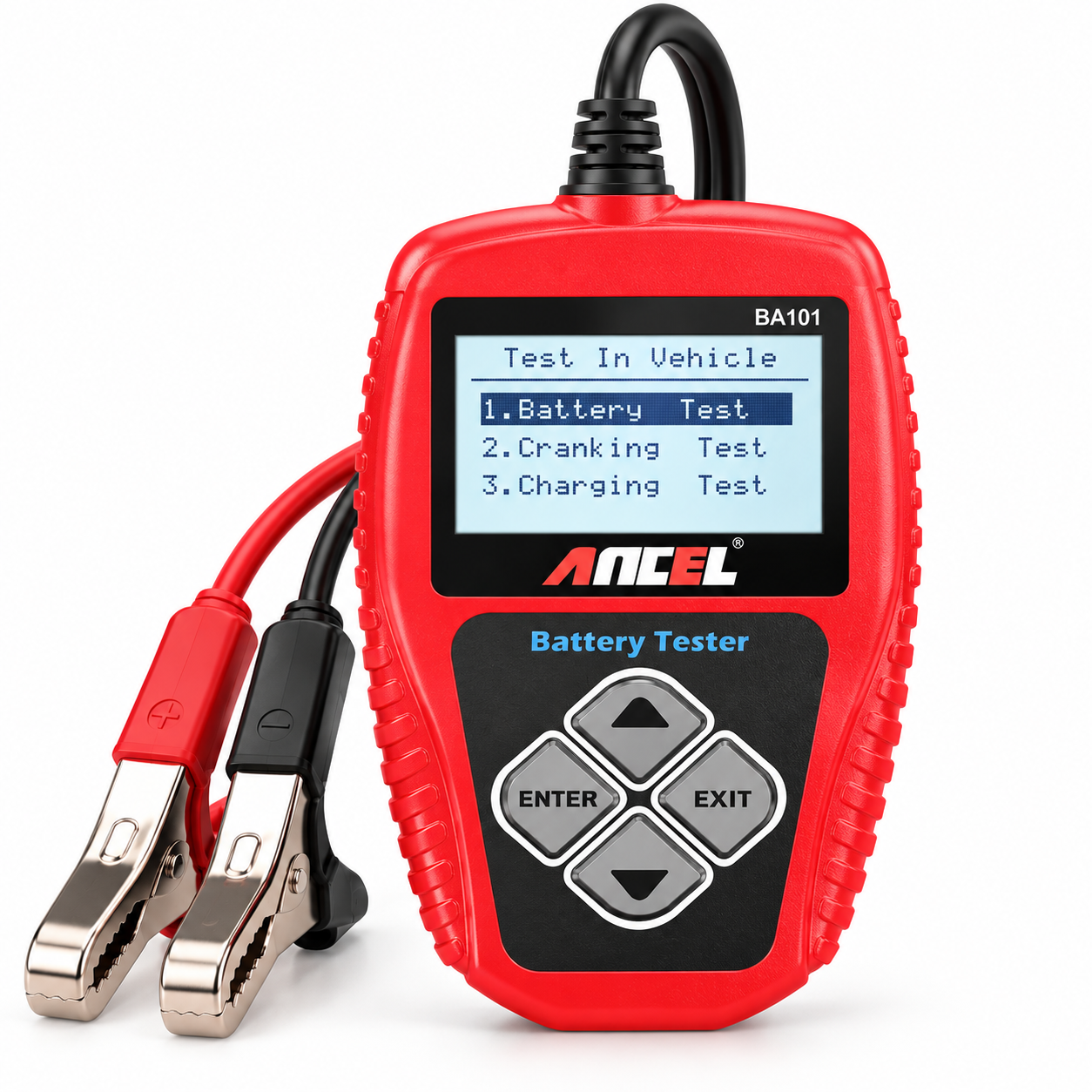
ANCEL BA101
A practical 12V battery tester for DIY mechanics who want battery analysis plus vehicle cranking and charging-system tests.
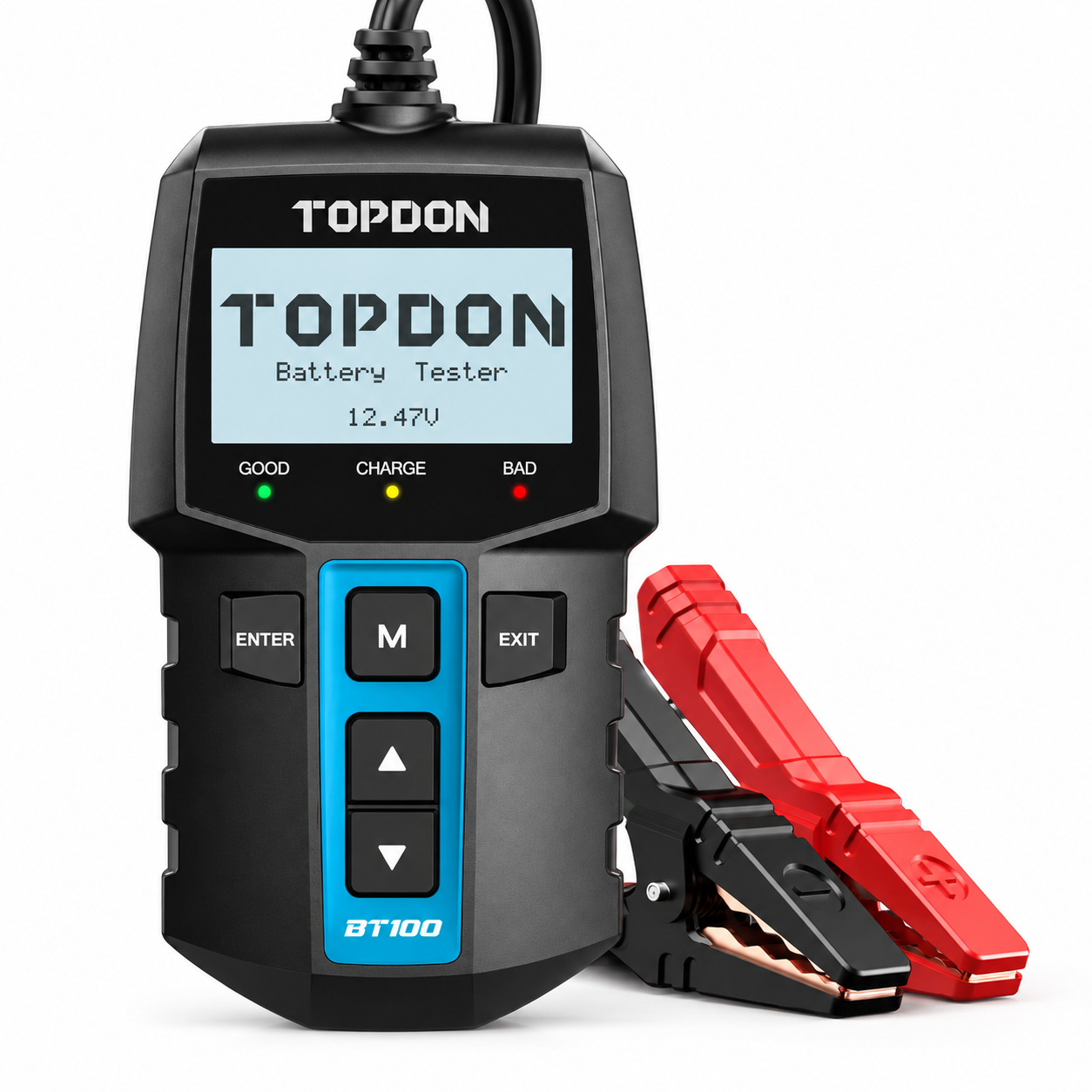
TOPDON BT100
A compact 12V tester with dedicated battery, cranking, and charging tests and an easy-to-read interface for home diagnostics.
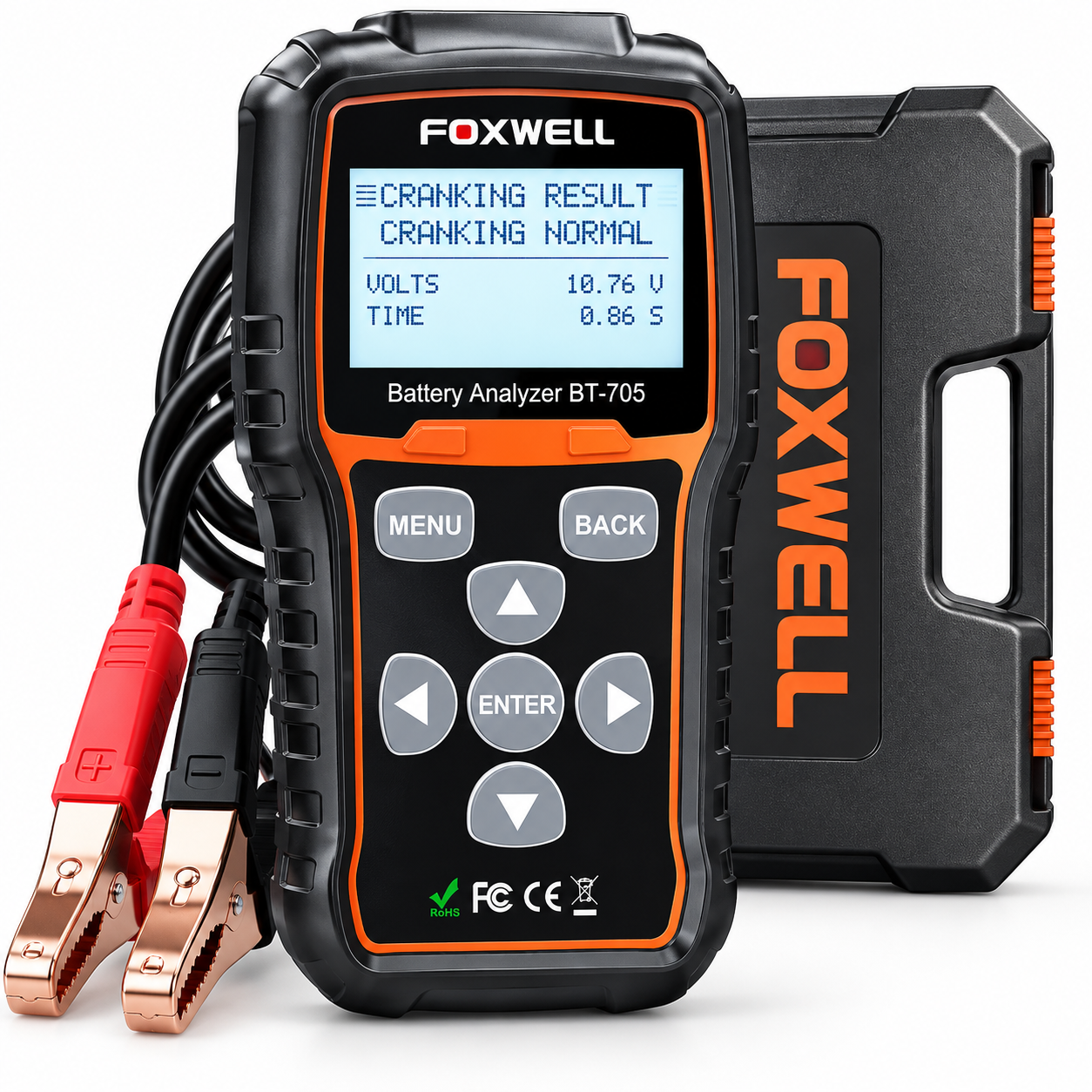
FOXWELL BT705
A more advanced battery analyzer for users who want battery testing plus broader 12V and 24V starting and charging-system capabilities.
What Does a Car Battery Tester Do?
A car battery tester helps evaluate the condition of a vehicle battery instead of relying only on its resting voltage or waiting until the vehicle refuses to start.
Depending on the tester, you may be able to check battery condition, available starting performance, cranking voltage, and charging-system operation.
This can help separate a weak battery from other possible starting or charging problems before you begin replacing components.
Best Car Battery Testers for DIY Mechanics
ANCEL BA101 — Practical All-Around DIY Tester
The ANCEL BA101 is designed for 12V battery testing and supports battery analysis along with cranking and charging-system tests.
ANCEL states that the BA101 can display information including battery voltage, CCA, internal resistance, battery health information, and test results. It also supports several common battery standards and multiple lead-acid battery types.
For a DIY mechanic who wants more information than a basic voltmeter can provide without moving into professional shop equipment, the BA101 offers a useful balance of functions.
TOPDON BT100 — Simple Interface for Home Diagnostics
The TOPDON BT100 is another 12V battery tester aimed at both DIY users and professional environments.
Its main functions include a battery test, cranking test, and charging test. TOPDON also lists support for common 12V lead-acid battery chemistries including regular flooded, AGM, GEL, and EFB batteries.
The dedicated menu and backlit display make it a straightforward option for users who want guided battery testing without depending on a smartphone app.
FOXWELL BT705 — More Advanced Electrical-System Testing
The FOXWELL BT705 moves toward the more advanced end of this group.
FOXWELL specifies support for several 12V battery types as well as testing of 12V and 24V starting and charging systems.
That broader capability can make it particularly useful for home mechanics working on multiple vehicles or users who want more electrical-system testing capability than a basic battery checker provides.
Car Battery Tester Comparison
The three tools share the same basic goal, but their capabilities and ideal users are slightly different.
- ANCEL BA101: Good fit for DIY users wanting detailed 12V battery analysis plus cranking and charging tests.
- TOPDON BT100: Straightforward choice for 12V battery, cranking, and charging tests with a simple interface.
- FOXWELL BT705: Better suited to users wanting broader battery analysis and 12V/24V starting and charging-system testing.
What to Look for in a Car Battery Tester
Battery Voltage Support
Start by confirming the tester supports the electrical system you intend to service.
Most passenger vehicles use 12V batteries, so a 12V tester is sufficient for many DIY users. Broader system support becomes more useful when working with different types of vehicles or equipment.
Supported Battery Types
Modern vehicles can use different lead-acid battery technologies, including conventional flooded, AGM, GEL, and EFB designs.
Do not assume every tester supports every battery chemistry. Check both the tester specifications and the battery label before beginning a test.
Battery Health Information
A dedicated battery analyzer can provide more useful diagnostic information than simply measuring voltage.
Depending on the tester, results may include state of charge, state of health, measured cranking performance, internal resistance, or a general battery-condition result.
Cranking Test
A cranking test observes battery performance while the starter is turning the engine.
This can reveal voltage behavior under a much heavier electrical load than a simple resting-voltage measurement.
Charging-System Test
A charging-system test helps evaluate whether the vehicle is restoring electrical energy to the battery after the engine starts.
This is useful because a battery that repeatedly becomes discharged may not always be the root cause of the problem.
Ease of Use
For home use, a clear screen and simple menu can be more valuable than dozens of advanced functions you may never use.
A good DIY tester should make it reasonably easy to select the correct battery type and rating, run the appropriate test, and understand the result.
Battery Tester vs. Multimeter
A digital multimeter is an extremely useful garage tool and can measure battery voltage, but voltage alone does not provide the same information as a dedicated battery analysis procedure.
A battery tester is designed specifically to evaluate battery condition and, depending on the model, may also provide cranking and charging-system tests.
For DIY diagnostics, the two tools complement each other rather than necessarily replacing one another.
How to Use a Car Battery Tester
The exact procedure depends on the tester, so always follow the manufacturer’s instructions. In general, the process begins by identifying the battery specifications and connecting the tester correctly to the battery terminals.
- Turn off the vehicle and electrical accessories as directed by the tester manufacturer.
- Identify the battery type, rating, and testing standard shown on the battery label.
- Connect the positive clamp to the positive battery terminal.
- Connect the negative clamp to the negative battery terminal.
- Select the appropriate battery test and enter the requested battery information.
- Run the test and review the displayed result.
- If needed, continue with the tester’s cranking or charging-system procedure.
Never rely on generic instructions when they conflict with the manual for your specific tester or vehicle.
Do You Need a Battery Tester for DIY Car Maintenance?
If you maintain your own vehicles, a battery tester can be a useful addition to the garage because starting problems are common and battery condition is not always obvious from appearance alone.
It can also be helpful for periodic checks before long trips, before seasonal weather changes, or when a vehicle begins cranking more slowly than usual.
However, a battery tester is only one diagnostic tool. Electrical problems can involve the battery, terminals, cables, starter, charging system, parasitic electrical loads, or other components.
Which Battery Tester Fits Different DIY Users?
- Occasional home maintenance: A straightforward 12V tester with battery, cranking, and charging tests is usually enough.
- Regular DIY mechanic: Look for detailed battery information, broad battery-type support, and an easy interface.
- Multiple vehicles or broader electrical work: Consider a more capable analyzer with expanded starting and charging-system coverage.
Frequently Asked Questions
Can a battery tester tell me if my car battery is bad?
A compatible battery tester can evaluate several aspects of battery condition and provide a test result based on the measurements it collects. The result should still be considered alongside symptoms, battery age, connections, charging-system condition, and the manufacturer’s diagnostic procedures.
Is a battery tester better than checking voltage?
It provides different information. Voltage is useful, but a dedicated battery tester can evaluate additional characteristics and may include cranking and charging tests.
Can I test a battery while it is still installed in the car?
Many automotive battery testers support in-vehicle testing, but you should follow the instructions for the specific tester and vehicle.
Do battery testers need their own batteries?
Many clamp-connected automotive testers obtain operating power from the battery being tested. Check the specifications of the individual tester before use.
Can a battery tester check the alternator?
Some testers include a charging-system test that can help evaluate charging performance after the engine starts. This should not be confused with a complete diagnosis of every possible alternator or electrical-system fault.
Final Thoughts
For most DIY mechanics, a dedicated car battery tester can remove much of the guesswork from basic starting and charging-system troubleshooting.
The ANCEL BA101 and TOPDON BT100 provide practical 12V testing capabilities for typical home-garage use, while the FOXWELL BT705 offers broader starting and charging-system support for users who want a more advanced tool.
The right choice depends on the vehicles you maintain, the battery types you work with, and how deeply you want to investigate starting and charging problems.
Ready to Compare Your Options?
If you are ready to add a battery tester to your garage, compare the three options below and choose the level of capability that matches the type of maintenance you perform.
Disclosure: The product links below are paid affiliate links. As an Amazon Associate I earn from qualifying purchases.
ANCEL BA101
12V battery analysis with cranking and charging-system testing for home mechanics.
TOPDON BT100
Compact 12V battery, cranking, and charging tester with a straightforward interface.
FOXWELL BT705
Advanced battery analyzer with broader 12V and 24V starting and charging-system support.
Use the PickRightGear Gear Advisor to narrow down the type of automotive gear that matches the job you are trying to complete.
Continue Learning
Next, learn How to Test a Car Battery at Home, explore Best OBD2 Scanners for Beginners, read TPMS Tools Explained, browse more Automotive guides, or use the PickRightGear Gear Advisor.
Affiliate Disclosure: As an Amazon Associate I earn from qualifying purchases.