
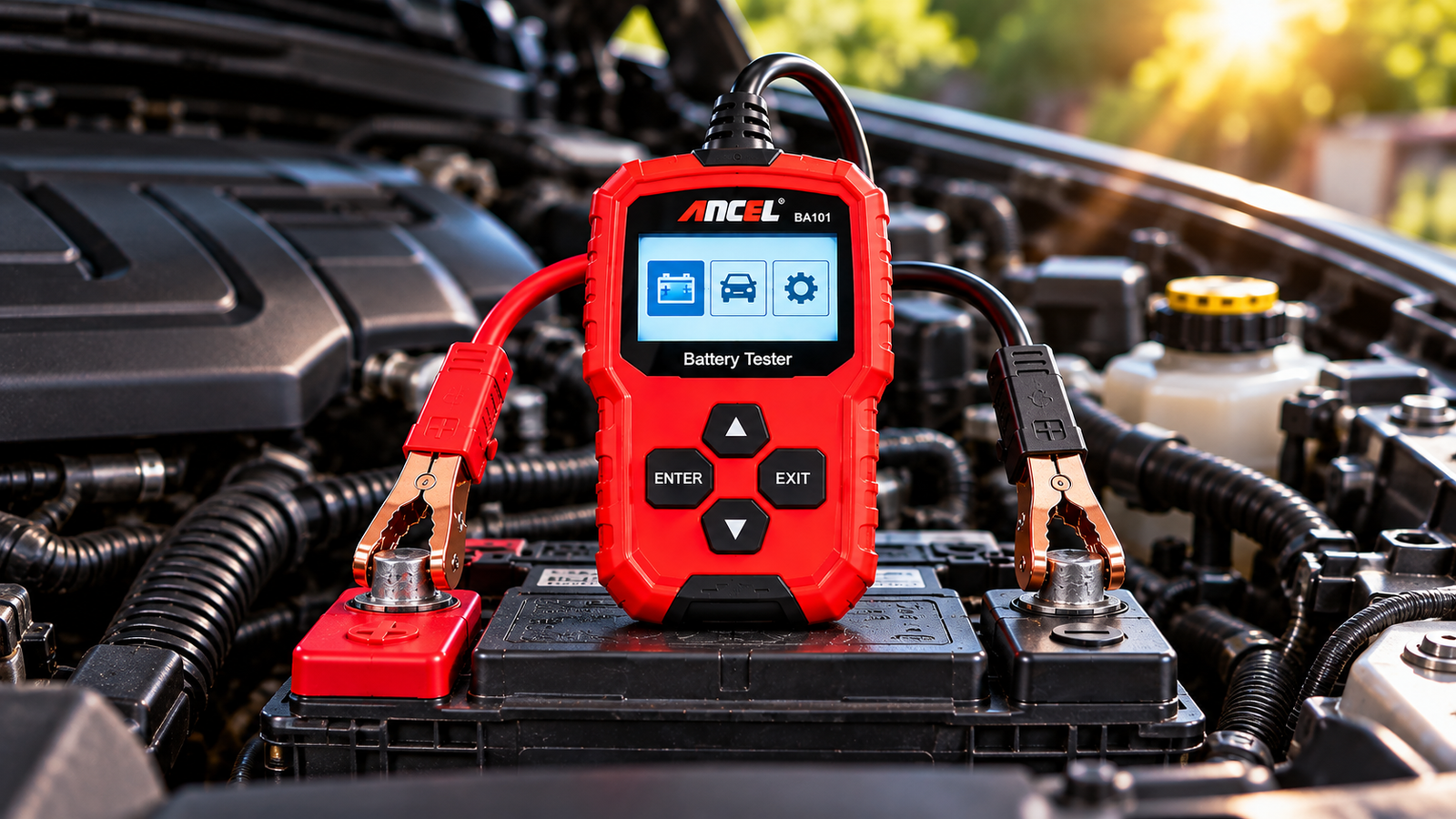
Testing your car battery at home can help you identify a weak battery before it leaves you stranded. With a compatible battery tester, you can check battery condition and, depending on the tool, evaluate cranking and charging-system performance without visiting a repair shop.
The process is relatively straightforward, but accurate results depend on connecting the tester correctly and entering the correct battery information.
To test a car battery at home, locate the battery specifications on its label, connect a compatible battery tester to the positive and negative terminals, select the correct battery type and rating, and run the battery test. Many dedicated testers can also perform cranking and charging-system tests.
What You Need to Test a Car Battery at Home
A dedicated automotive battery tester is one of the easiest ways to perform a detailed battery check at home.
Unlike checking voltage alone, compatible battery analyzers can provide additional information about battery condition and may also include dedicated cranking and charging-system tests.
For the testing process described in this guide, examples include the ANCEL BA101, TOPDON BT100, and FOXWELL BT705.
Disclosure: The product links below are paid affiliate links. As an Amazon Associate I earn from qualifying purchases.
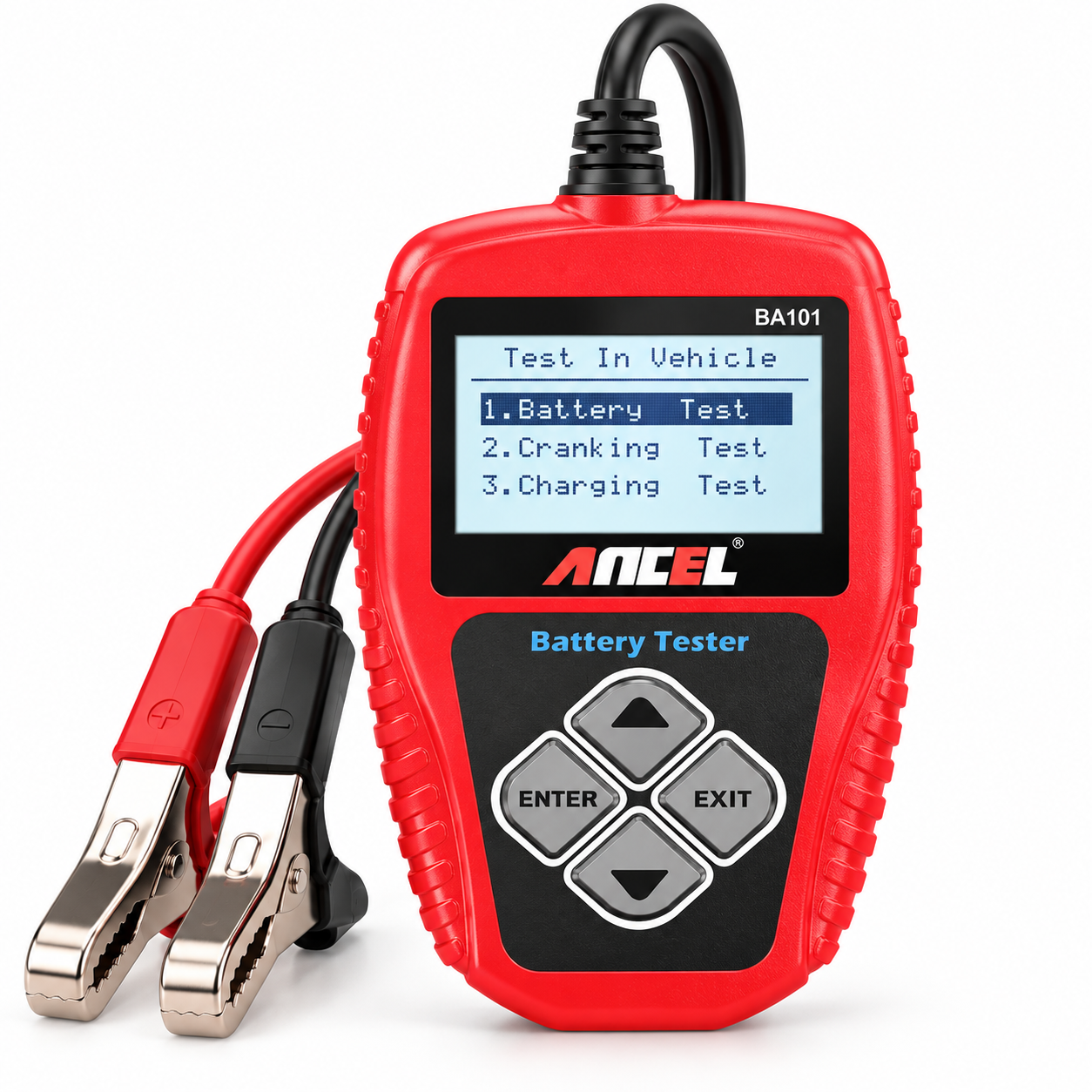
ANCEL BA101
A 12V battery analyzer that can perform battery, cranking, and charging-system tests for DIY vehicle maintenance.
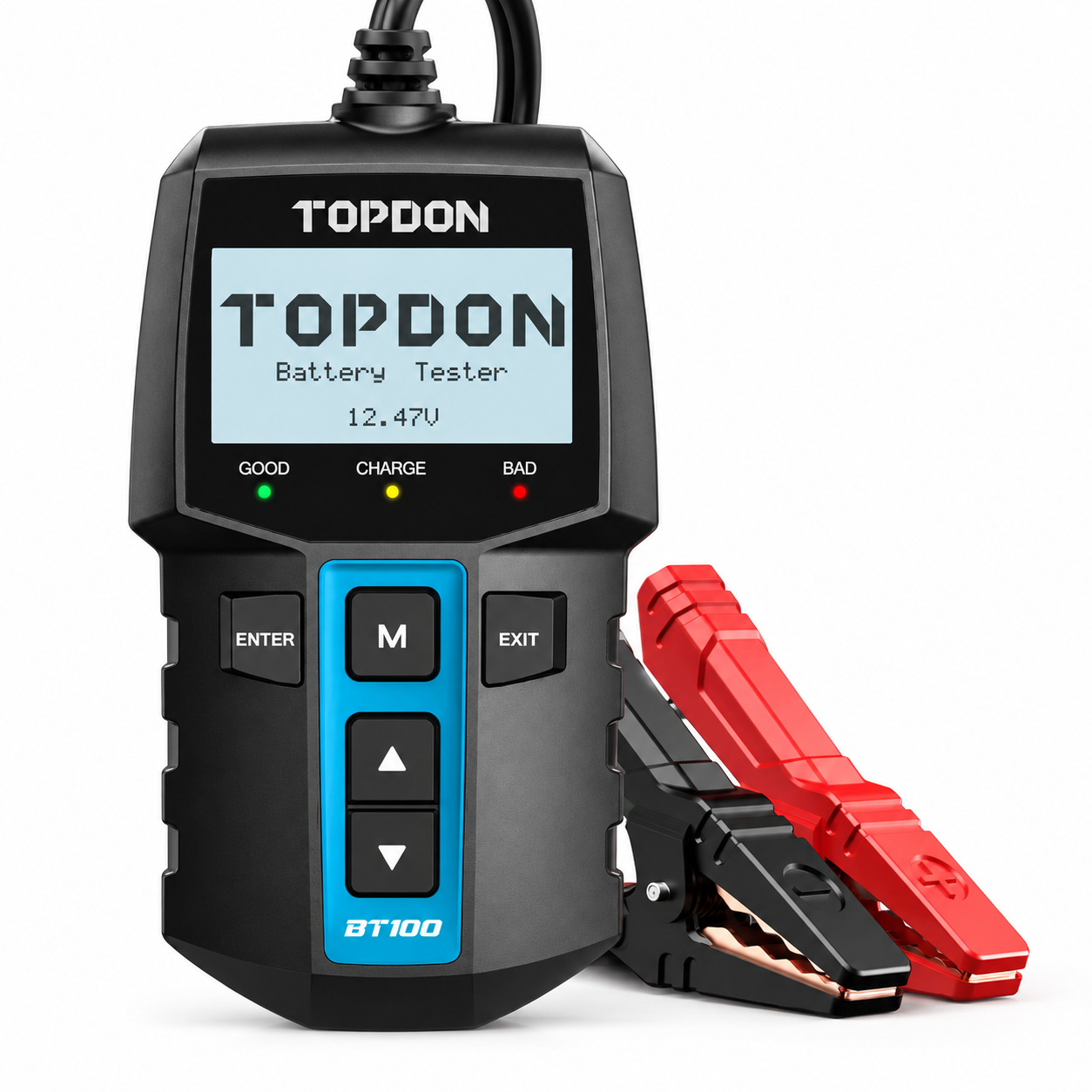
TOPDON BT100
A compact 12V tester designed for battery, cranking, and charging-system testing.
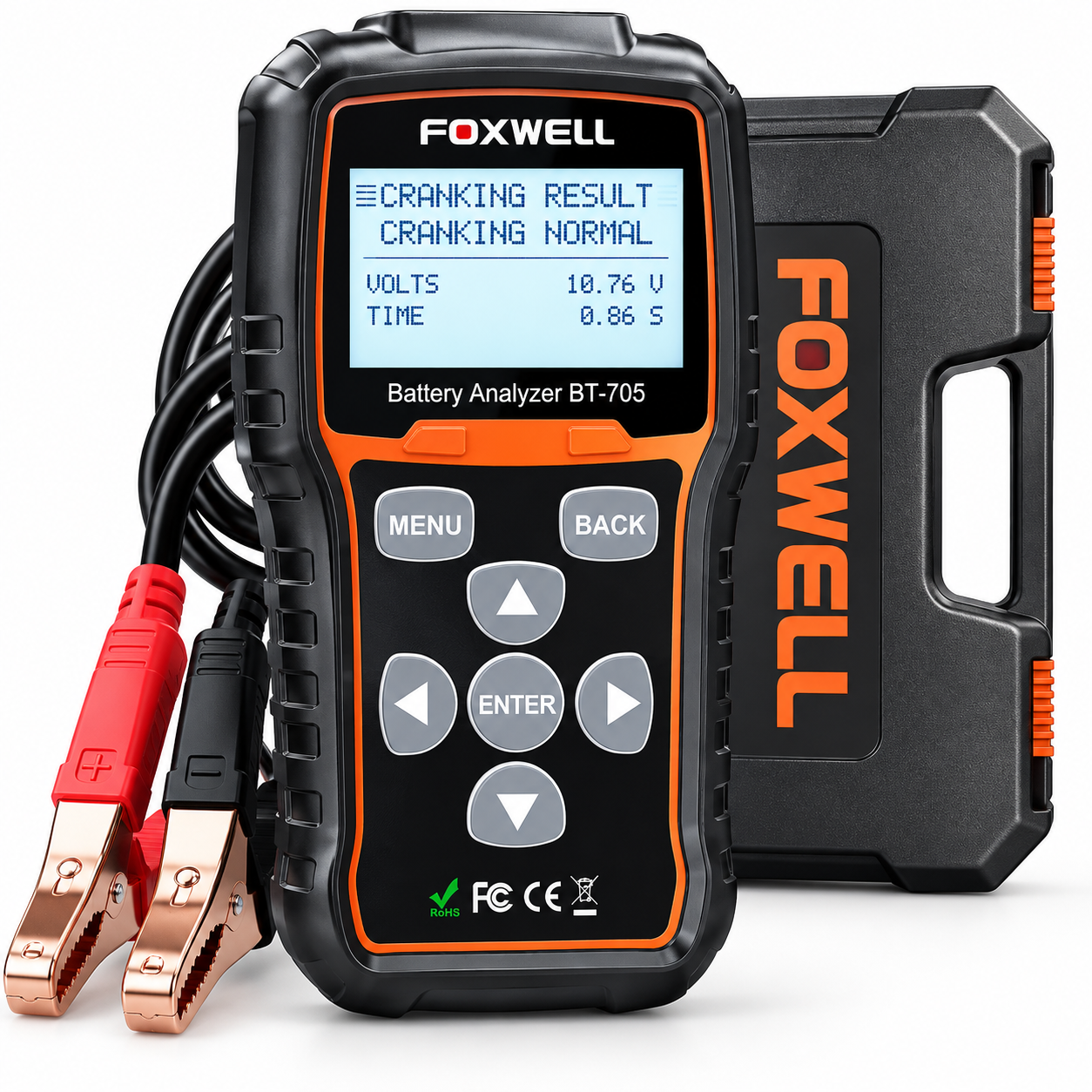
FOXWELL BT705
A more advanced battery analyzer with battery testing and broader starting and charging-system capabilities.
Before You Test the Battery
Before connecting a tester, inspect the battery and surrounding area. Do not attempt routine testing on a battery that appears physically damaged, cracked, leaking, or otherwise unsafe.
You should also locate the battery label because your tester may ask for information printed on it.
Depending on the battery and tester, this may include:
- Battery type
- Battery testing standard
- Cold Cranking Amps (CCA)
- Rated capacity
Entering the correct information is important because the tester uses those specifications when evaluating the battery.
How to Test a Car Battery at Home
Step 1: Turn Off the Vehicle
Before beginning the basic battery test, turn off the engine and vehicle accessories according to the instructions provided with your tester.
This creates an appropriate starting condition for evaluating the battery itself.
Step 2: Find the Battery Specifications
Look at the battery label before starting the test.
Find the battery type and the rating requested by your tester. A common value is Cold Cranking Amps, usually shown as CCA.
Do not guess the rating if it is available on the battery label.
Step 3: Connect the Positive Clamp
Connect the tester’s red positive clamp to the battery’s positive terminal.
The positive terminal is normally identified with a plus (+) symbol. Make sure the clamp has secure contact with the terminal.
Step 4: Connect the Negative Clamp
Connect the black negative clamp to the negative battery terminal as directed by the tester manufacturer.
The negative terminal is normally identified with a minus (-) symbol. Once both clamps are properly connected, many battery testers will power on using the battery being tested.
Step 5: Select the Correct Battery Type
Use the tester menu to select the battery type that matches the battery installed in your vehicle.
Common lead-acid battery types may include:
- Regular flooded
- AGM flat plate
- AGM spiral
- GEL
- EFB
Available options depend on the individual tester.
Step 6: Select the Battery Standard and Rating
Enter the battery standard and rating requested by the tester.
Different testers may support standards such as CCA, SAE, EN, DIN, IEC, JIS, or others.
Use the information printed on your battery rather than selecting a value at random.
Step 7: Run the Battery Test
Start the battery test and allow the tester to analyze the battery.
Depending on the device, the results may include information such as voltage, state of charge, state of health, measured CCA, internal resistance, or a simplified battery-condition result.
The exact information displayed varies by tester.
How to Understand the Results
Battery testers often simplify their findings into a condition message.
Depending on the model, you may see results indicating that the battery is good, should be charged and retested, or may require replacement.
The available information may also include state of health, state of charge, CCA, voltage, internal resistance, and an overall battery-test result.
How to Perform a Cranking Test
After checking the battery itself, a cranking test can provide additional information about what happens when the starter attempts to turn the engine.
The exact procedure depends on your tester.
Typically, the tester remains connected to the battery, the cranking-test function is selected, and the engine is started when instructed by the tester.
The tester can then evaluate battery behavior while the starter places a much heavier electrical demand on the battery.
How to Perform a Charging-System Test
A battery can test reasonably well and still become discharged again if there is a charging-system problem.
This is why many dedicated battery testers also include a charging test.
During this procedure, the engine normally needs to be running and the tester follows a specific sequence to evaluate charging performance.
The ANCEL BA101, TOPDON BT100, and FOXWELL BT705 provide charging-system testing capabilities within their supported applications.
Always follow the instructions supplied with your specific tester rather than assuming every model uses the same procedure.
Battery Test vs. Cranking Test vs. Charging Test
These three tests examine different parts of the starting and charging process.
- Battery Test: Evaluates the condition and available performance of the battery.
- Cranking Test: Observes battery and starting behavior while the engine is being started.
- Charging Test: Helps evaluate charging-system performance while the engine is running.
Using all three when appropriate can provide a more complete picture than checking battery voltage alone.
Can You Test a Car Battery With a Multimeter?
Yes. A digital multimeter can be used to measure battery voltage and is an extremely useful tool for automotive electrical work.
However, a voltage measurement by itself is not identical to a dedicated battery-health test.
A compatible battery analyzer can provide additional battery information and may guide you through cranking and charging-system tests.
For a DIY garage, a multimeter and a battery tester can serve complementary purposes.
Common Battery Testing Mistakes
A few simple mistakes can reduce the usefulness of your test results.
- Entering the wrong battery rating
- Selecting the wrong battery type
- Making poor clamp contact with the terminals
- Ignoring corrosion or damaged connections
- Testing without following the manufacturer’s preparation procedure
- Assuming every starting problem is caused by the battery
Battery testing should be treated as part of the diagnostic process rather than proof that every electrical or starting-system component is functioning correctly.
When Should You Test Your Car Battery?
You do not necessarily have to wait for a no-start condition.
Battery testing can be useful when:
- The engine begins cranking more slowly than usual
- The vehicle has been sitting for an extended period
- You are preparing for a long trip
- The battery has repeatedly needed charging
- You are troubleshooting a starting problem
- You want to check an aging battery before seasonal temperature changes
What If the Battery Tests Good but the Car Still Won’t Start?
A battery is only one part of the starting system.
If battery testing does not reveal an obvious problem, other possibilities may include battery-terminal connections, cables, the starter, charging system, electrical loads, wiring, or other vehicle systems.
A battery tester should therefore be used as a diagnostic aid rather than as a replacement for complete troubleshooting.
Frequently Asked Questions
Do I need to remove the battery from the car to test it?
Not necessarily. Many automotive battery testers support testing while the battery remains installed in the vehicle. Follow the instructions for your particular tester and vehicle.
Does the engine need to be running during a battery test?
For the basic battery test, the engine is generally off. Cranking and charging tests use different procedures, so follow the instructions displayed by your tester.
What does CCA mean?
CCA stands for Cold Cranking Amps. It is a battery rating related to its ability to provide starting current under specified cold-temperature conditions.
Can a battery tester check the alternator?
Many automotive battery testers include a charging-system test that helps evaluate charging performance. This is useful diagnostic information, but it should not be treated as a complete diagnosis of every possible alternator or electrical-system fault.
Can I use the wrong CCA setting?
You should enter the battery rating requested by the tester using the information printed on the battery label. Incorrect input can reduce the usefulness of the test result.
Does a good battery test guarantee the battery is perfect?
No single test should be interpreted in isolation. Consider the test result together with vehicle symptoms, battery age, terminal condition, charging performance, and any other relevant diagnostic information.
Final Thoughts
Learning how to test a car battery at home is a useful DIY maintenance skill and can help you investigate starting problems before replacing parts unnecessarily.
The basic process is simple: identify the battery specifications, connect the tester correctly, enter the appropriate battery information, and review the results.
When your tester supports them, cranking and charging-system tests can provide additional information about how the vehicle behaves during starting and while the engine is running.
If you still need to choose a tester, our dedicated buying guide compares three practical options for DIY mechanics.
See our Best Car Battery Testers for DIY Mechanics guide to compare the ANCEL BA101, TOPDON BT100, and FOXWELL BT705.
Continue Learning
Compare the Best Car Battery Testers for DIY Mechanics, explore Best OBD2 Scanners for Beginners, learn about TPMS Tools, browse more Automotive guides, or use the PickRightGear Gear Advisor.
Affiliate Disclosure: As an Amazon Associate I earn from qualifying purchases.