
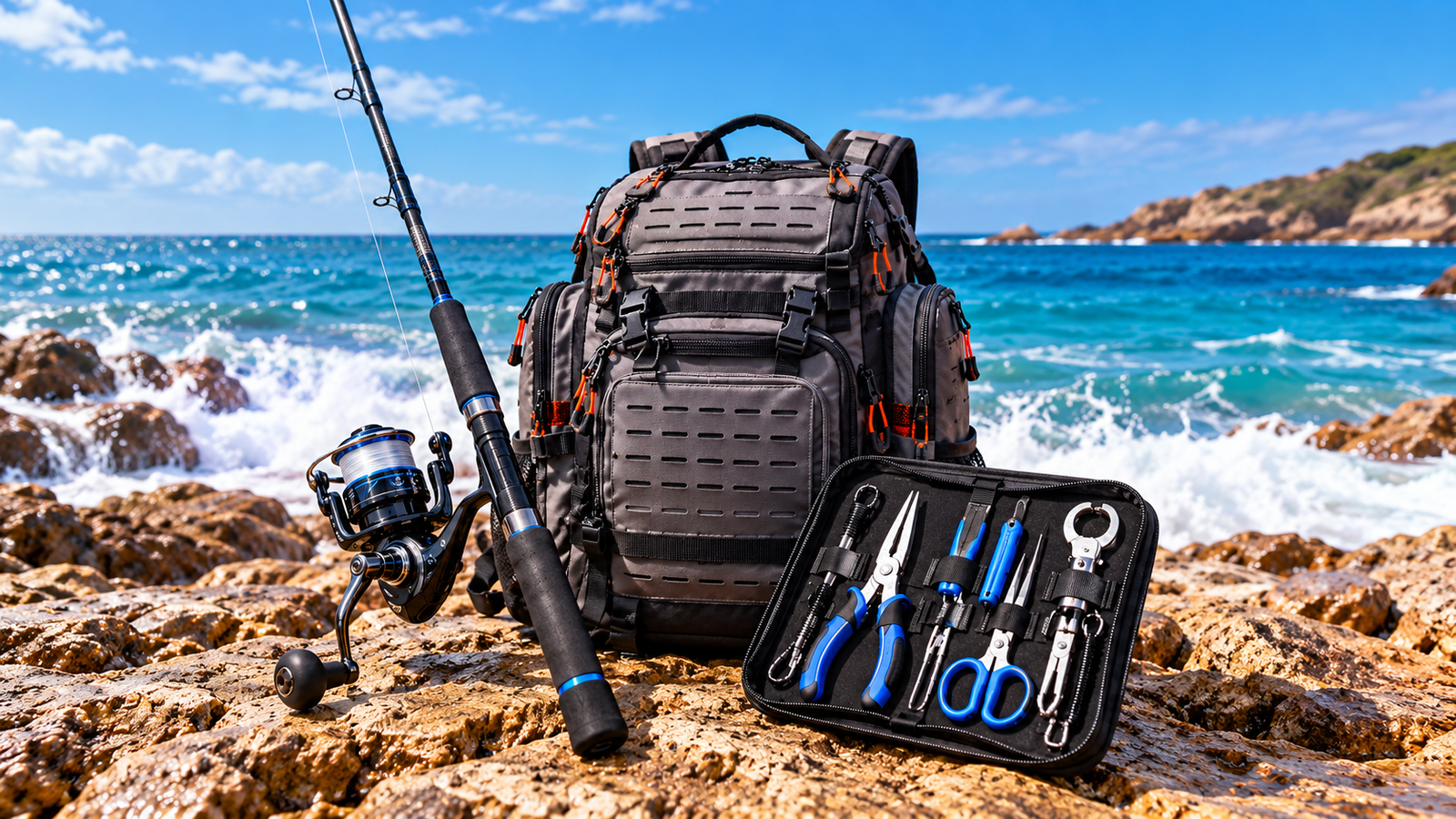
Saltwater fishing can expose your equipment to salt, sand, moisture, wind, and demanding fishing conditions. Preparing the right gear before leaving home can make your trip easier and help prevent important equipment from being forgotten.
The exact equipment you need depends on where you fish, the species you target, and the techniques you plan to use. Most saltwater anglers can build their setup around the same essential categories of rods, reels, line, terminal tackle, tools, storage, and safety equipment.
A practical saltwater fishing gear checklist includes an appropriate rod and reel, fishing line, leader material, hooks, sinkers or weights, swivels, lures or bait, fishing pliers, line cutters, organized tackle storage, and personal safety equipment. Choose each item according to your target species, fishing location, and technique.
Saltwater Fishing Gear Checklist
Use this checklist as a starting point when preparing for your next saltwater fishing trip:
- Fishing rod and reel
- Fishing line
- Leader material
- Hooks
- Sinkers or weights
- Swivels and terminal tackle
- Lures or bait
- Fishing pliers
- Line cutters or scissors
- Hook-removal tools
- Tackle box, bag, or fishing backpack
- Measuring device
- Sun protection
- Drinking water
- Basic first-aid supplies
- Personal flotation device when appropriate
You do not need every possible piece of fishing equipment. Carry the gear required for the location, species, and fishing technique you actually plan to use.
Three Useful Starting Points
These products represent three useful parts of an organized fishing setup: a rod-and-reel combination, tackle storage, and basic fishing tools.
Disclosure: The product links below are paid affiliate links. As an Amazon Associate I earn from qualifying purchases.
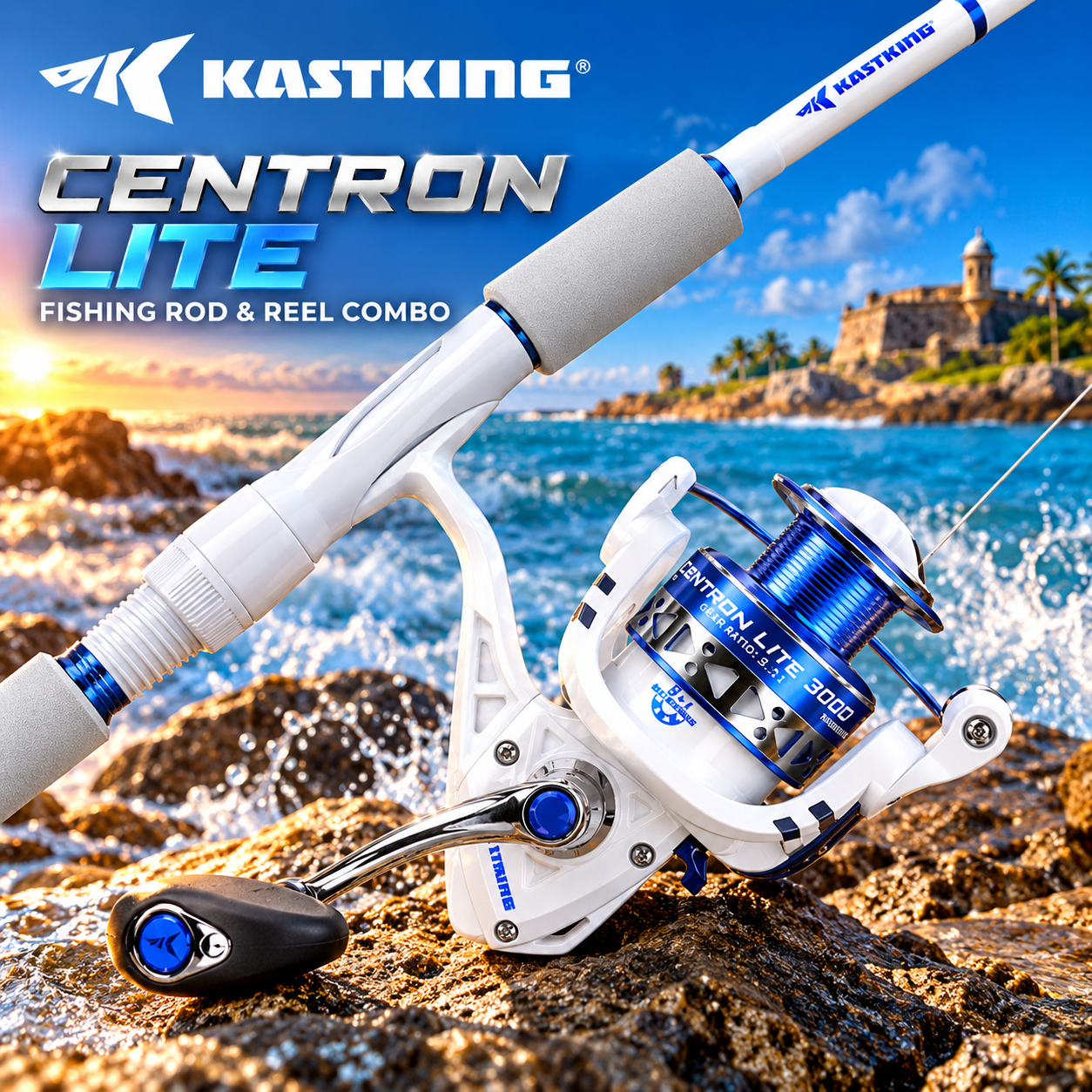
KastKing Centron Lite Combo
A convenient rod-and-reel combination that provides two major pieces of fishing equipment in one package for an organized setup.
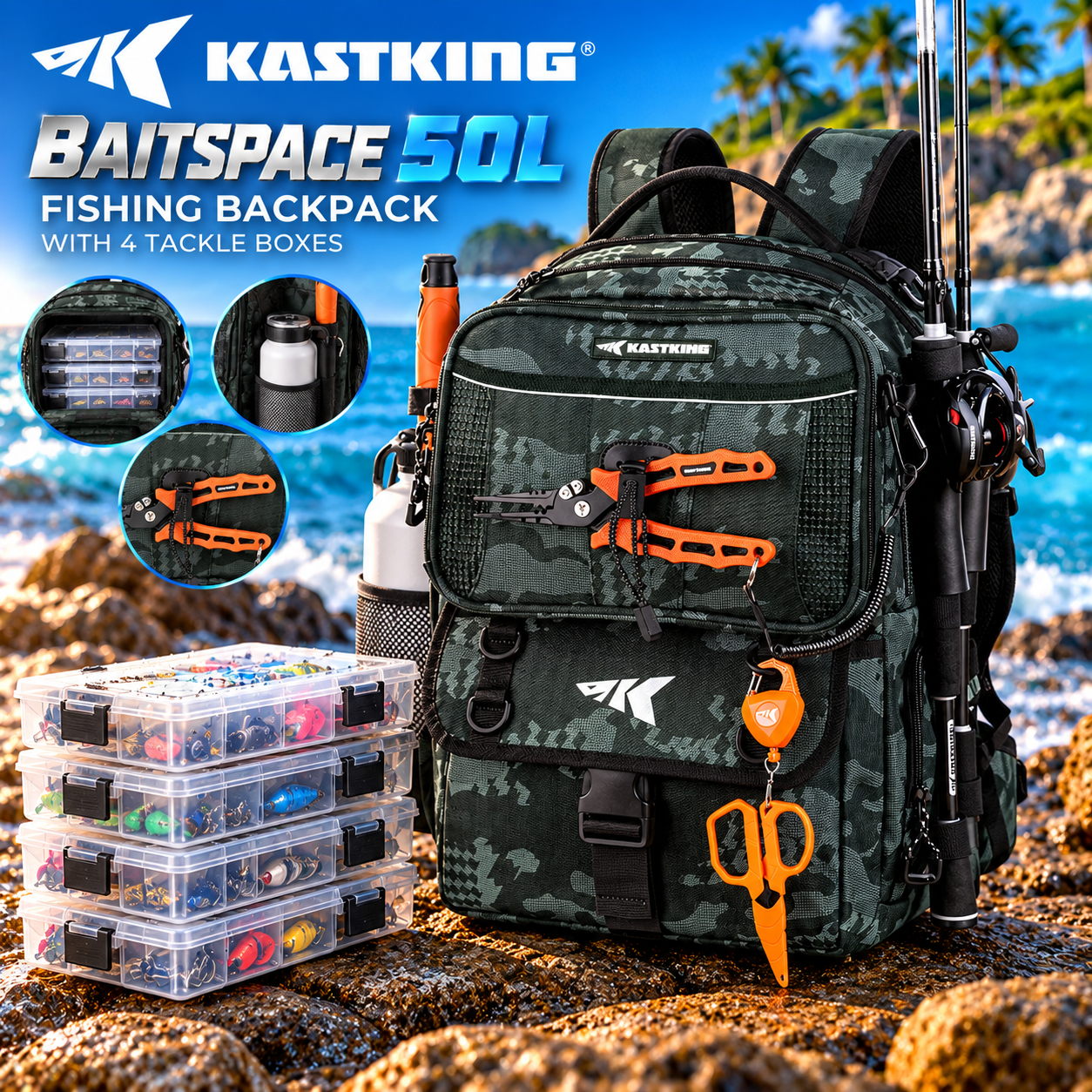
KastKing BaitSpace 50L Backpack
A large fishing backpack with four tackle boxes for keeping lures, terminal tackle, tools, and other fishing equipment organized.
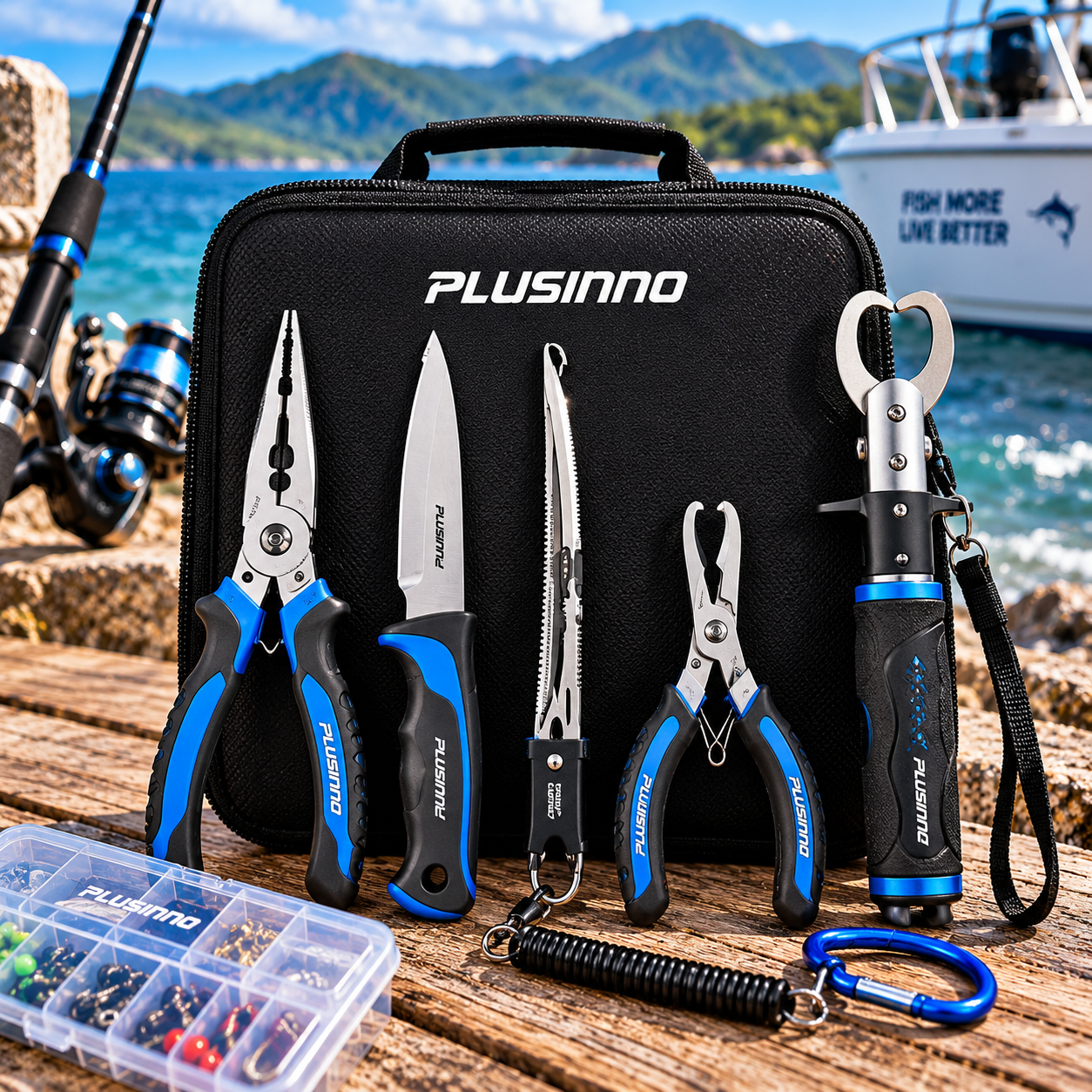
PLUSINNO Fishing Tools Kit
A useful collection of fishing tools for handling hooks, cutting fishing line, working with tackle, and other common fishing tasks.
1. Fishing Rod
The fishing rod is the foundation of your saltwater setup. Rods differ in length, power, action, construction, and intended fishing application.
Surf fishing, pier fishing, inshore fishing, and offshore fishing can require very different rods. The right choice depends on where you plan to fish, the lure or bait you will use, and the size of the fish you expect to encounter.
For a deeper explanation, read our How to Choose a Fishing Rod guide.
2. Fishing Reel
Your reel should be appropriately matched to the rod, fishing line, target species, and fishing technique.
Line capacity, drag capability, reel size, construction, and manufacturer recommendations should all be considered when choosing equipment for a saltwater environment.
Salt and moisture can be demanding on fishing equipment, so check whether the exact reel is intended for the environment where you plan to use it.
3. Rod and Reel Combo
A pre-matched rod-and-reel combo can simplify the buying process because two of the most important pieces of fishing equipment are already paired together.
Do not assume that every fishing combo is specifically designed for saltwater. Check the manufacturer’s specifications for the exact model before deciding whether it fits your intended use.
The exact KastKing Centron Lite variant shown above should therefore be evaluated according to its specifications and intended fishing environment.
4. Fishing Line
Fishing line connects your reel to your lure or terminal tackle and ultimately to the fish.
Monofilament, braided line, and fluorocarbon each have different characteristics. They differ in stretch, diameter, sensitivity, visibility, and handling.
Braided line offers very low stretch and considerable strength relative to its diameter. Monofilament provides more stretch and straightforward handling in many applications.
Learn more in How to Choose Fishing Line and our Braided Line vs. Monofilament comparison.
5. Leader Material
A leader is a separate section of line between your main fishing line and your hook, lure, or terminal tackle.
Leader material can provide different abrasion, visibility, stretch, or handling characteristics from the main line.
Abrasion resistance can be especially useful when fishing around rocks, reefs, shells, pilings, and other rough structure.
The appropriate leader strength depends on the target species, fishing environment, and technique.
6. Fishing Hooks
Hooks come in many sizes and designs because different species, baits, lures, and techniques require different hook characteristics.
Choose hooks that match the bait or presentation you intend to use and the approximate size of the fish you are targeting.
Replace hooks that show significant corrosion, wear, or damage.
7. Sinkers and Weights
Weights can help your bait or rig reach the desired depth, remain near the bottom, or resist current and wave action.
The correct amount and style of weight depends on water depth, current, wind, surf conditions, line, bait, and fishing technique.
Use enough weight to control the presentation without automatically choosing more weight than the situation requires.
8. Swivels, Snaps, and Terminal Tackle
Swivels, snaps, beads, clips, and other terminal tackle components can be useful when building specific saltwater rigs.
Swivels may help manage line twist in appropriate applications, while snaps can make changing certain lures or rigs faster.
Choose terminal tackle with strength appropriate for the rest of your fishing setup.
9. Fishing Lures
Artificial lures allow anglers to imitate prey, movement, or other signals that can attract fish.
Common saltwater lure categories include jigs, soft plastics, spoons, plugs, and topwater lures.
Your lure selection should reflect the target species, water depth, structure, water clarity, current, and fishing technique.
A small selection of useful lures is often easier to organize and learn than carrying large quantities of tackle without a clear purpose.
10. Natural or Prepared Bait
Natural or prepared bait can also be an important part of a saltwater fishing setup.
The appropriate bait varies substantially according to the target species and local fishing environment.
Rules concerning bait collection, possession, transportation, and use can vary by location, so check current regulations before fishing.
11. Fishing Pliers
Fishing pliers are one of the most useful small tools an angler can carry.
Depending on their design, they may help remove hooks, grip tackle components, work with split rings, or cut certain fishing lines.
Because saltwater can accelerate corrosion, follow the manufacturer’s cleaning and maintenance recommendations after use.
12. Line Cutters or Scissors
A dedicated cutting tool makes it easier to trim fishing line when tying knots, replacing leaders, changing lures, or rebuilding rigs.
The appropriate cutter depends partly on the type of fishing line being used. Braided line can require a sharp cutting surface to produce a clean cut.
Keep cutting surfaces clean and in good condition.
13. Hook Removal Tool
A hook-removal tool or appropriate fishing pliers can help keep your hands farther from sharp hooks and the fish’s mouth.
The proper method depends on the species, hook location, and whether the fish will be released.
When practicing catch and release, efficient handling can help reduce unnecessary time that the fish remains out of the water.
14. Tackle Box or Fishing Backpack
Hooks, sinkers, leaders, lures, tools, spare line, and other small equipment are easier to manage when they have an organized storage system.
A tackle box, tackle bag, or fishing backpack can help keep equipment separated and accessible.
The KastKing BaitSpace 50L Fishing Backpack shown above provides a larger storage approach for anglers who want to carry multiple tackle boxes and additional equipment.
15. Landing Net
A landing net can help control a fish near shore, a pier, or a boat and can reduce the need to lift a fish directly using the fishing line.
Net size and design should match the fish you expect to encounter and the location where you plan to use it.
If catch and release is important, consider how the net material and handling technique interact with the fish.
16. Measuring Equipment
A measuring device can be important when fishing regulations include minimum or maximum size requirements.
Use a measuring method appropriate for the species and follow the measurement rules established by the relevant fishing authority.
Do not rely on visual estimates when compliance depends on an exact legal size.
17. Sun and Weather Protection
Saltwater fishing can involve long periods of exposure to direct sunlight, wind, heat, and rapidly changing weather.
Useful personal items may include sunscreen, a hat, sun-protective clothing, polarized sunglasses, drinking water, and weather-appropriate clothing.
Check current conditions before leaving and be prepared to change plans when conditions become unsafe.
18. Basic Safety Gear
Safety equipment should be selected according to the fishing environment.
Depending on where you fish, useful items may include:
- Personal flotation device when boating or where appropriate
- Basic first-aid supplies
- Drinking water
- Sun protection
- Appropriate footwear
- Weather-appropriate clothing
- Lighting for low-light conditions
- Communication equipment appropriate for the location
Safety needs can be very different when fishing from a beach, rocky shoreline, pier, kayak, or offshore boat.
What Saltwater Fishing Gear Do You Actually Need?
Your first saltwater setup does not need to include every specialized accessory available.
A practical starting setup could include:
- One rod and reel appropriate for the intended fishing style
- Fishing line and leader material
- A selection of hooks and weights
- A few suitable lures or bait rigs
- Fishing pliers and a line cutter
- Organized tackle storage
- Personal safety equipment appropriate for the location
Additional equipment can be added as you learn which species, locations, and fishing techniques you use most often.
Shore Fishing vs. Boat Fishing Gear
The basic categories of fishing equipment remain similar, but the actual gear requirements can change substantially depending on where you fish.
Shore anglers may prioritize casting distance, portable tackle storage, appropriate footwear, and equipment that is easy to carry.
Boat anglers may have access to more storage but can also require additional safety equipment and specialized tackle for deeper water or larger target species.
Choose equipment for the fishing environment rather than assuming one setup will be ideal everywhere.
How Much Saltwater Fishing Gear Should You Carry?
Carry enough equipment to adapt to realistic fishing conditions without bringing so much tackle that organization becomes difficult.
A smaller, carefully selected collection of hooks, leaders, lures, and tools can often be more useful than carrying large amounts of equipment you are unlikely to use.
As you gain experience, your tackle selection can become more specific to the species and techniques that consistently work for you.
Protecting Fishing Gear From Salt and Corrosion
Saltwater can be demanding on rods, reels, hooks, pliers, and other metal fishing equipment.
Follow the manufacturer’s cleaning and maintenance instructions after saltwater exposure. Allow equipment to dry properly before long-term storage.
Inspect hooks, guides, tools, and other components periodically for corrosion, damage, or wear that could affect their performance.
Common Saltwater Fishing Gear Mistakes
- Assuming every rod or reel is designed for saltwater use.
- Choosing a rod, reel, and fishing line that do not work well together.
- Carrying too many lures without understanding when to use them.
- Forgetting leader material or terminal tackle.
- Leaving fishing pliers or line cutters at home.
- Ignoring saltwater maintenance after fishing.
- Using tackle that does not match the target species.
- Ignoring weather and personal safety equipment.
- Failing to check current fishing regulations.
How to Build a Saltwater Fishing Setup
A simple way to organize your equipment is to build the setup outward from your intended fishing style.
- Decide where you plan to fish.
- Identify the species you are likely to target.
- Choose an appropriate rod and reel.
- Select compatible fishing line and leader material.
- Choose hooks, weights, and terminal tackle for the intended rig.
- Add a small selection of appropriate lures or bait equipment.
- Pack fishing pliers, cutters, and hook-removal tools.
- Organize everything in a tackle box, bag, or fishing backpack.
- Add personal and safety equipment appropriate for the location.
- Check current weather and fishing regulations before leaving.
This approach keeps the equipment focused on the fishing you actually plan to do.
Frequently Asked Questions
What gear do I need for saltwater fishing?
A basic setup normally includes a suitable rod and reel, fishing line, leader material, hooks, sinkers, terminal tackle, lures or bait, fishing tools, organized storage, and appropriate personal safety equipment.
Can I use freshwater fishing gear in saltwater?
Do not assume equipment designed for one environment is automatically appropriate for another. Check the manufacturer’s specifications for the exact rod, reel, tools, and other equipment you intend to use.
Do I need a leader for saltwater fishing?
Leaders are common in many saltwater applications because they can provide different abrasion, visibility, and handling characteristics from the main fishing line. Whether you need one depends on your fishing technique and setup.
Do I need fishing pliers?
Fishing pliers are highly useful for tasks such as handling hooks and working with tackle. Some models also include line-cutting or split-ring functions.
Should I use braid or monofilament for saltwater fishing?
Both can be appropriate depending on the fishing technique. Braid provides low stretch and high strength relative to its diameter, while monofilament offers more stretch and different handling characteristics.
How should I store saltwater fishing tackle?
Use tackle boxes, bags, or fishing backpacks that keep small components organized and accessible. Allow equipment to dry properly and follow manufacturer recommendations for cleaning items exposed to saltwater.
What safety gear should I bring?
Safety requirements depend on the fishing location. Sun protection, drinking water, suitable footwear, basic first-aid supplies, and a personal flotation device when appropriate are useful starting considerations.
Final Thoughts
A useful saltwater fishing gear checklist starts with equipment that matches your actual fishing environment. Your rod, reel, line, leader, terminal tackle, tools, and storage should work together rather than being selected independently.
The KastKing Centron Lite combo provides a rod-and-reel option to evaluate for the intended application, the KastKing BaitSpace 50L Fishing Backpack provides organized tackle storage, and the PLUSINNO Fishing Tools Kit covers several common tasks anglers encounter around the water.
Start with the essentials, learn what works for the species and locations you fish, and add specialized equipment as your experience develops.
Prepare for Your Next Fishing Trip
These three products cover different parts of an organized fishing setup and provide useful starting points for comparing your options.
Disclosure: The product links below are paid affiliate links. As an Amazon Associate I earn from qualifying purchases.
KastKing Centron Lite Combo
A convenient rod-and-reel combination that provides two major pieces of fishing equipment in one package for an organized setup.
KastKing BaitSpace 50L Backpack
A large fishing backpack with four tackle boxes for keeping lures, terminal tackle, tools, and other fishing equipment organized.
PLUSINNO Fishing Tools Kit
A useful collection of fishing tools for handling hooks, cutting fishing line, working with tackle, and other common fishing tasks.
Learn How to Choose a Fishing Rod, read How to Choose Fishing Line, compare Braided Line vs. Monofilament, or use the PickRightGear Gear Advisor to narrow down the gear that fits your fishing needs.
Continue Learning
Explore Fishing guides, learn How to Choose a Fishing Rod, read How to Choose Fishing Line, compare Braided Line vs. Monofilament, or use the PickRightGear Gear Advisor.
Affiliate Disclosure: As an Amazon Associate I earn from qualifying purchases.