

Shore fishing is one of the easiest ways to get on the water without needing a boat. Beaches, piers, jetties, rocky shorelines, and coastal access points can all provide productive fishing opportunities, but having the right equipment can make the experience much easier.
The best fishing gear for shore fishing should help you cast effectively, manage your tackle, handle fish safely, and protect your equipment from sand, rocks, and saltwater. You do not need to carry everything in the tackle shop. A practical setup built around a capable rod and reel, dependable line, terminal tackle, essential tools, and organized storage is usually a better place to start.
What Fishing Gear Do You Need for Shore Fishing?
Shore anglers often need equipment that can cover water beyond the immediate shoreline while remaining manageable enough to carry between fishing spots. The exact setup depends on whether you are fishing from a beach, pier, jetty, inlet, or rocky coast.
A versatile shore fishing kit usually starts with the following essentials:
- Spinning rod and reel
- Main fishing line
- Leader material
- Hooks
- Sinkers or weights
- Swivels and snaps
- Lures or natural bait
- Fishing pliers
- Line cutter
- Tackle storage
- Sun protection
- Appropriate safety equipment
Shore Fishing Gear to Consider
The following products can help cover three important parts of a shore fishing setup: casting equipment, tackle organization, and fishing tools.
Disclosure: The product links below are paid affiliate links. As an Amazon Associate I earn from qualifying purchases.
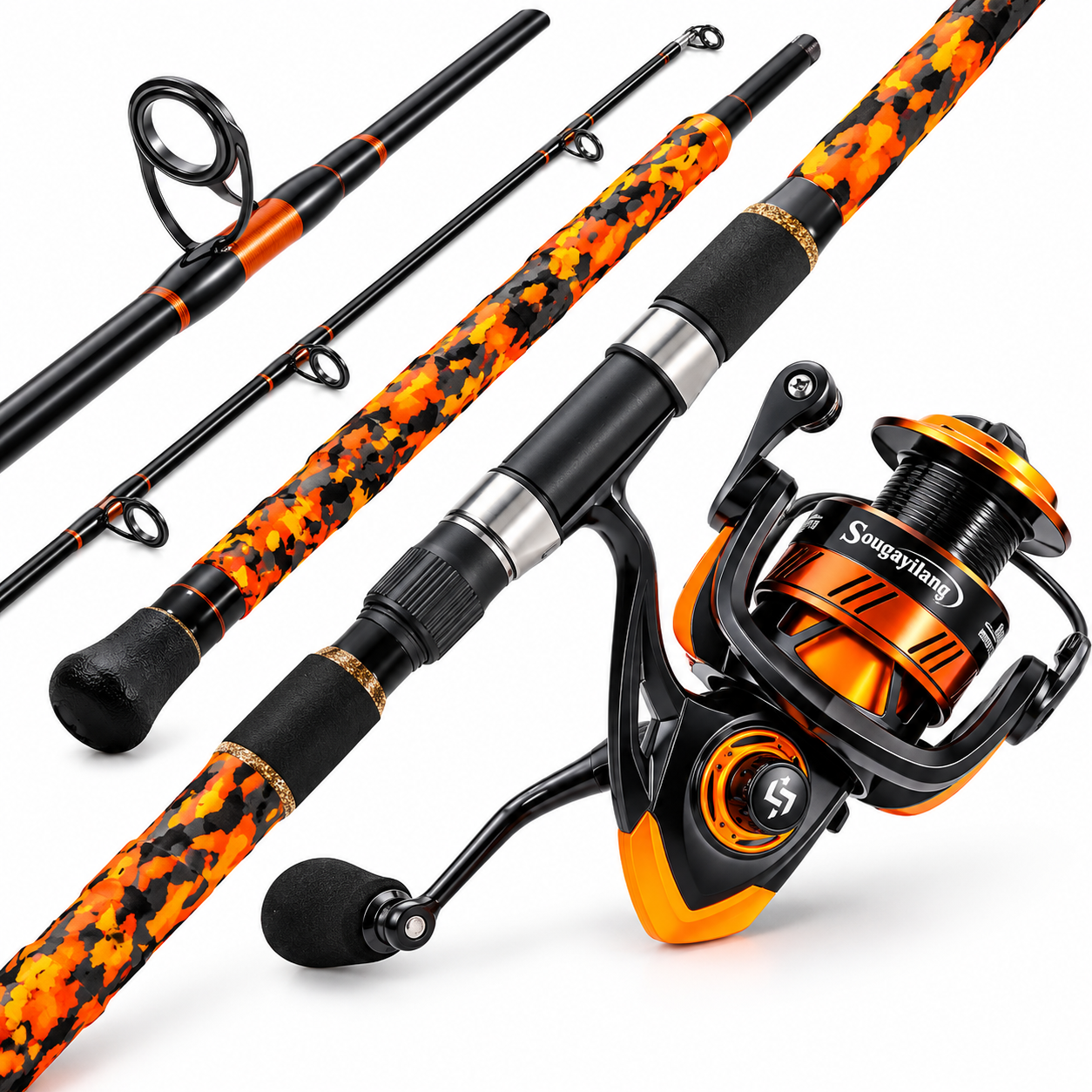
Sougayilang Surf Fishing Combo
A three-piece medium-heavy spinning setup designed for surf fishing, portability, and longer casts from the shoreline.
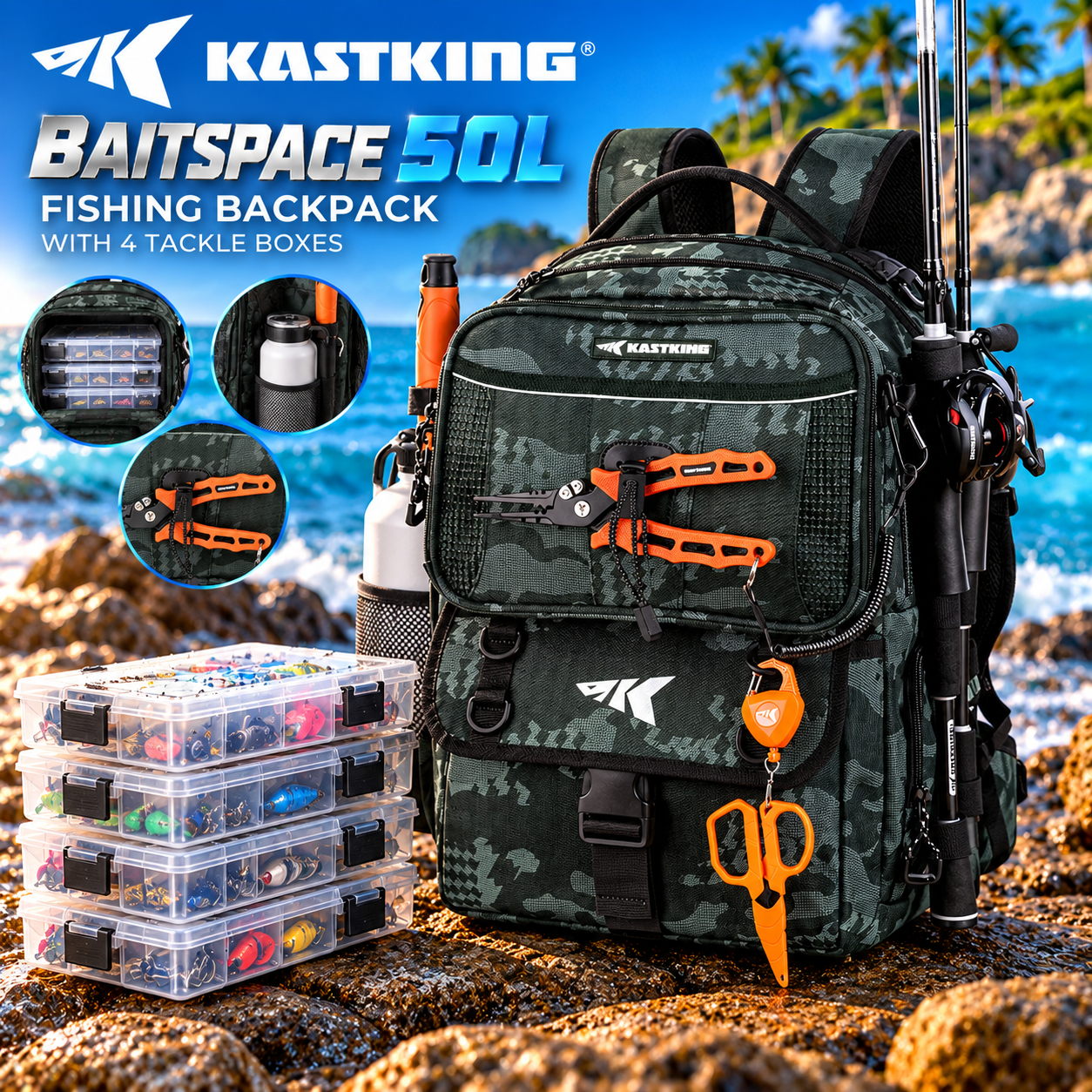
KastKing BaitSpace 50L Backpack
A large fishing backpack with four tackle boxes for carrying lures, terminal tackle, tools, and other shore fishing equipment.
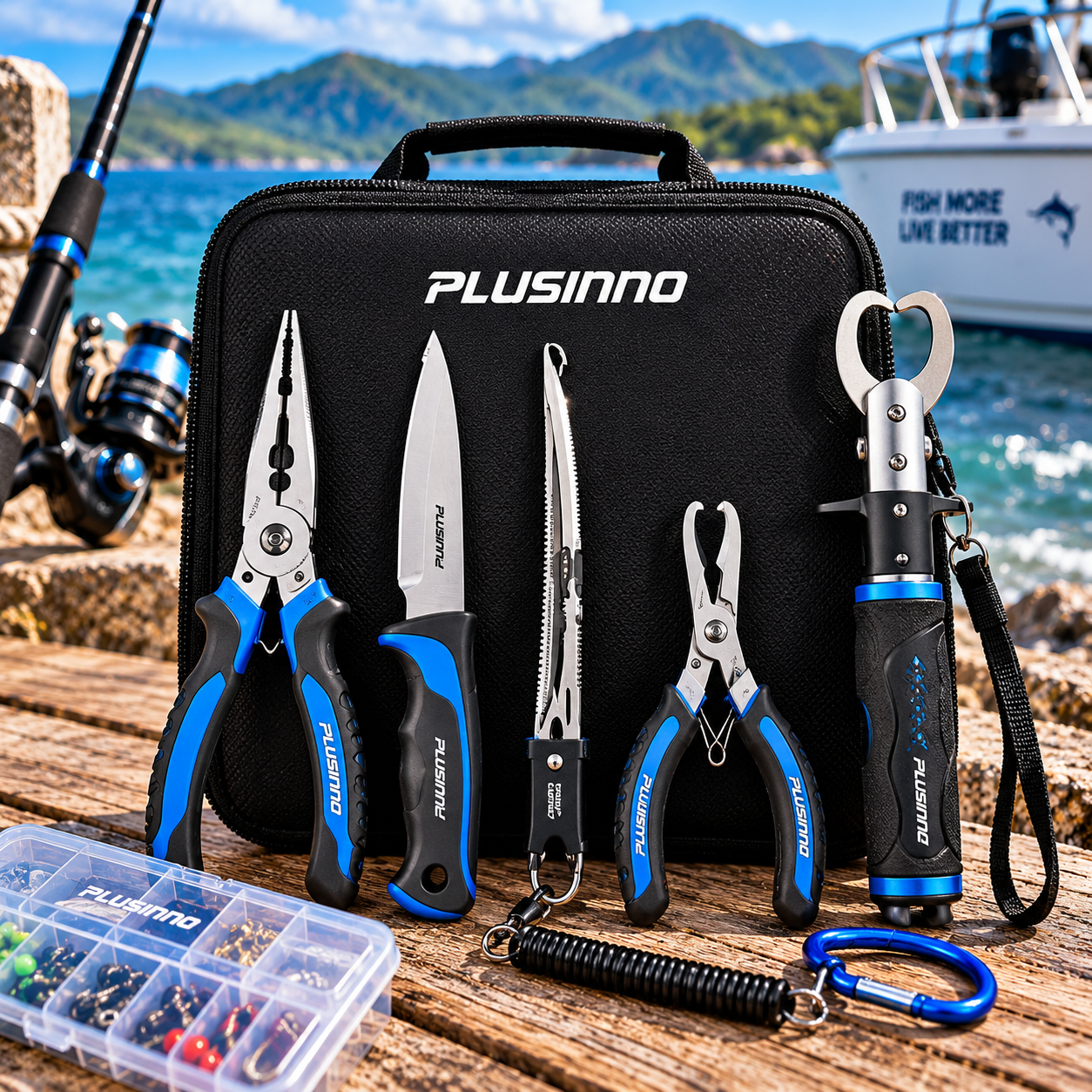
PLUSINNO Fishing Tools Kit
A useful collection of fishing tools for cutting line, handling hooks, working with tackle, and performing common fishing tasks.
1. Choose a Rod Designed for Shore Fishing
The fishing rod is the foundation of a shore fishing setup. Unlike fishing from a boat, shore anglers may need to cast beyond breaking waves, shallow water, rocks, or other nearshore structure to reach productive areas.
Longer rods can provide additional casting leverage and help keep fishing line above waves and shoreline obstacles. The ideal length depends on where you fish. Open beaches may benefit from a longer surf-style rod, while piers and protected shoreline locations may be easier to fish with a somewhat shorter setup.
2. Medium-Heavy Power Is a Versatile Starting Point
Rod power describes how much force is required to bend the rod. For many shore fishing situations, medium-heavy power provides a useful balance between casting common rigs and maintaining enough backbone to control fish.
A heavier setup is not automatically better. Your rod should still match the weight of the sinkers, lures, rigs, and species you plan to target.
3. Consider a Surf Fishing Rod and Reel Combo
A rod-and-reel combination can simplify the process of building a shore fishing setup because it gives you two major pieces of equipment in one package.
The Sougayilang 3 Piece Surf Fishing Rod Combo featured above is offered as a travel-oriented spinning combination. According to the supplied product information, the line includes 9- to 12-foot options, high-modulus carbon-fiber construction, medium-heavy power, fast action, stainless-steel-base guides with ceramic rings, and a spinning reel with a 5.5:1 gear ratio.
Because rod length and specifications can vary by option, check the exact Amazon variant before purchasing to make sure it matches your intended fishing location and technique.
4. Match the Reel to Your Rod
A spinning reel is a popular choice for shore fishing because it is relatively straightforward to operate and works with many common shore-fishing techniques.
The reel should balance comfortably with the rod and provide enough line capacity for the fishing situation. Larger beaches and surf environments can require more line capacity than fishing from a small pier or protected shoreline.
5. Choose Fishing Line for the Conditions
Fishing line selection affects casting, sensitivity, abrasion resistance, and how much line fits on your reel.
Braided line is popular among many shore anglers because its relatively thin diameter can provide useful line capacity and sensitivity. Monofilament remains a practical option because it is simple to use, provides stretch, and is widely available.
Whichever type you choose, match the line strength to your rod, reel, target species, and fishing environment.
6. Use Leader Material When Needed
A leader connects the main fishing line to the lure, hook, or terminal rig. It can provide additional abrasion resistance around rocks, shells, structure, and rough fish mouths.
Leader selection depends on water clarity, target species, structure, and the type of rig being used. Fluorocarbon and monofilament are both commonly used as leader materials.
7. Carry Several Hook Sizes
There is no single hook size that works for every shore fishing situation. Hook choice should match the bait and the approximate size of the fish you expect to encounter.
Instead of carrying a large collection, beginners can start with several practical sizes that cover their most common bait presentations.
8. Sinkers Help Keep Your Rig in Position
Waves and current can move a baited rig quickly. Sinkers add weight to the setup and can help keep bait closer to the intended fishing area.
The amount of weight required depends on current, surf conditions, casting distance, rig design, and the capabilities of your rod.
Always stay within the casting-weight recommendations for your specific rod.
9. Add Swivels and Snaps to Your Tackle
Small terminal-tackle components can make shore fishing setups easier to manage. Swivels may help reduce line twist, while snaps can make certain lure or rig changes faster.
These items take up very little space, so keeping several sizes organized in a tackle box can be useful.
10. Keep Your Lure Selection Simple
You do not need dozens of lure styles to start shore fishing. A small selection covering different depths and presentations is easier to organize and learn.
Depending on the species and location, shore anglers may use jigs, spoons, plugs, soft plastics, or other artificial presentations.
Local conditions and target species should determine which lures deserve space in your tackle box.
11. Natural Bait Can Be Highly Practical From Shore
Natural bait is another common approach for fishing beaches, piers, jetties, and coastal shorelines. The appropriate bait varies considerably by region and target species.
When using natural bait, carry the hooks, weights, and leader material required for the rig you plan to fish.
12. Fishing Pliers Are an Essential Shore Tool
Fishing pliers can assist with hook removal, tackle adjustments, and other common tasks. Saltwater environments can be demanding on metal equipment, so tools intended for fishing environments can be especially useful.
Keep pliers somewhere that can be reached quickly rather than buried underneath other equipment.
13. Always Carry a Reliable Line Cutter
Fishing line should be cut cleanly rather than pulled apart by hand. A dedicated line cutter, fishing scissors, or appropriate cutting tool makes rigging faster and easier.
If you use braided fishing line, make sure your cutting tool can handle braid effectively.
14. Use a Backpack to Organize Shore Fishing Gear
Shore anglers often walk farther than expected. Carrying multiple tackle boxes, tools, water, leader material, and personal items separately can become inconvenient.
A fishing backpack keeps equipment together while leaving your hands available for carrying a rod, cooler, bait container, or other gear.
The KastKing BaitSpace 50L featured above includes four tackle boxes and provides a large storage format for anglers who need to carry multiple categories of equipment.
15. Protect Your Equipment From Sand and Saltwater
Sand and saltwater can be hard on fishing equipment. Avoid placing reels directly in wet sand whenever possible, and do not allow tackle boxes and tools to remain covered in salt residue after a trip.
After fishing around saltwater, follow the manufacturer’s maintenance instructions for your rod, reel, and tools. Appropriate cleaning and drying can help reduce corrosion and keep equipment operating properly.
16. Bring Sun Protection and Drinking Water
Shore fishing can mean spending several hours exposed to direct sunlight, reflected light from the water, wind, and heat.
Sunscreen, sunglasses, protective clothing, a hat, and sufficient drinking water should be considered part of your overall fishing setup rather than optional accessories.
17. Make Safety Equipment Part of Your Setup
Shorelines can include slippery rocks, waves, changing tides, strong currents, sharp structure, and sudden changes in weather.
Wear appropriate footwear and consider a personal flotation device whenever conditions or the fishing location make falling into the water a realistic possibility. Avoid exposed areas during dangerous surf, lightning, or severe weather.
Best Fishing Gear for Beach Fishing
Beach fishing generally places more emphasis on casting distance and managing rigs in waves and current. A longer surf-style spinning rod, suitable reel, appropriate line, leader material, hooks, sinkers, and a manageable tackle selection can form the core of the setup.
A rod holder or sand spike may also be useful when fishing bait from the beach because it keeps the rod supported and helps keep the reel away from the sand.
Best Fishing Gear for Pier Fishing
Pier fishing can require a somewhat different setup because extremely long casts may not always be necessary. Anglers can often fish vertically near structure or cast outward from the pier.
Pliers, leader material, terminal tackle, and an organized tackle bag remain important. Depending on the height of the pier and the size of the fish, specialized fish-landing equipment may also be appropriate.
Best Fishing Gear for Jetty and Rocky Shore Fishing
Rocks and jetties can provide access to deeper water but also create additional abrasion and safety concerns.
Leader material and durable terminal tackle become especially important around sharp structure. Footwear with appropriate traction should also be treated as essential equipment.
Never prioritize reaching a fishing spot over personal safety when waves, tides, or slippery surfaces create hazardous conditions.
How Much Gear Should You Carry From Shore?
Carry enough equipment to handle common situations without turning every fishing trip into a major transport project.
A simple shore fishing loadout might include:
- One rod and reel combination
- One spool of leader material
- A compact selection of hooks
- Several appropriate sinkers
- Swivels and snaps
- A few proven lures
- Fishing pliers
- A line cutter
- One or more organized tackle boxes
- Water and sun protection
Once you gain experience at a particular location, you can add equipment that solves specific problems rather than carrying unnecessary gear.
Common Shore Fishing Gear Mistakes
One common mistake is choosing equipment based entirely on maximum size or power. A very long or heavy rod may be unnecessary for protected shorelines, while equipment that is too light may struggle with heavier surf rigs.
Other common mistakes include carrying too many lures, ignoring leader material, using dull or corroded hooks, failing to organize terminal tackle, placing reels directly in sand, and neglecting basic safety equipment.
Building a balanced setup around the actual conditions you fish is more useful than simply buying more gear.
How to Build a Shore Fishing Setup
Start with the rod and reel because they determine many of the choices that follow. Select fishing line that matches the reel and intended fishing conditions, then add leader material and terminal tackle.
Choose a small collection of hooks, sinkers, and lures based on your target species and location. Add fishing pliers and a reliable line cutter, then organize everything in tackle boxes or a fishing backpack.
Finally, include the personal equipment required for the environment, including drinking water, sun protection, suitable footwear, and any necessary safety gear.
Frequently Asked Questions
What type of rod is best for shore fishing?
There is no single rod that is best for every shoreline. Surf beaches often benefit from longer rods that help with casting distance, while piers and protected shorelines may not require the same length. Rod power, action, lure-weight rating, and target species should also influence your choice.
Is a medium-heavy rod good for shore fishing?
Medium-heavy power can be a versatile option for many shore-fishing applications because it can handle a range of common rigs and provide useful backbone. However, the correct power depends on the weight you plan to cast and the fish you intend to target.
Is a spinning reel good for shore fishing?
Yes. Spinning reels are commonly used for shore fishing and can work with bait rigs, lures, and many different fishing techniques. Choose a reel size that balances with your rod and provides appropriate line capacity.
Do I need a long rod for shore fishing?
Not always. Longer rods can be useful on open beaches when casting distance and line control are important, but shorter setups may be easier to manage from piers, protected shorelines, and locations where long casts are unnecessary.
What should I carry in a shore fishing backpack?
Useful items include terminal tackle, leader material, lures, fishing pliers, line cutters, spare tackle, sun protection, drinking water, and other equipment appropriate for your fishing location.
Should I rinse fishing gear after shore fishing?
Saltwater and salt residue can contribute to corrosion. Follow the cleaning and maintenance instructions provided by the manufacturer of your rod, reel, and fishing tools after saltwater use.
Final Thoughts
The best fishing gear for shore fishing is not necessarily the largest or most expensive equipment. A well-matched rod and reel, appropriate fishing line, dependable terminal tackle, essential tools, and organized storage can cover a wide range of shoreline fishing situations.
Start with equipment that matches where and how you actually fish. As you gain experience with beaches, piers, jetties, and other shorelines, you can refine your setup around the species, conditions, and techniques that work best for you.
Build Your Shore Fishing Kit
These three products cover several of the major equipment categories discussed in this guide: a surf-oriented rod and reel combination, organized tackle storage, and frequently used fishing tools.
Disclosure: The product links below are paid affiliate links. As an Amazon Associate I earn from qualifying purchases.
Sougayilang Surf Fishing Combo
A three-piece medium-heavy spinning setup designed for surf fishing, portability, and longer casts from the shoreline.
KastKing BaitSpace 50L Backpack
A large fishing backpack with four tackle boxes for carrying lures, terminal tackle, tools, and other shore fishing equipment.
PLUSINNO Fishing Tools Kit
A useful collection of fishing tools for cutting line, handling hooks, working with tackle, and performing common fishing tasks.
Start with the Saltwater Fishing Gear Checklist, explore the Best Saltwater Fishing Gear for Beginners, learn How to Choose a Fishing Rod, or use the PickRightGear Gear Advisor to narrow down the equipment that fits your fishing needs.
Continue Learning
Explore Fishing guides, read the Saltwater Fishing Gear Checklist, see the Best Saltwater Fishing Gear for Beginners, compare Braided Line vs. Monofilament, or use the PickRightGear Gear Advisor.
Affiliate Disclosure: As an Amazon Associate I earn from qualifying purchases.