

Generator wattage is one of the most important numbers to understand when choosing portable power. A generator may look large enough for the job, but its actual electrical capacity determines which appliances, tools and devices it can operate.
Understanding running watts, starting watts and total electrical load makes it much easier to compare generators and avoid choosing a unit that is either too small or unnecessarily large.
What Does Generator Wattage Mean?
Watts measure electrical power. When a portable generator is rated for a certain number of watts, that rating describes how much electrical load the generator is designed to support.
The important detail is that generators commonly have two wattage ratings rather than one: running watts and starting watts.
Running Watts Explained
Running watts, sometimes called rated watts, describe the amount of power a generator can provide continuously during normal operation.
For example, if several devices operating at the same time require a combined 2,000 running watts, the generator needs enough continuous capacity to support that load.
Running wattage is the number you should primarily use when calculating the combined electrical demand of equipment that will operate simultaneously.
Starting Watts Explained
Some electrical equipment requires a brief surge of additional power when it starts. This is especially common with equipment that contains motors or compressors.
Examples can include refrigerators, freezers, pumps, air conditioners and certain power tools.
The generator must have enough temporary starting capacity to handle that surge without being overloaded.
Two Generator Sizes to Compare
Looking at generators from different power classes helps illustrate why wattage should be matched to the intended load rather than simply choosing the largest generator available.

Generac GP2500i Portable Inverter Generator
A compact inverter generator suited to lighter portable-power requirements where portability and efficient power delivery may be more important than supporting a large collection of heavy electrical loads.
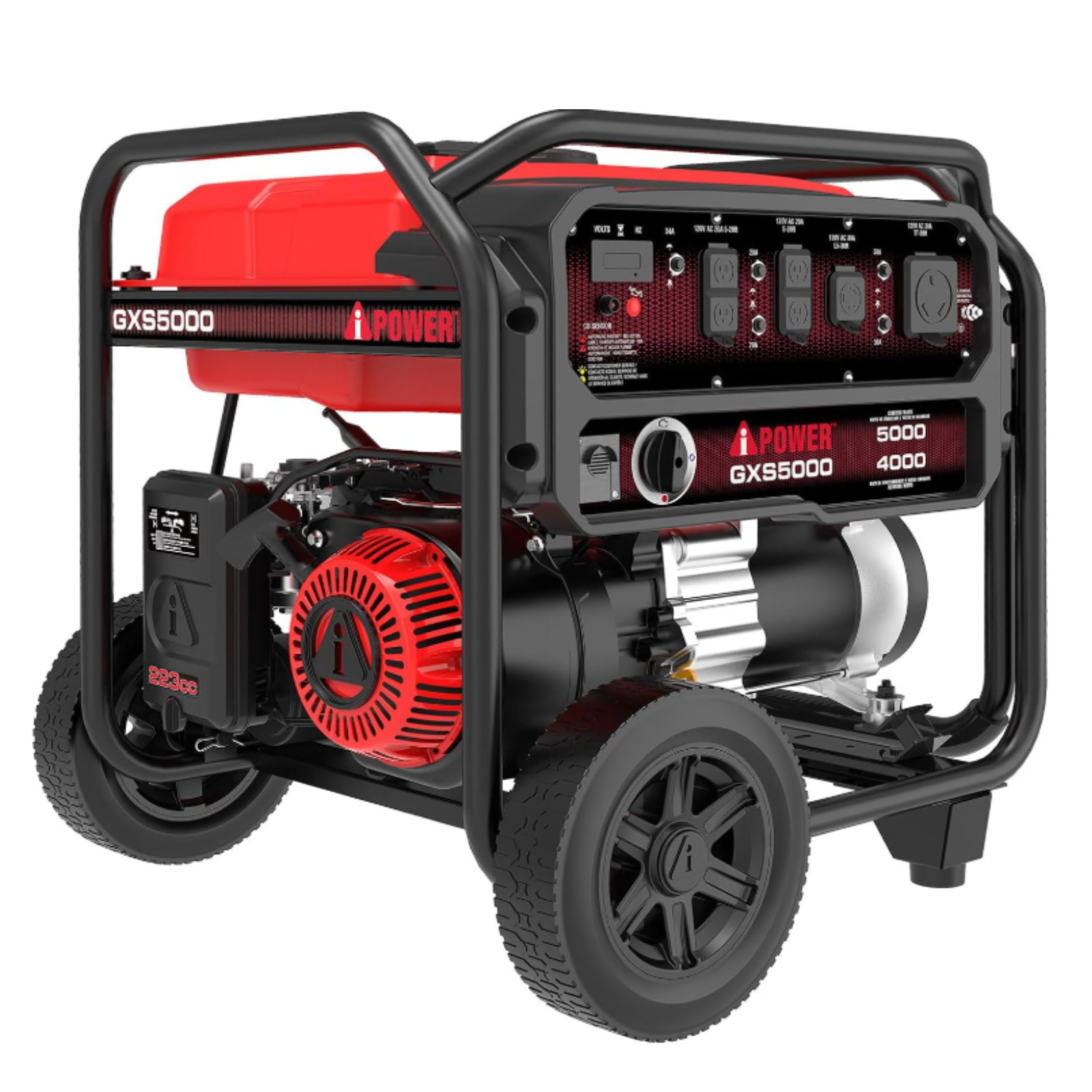
A-iPower 5000-Watt Portable Generator
A higher-capacity portable generator designed for users who need more available power for combinations of appliances, tools or other equipment during backup and portable-power applications.
As an Amazon Associate, PickRightGear may earn from qualifying purchases.
Why Starting Watts Matter
A common generator-sizing mistake is adding only the running wattage of the equipment you plan to use.
Imagine that your generator is already supporting several devices when a refrigerator compressor starts. For a brief period, the refrigerator can require more power than it needs during normal operation.
If the generator does not have enough additional capacity for that starting surge, the generator may become overloaded.
Which Equipment Can Have Starting Surge?
Equipment with electric motors or compressors is particularly important when calculating generator requirements.
- Refrigerators and freezers.
- Air conditioners.
- Water and sump pumps.
- Air compressors.
- Power saws and other motor-driven tools.
- Some household appliances.
Not every electrical device requires a large starting surge. Electronics and many resistive loads may have much smaller differences between startup and normal operation.
How to Calculate the Generator Wattage You Need
Start by making a list of everything you realistically expect to operate from the generator at the same time.
Step 1: Find the Running Watts
Record the running wattage for each appliance, tool or device. Look at manufacturer labels, manuals or official specifications whenever possible.
Step 2: Add the Running Watts
Add together the running wattage of all equipment you expect to operate simultaneously.
For example, if your selected loads total 2,500 running watts, your generator needs more than 2,500 watts of continuous output.
Step 3: Identify the Largest Starting Requirement
Determine which motor-driven appliance or tool has the largest additional starting requirement.
You generally do not need to assume that every motor will start at exactly the same instant. Instead, plan around the largest realistic surge while the other expected loads are already operating.
Step 4: Add Reasonable Headroom
Avoid planning a system that requires the generator to operate continuously at its maximum capacity.
Leaving additional capacity provides flexibility when loads change and reduces the chance of accidentally exceeding the generator’s rating.
A Simple Wattage Example
Suppose your essential equipment requires approximately 2,400 running watts in total.
One appliance also requires an additional 800 watts temporarily when its motor starts.
A practical calculation would be:
You would then compare that requirement against both the running and starting ratings of the generators you are considering.
Why Generator Names Can Be Confusing
A model name containing a wattage number does not always tell the entire story. The number emphasized in a product name may refer to peak or starting capacity rather than continuous running output.
For that reason, always check both specifications before comparing two generators.
Two generators advertised with similar headline wattage can have different continuous power capabilities.
How Much Wattage Is Enough?
There is no single generator wattage that is correct for everyone. The right capacity depends on what you intend to power.
Light Portable Power
Smaller generators can be useful for charging devices, operating lights and supporting a limited selection of equipment where overall electrical demand is relatively low.
Essential Home Backup
A larger generator may be appropriate when you need to operate several important household loads during an outage.
The exact requirement depends on the equipment selected rather than the size of the house itself.
Jobsites and Power Tools
Power tools can create significant starting loads. When choosing a jobsite generator, consider which tools might operate simultaneously and which one produces the largest startup demand.
Bigger Is Not Always Better
It can be tempting to simply purchase the highest-wattage generator available within your budget, but additional capacity can come with tradeoffs.
Larger conventional generators may be heavier, require more storage space and use more fuel depending on load and design.
The goal is not necessarily to buy the largest generator. It is to choose enough capacity for your expected electrical loads while maintaining useful operating headroom.
Don’t Forget Generator Outlets
Wattage is only part of the compatibility equation. The generator must also provide the appropriate outlets and electrical configuration for the equipment you intend to connect.
Before purchasing, check the generator’s outlet types, voltage capabilities and manufacturer instructions in addition to its wattage ratings.
Can You Run Everything at Once?
Usually, the easiest way to reduce the size of generator required is to manage electrical loads rather than trying to operate every appliance simultaneously.
During an outage, you may be able to alternate higher-demand equipment. For example, one large load can be turned off before another is started.
This type of load management can make more efficient use of available generator capacity.
Generator Wattage Checklist
- List the equipment you actually need to power.
- Find the running watts for each load.
- Add the loads that will operate simultaneously.
- Identify equipment with starting surges.
- Account for the largest realistic startup demand.
- Leave additional capacity for changing loads.
- Confirm outlet and voltage compatibility.
- Compare both running and starting generator ratings.
Portable Generator Examples
Generac GP2500i Portable Inverter Generator
A compact generator example for lighter power requirements where portability can be an important part of the buying decision.
A-iPower 5000-Watt Portable Generator
A larger portable generator example for applications where multiple appliances, tools or other electrical loads require additional available capacity.
As an Amazon Associate, PickRightGear may earn from qualifying purchases.
Start with the equipment you actually need to operate. Calculate its running load, account for starting surges and leave reasonable extra capacity. This gives you a much stronger basis for choosing the right generator size.
Continue Learning About Portable Generators
Generator wattage becomes much easier to understand once you separate continuous power from temporary starting demand. From there, you can compare generator sizes, fuel types and designs based on the equipment you actually need to operate.
Continue exploring the PickRightGear portable generator guides for more practical information about backup and portable power.
PickRightGear participates in the Amazon Associates Program and may earn commissions from qualifying purchases made through affiliate links.