
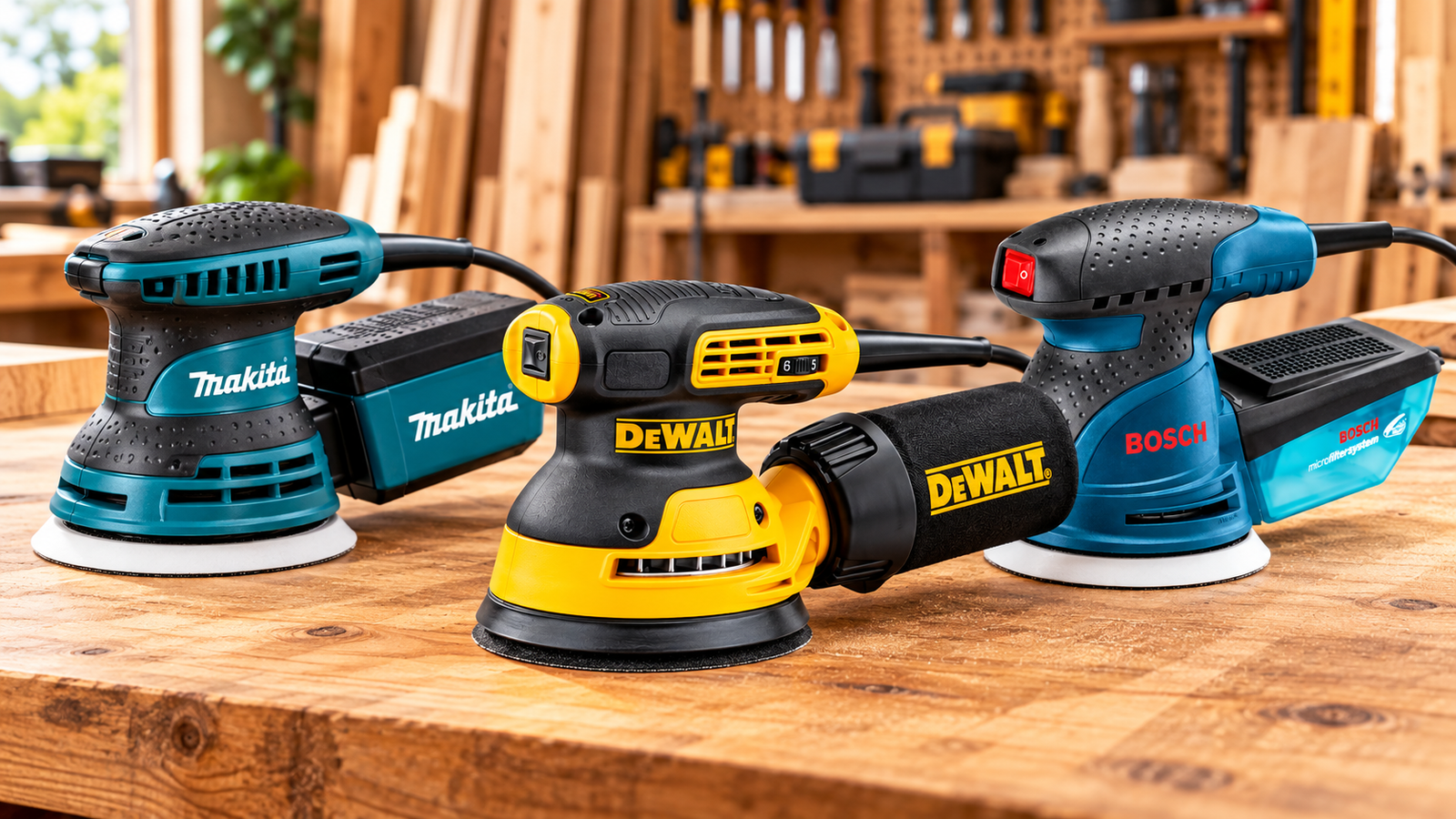
A random orbital sander is one of the most useful finishing tools in a woodworking shop. It can help smooth rough surfaces, prepare wood for finishing, remove previous coatings, and reduce visible sanding marks when used with the correct abrasive and technique.
Choosing the right random orbital sander involves more than comparing brands. Pad size, speed control, ergonomics, dust collection, vibration, abrasive compatibility, and the type of projects you build can all influence which sander fits your workshop.
What Should You Look for in a Random Orbital Sander?
A useful random orbital sander should match both the material you work with and the amount of sanding you expect to do.
- Pad size
- Variable-speed control
- Comfortable grip
- Manageable vibration
- Dust collection
- Abrasive attachment system
- Power source
- Tool size and weight
Instead of choosing only by power or price, consider how all of these characteristics work together during an actual woodworking project.
Random Orbital Sanders to Consider
Disclosure: The product links below are paid affiliate links. As an Amazon Associate I earn from qualifying purchases.

Makita BO5041K 5″ Random Orbit Sander
A 5-inch random orbital sander option for general woodworking, surface preparation, and common sanding projects.

DEWALT DWE6423 5″ Random Orbit Sander
A variable-speed 5-inch random orbital sander designed for common woodworking and surface-finishing applications.
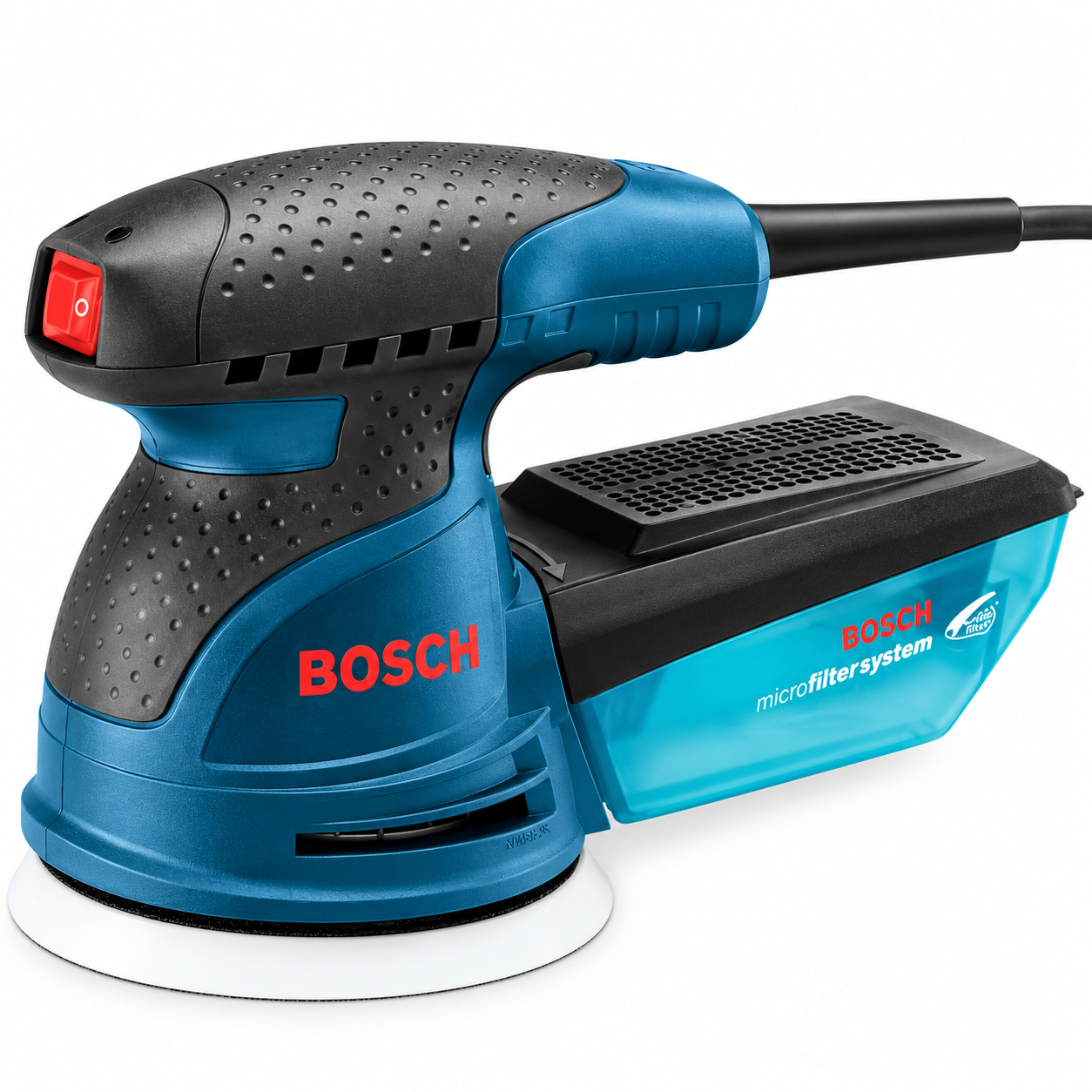
BOSCH ROS20VSC Random Orbital Sander
A variable-speed random orbital sander with a compact palm-style design for woodworking and surface preparation.
1. Understand How a Random Orbital Sander Works
A random orbital sander combines rotation with an orbital movement. This motion helps reduce the repetitive scratch pattern that can occur when an abrasive travels over the surface in only one predictable direction.
The final surface still depends on abrasive grit, sanding technique, pressure, wood species, and how carefully you progress through the sanding process.
2. Choose the Right Pad Size
Five-inch random orbital sanders are widely used for general woodworking because the pad is large enough to cover useful surface area while the tool remains relatively compact.
Larger sanding systems can cover more material, but size alone does not determine which tool is appropriate. Consider the dimensions and shapes of the pieces you normally build.
3. Consider Variable-Speed Control
Variable speed allows the sanding action to be adjusted for different materials, abrasives, and tasks.
Higher speed is not automatically better. Some sanding operations benefit from greater control, particularly when working near edges, dealing with delicate surfaces, or performing finer finishing work.
4. Pay Attention to Ergonomics
Sanding can involve holding a vibrating tool for extended periods, so grip shape and overall comfort matter.
A sander that feels comfortable during a quick test may feel different after a longer sanding session. Consider the grip diameter, control placement, balance, and the way you naturally hold the tool.
5. Vibration Can Affect Comfort
Random orbital sanders naturally create vibration while operating. The way a tool manages that vibration can affect user comfort and control.
Maintaining the sanding pad correctly, using compatible abrasives, and allowing the tool to work without excessive downward pressure can also influence how the sander feels during operation.
6. Dust Collection Is Important
Wood sanding creates fine dust, so dust management should be part of the buying decision rather than an afterthought.
Many random orbital sanders include a dust bag, dust box, filter system, or connection that may be used with compatible dust-extraction equipment. Check the exact model specifications before choosing accessories.
7. Check the Abrasive Attachment System
Many modern random orbital sanders use hook-and-loop sanding discs. This allows worn discs or different grit levels to be changed relatively quickly.
Before buying abrasives, confirm the disc diameter, attachment type, and dust-hole pattern required by your particular sander.
8. Understand Sandpaper Grit
Sandpaper grit affects how aggressively material is removed. Lower grit numbers generally remove material more aggressively, while higher grit numbers create a finer sanding action.
The correct starting and finishing grits depend on the condition of the wood, the finish you plan to apply, and the requirements of the project.
9. Progress Through Grits Gradually
A common sanding approach is to move from a coarser abrasive toward progressively finer grits rather than jumping directly from very coarse to very fine sandpaper.
Each stage helps remove or refine the scratch pattern created by the previous abrasive.
10. Do Not Use Excessive Pressure
Pressing heavily on a random orbital sander does not necessarily make sanding more effective. Excessive pressure can interfere with the tool’s intended movement and may make the sander more difficult to control.
Keep the sanding pad reasonably flat against the workpiece and allow the abrasive and tool movement to perform the work.
11. Corded vs. Cordless Random Orbital Sanders
Corded sanders can be practical for workshop use where electrical power is readily available and sanding sessions may last for extended periods.
Cordless models provide additional mobility but depend on battery capacity and the battery platform being used. Consider where you work and how long your typical sanding sessions last.
12. Think About Dust Extractor Compatibility
A built-in dust container can be convenient, but some workshops use a vacuum or dedicated dust-extraction system for additional dust management.
If you plan to connect the sander to external extraction equipment, verify port dimensions and adapter requirements for the exact tool and extraction system.
13. Match the Sander to Your Projects
Furniture, cabinets, shelves, boxes, tabletops, and other woodworking projects can involve very different sanding requirements.
For broad flat surfaces, a comfortable general-purpose random orbital sander can be especially useful. Tight corners, profiles, and narrow details may require additional hand sanding or another type of sanding tool.
14. A Random Orbital Sander Does Not Replace Every Sander
Random orbital sanders are versatile, but they are not designed for every sanding operation.
Detail sanders, belt sanders, finishing sanders, sanding blocks, and hand sanding can each be more appropriate for particular surfaces or stages of a project.
15. Edge Sanding Requires Control
When working near the edge of a board, keep the tool controlled and avoid allowing too much of the sanding pad to extend beyond the workpiece.
Uneven pressure near an edge can remove material faster than intended and may round an edge that was supposed to remain crisp.
16. Keep the Sanding Pad Flat
Tilting the sander can concentrate the abrasive action on a smaller area. For general surface sanding, keeping the pad reasonably flat helps distribute the sanding action more consistently.
Use a different tool or hand-sanding method when the shape of the workpiece prevents the orbital sander from contacting the surface correctly.
17. Sanding Speed Is Not the Same as Working Faster
Moving the tool rapidly across the surface can leave areas insufficiently sanded. Moving too slowly or applying too much pressure can also create problems.
Use controlled, overlapping passes and inspect the surface between grit changes.
18. Inspect the Surface Before Applying Finish
Sanding scratches and imperfections can become more noticeable after stain or finish is applied.
Remove sanding dust and inspect the workpiece under good lighting before moving to the finishing stage.
19. Consider Replacement Abrasive Availability
A sander is more useful when compatible abrasives are easy to obtain in the grits required for your projects.
Check the sanding-disc size and hole configuration before building a supply of abrasives for a new tool.
20. Think Beyond the Initial Purchase Price
The cost of a random orbital sander is only one part of long-term ownership. Sanding discs, dust-management accessories, replacement pads, adapters, and other consumable or maintenance items can also affect overall cost.
Choose a tool that fits your actual workload rather than automatically buying the least or most expensive option.
Random Orbital Sander vs. Sheet Sander
A random orbital sander uses a round sanding pad and combines rotating and orbital movement. A sheet or finishing sander generally uses a different pad shape and sanding motion.
The random orbital design is especially useful for general surface preparation, while other sander styles can be useful when their pad shape or sanding action better matches the workpiece.
Random Orbital Sander vs. Belt Sander
A belt sander is generally associated with more aggressive material removal, while a random orbital sander is commonly used for surface preparation and progressive finishing.
These tools can complement each other, but they should not automatically be treated as interchangeable.
Common Random Orbital Sander Mistakes
- Using excessive downward pressure
- Starting with an unnecessarily aggressive grit
- Skipping too many grit levels
- Tilting the sanding pad
- Moving across the workpiece too quickly
- Ignoring dust collection
- Using incompatible sanding discs
- Continuing to use worn abrasive discs
- Failing to inspect the surface before finishing
- Ignoring the manufacturer’s operating instructions
How to Choose Your First Random Orbital Sander
Start by considering the size of the projects you normally build and where the tool will be used. For many general woodworking applications, a 5-inch model provides a practical balance between surface coverage and maneuverability.
Next, compare ergonomics, speed adjustment, dust management, abrasive compatibility, power source, and accessory availability.
The best choice is the sander that fits your workflow and remains comfortable and controllable during the sanding tasks you perform most often.
Frequently Asked Questions
Is a 5-inch random orbital sander good for woodworking?
A 5-inch random orbital sander is a practical size for many common woodworking projects, including furniture components, shelves, panels, tabletops, and general surface preparation.
Do I need variable speed on a random orbital sander?
Variable speed is not required for every sanding task, but it provides additional control when working with different materials, abrasives, and stages of surface preparation.
Can a random orbital sander remove paint?
A random orbital sander may be used for some coating-removal and surface-preparation tasks when the abrasive and tool are appropriate for the material. Follow applicable safety precautions and determine what coating is present before sanding it.
Can I use a random orbital sander between finish coats?
Finishing requirements vary by product. Follow the finish manufacturer’s instructions regarding whether sanding is required between coats and which abrasive or technique should be used.
Why does my random orbital sander leave swirl marks?
Visible sanding marks can result from several factors, including worn or contaminated abrasives, excessive pressure, incorrect grit progression, poor sanding technique, or debris trapped between the abrasive and workpiece.
Do I still need to sand by hand?
Yes. Corners, narrow profiles, edges, detailed areas, and some final finishing operations may still require hand sanding even when a random orbital sander is used for the majority of the surface.
Final Thoughts
Choosing a random orbital sander is mainly about matching the tool to your woodworking projects and working style.
A practical sander should be comfortable to control, compatible with readily available abrasives, capable of managing sanding dust effectively, and appropriate for the amount of surface preparation you normally perform.
Once you have the right tool, proper abrasive selection, controlled sanding technique, and gradual grit progression are just as important as the sander itself.
Compare Random Orbital Sanders
These three 5-inch random orbital sanders provide examples of popular configurations for general woodworking and surface preparation.
Disclosure: The product links below are paid affiliate links. As an Amazon Associate I earn from qualifying purchases.
Makita BO5041K 5″ Random Orbit Sander
A 5-inch random orbital sander option for general woodworking, surface preparation, and common sanding projects.
DEWALT DWE6423 5″ Random Orbit Sander
A variable-speed 5-inch random orbital sander designed for common woodworking and surface-finishing applications.
BOSCH ROS20VSC Random Orbital Sander
A variable-speed random orbital sander with a compact palm-style design for woodworking and surface preparation.
Explore the Woodworking Gear Hub, compare Circular Saw vs. Miter Saw, review Essential Woodworking Tools for Beginners, or use the PickRightGear Gear Advisor to narrow down the equipment for your workshop.
Continue Learning
Explore Woodworking guides, review Essential Woodworking Tools for Beginners, compare Circular Saw vs. Miter Saw, or use the PickRightGear Gear Advisor.
Affiliate Disclosure: As an Amazon Associate I earn from qualifying purchases.