
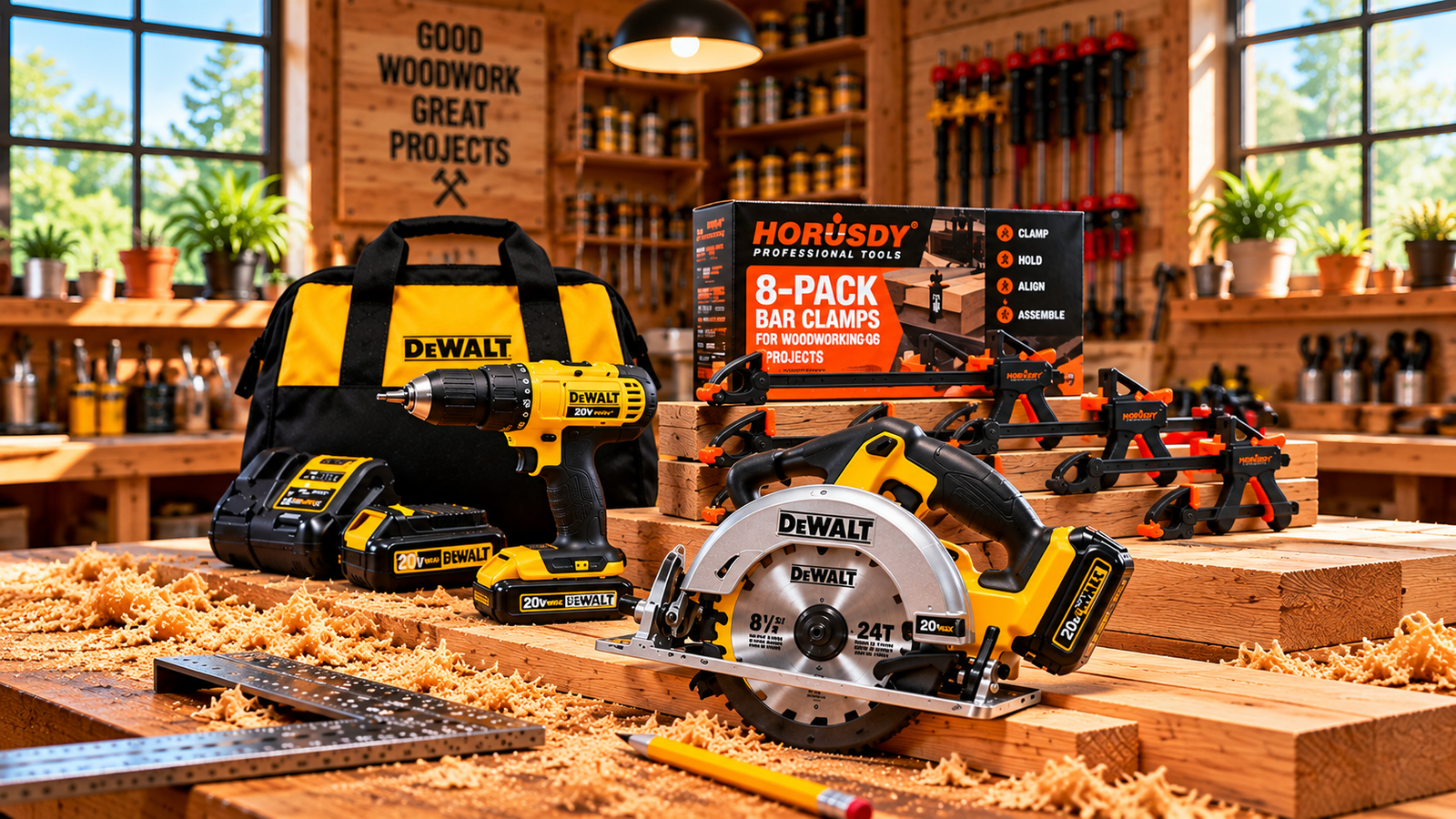
Starting woodworking does not require filling an entire workshop with expensive equipment. A practical beginner setup focuses on a small group of versatile tools that can help you measure, cut, drill, fasten, clamp, sand, and assemble common woodworking projects.
This guide explains the essential woodworking tools for beginners, what each tool is used for, and how to build a useful starter workshop without buying equipment you may not need.
What Woodworking Tools Does a Beginner Need?
A beginner woodworking tool collection should cover several basic workshop tasks: measuring, marking, cutting, drilling, fastening, holding workpieces, shaping, sanding, and finishing.
- Tape measure and measuring tools
- Square and marking tools
- Circular saw or another appropriate cutting tool
- Cordless drill and drill bits
- Woodworking clamps
- Basic hand tools
- Random orbital sander or sanding supplies
- Workbench or stable work surface
- Workshop safety equipment
You can add specialized tools later as your projects become more advanced and you better understand which woodworking techniques you use most often.
Beginner Woodworking Tools to Consider
Disclosure: The product links below are paid affiliate links. As an Amazon Associate I earn from qualifying purchases.

DEWALT 20V MAX Cordless Drill/Driver Kit
A versatile cordless drill and driver kit for drilling holes, driving fasteners, assembling projects, and handling common workshop tasks.
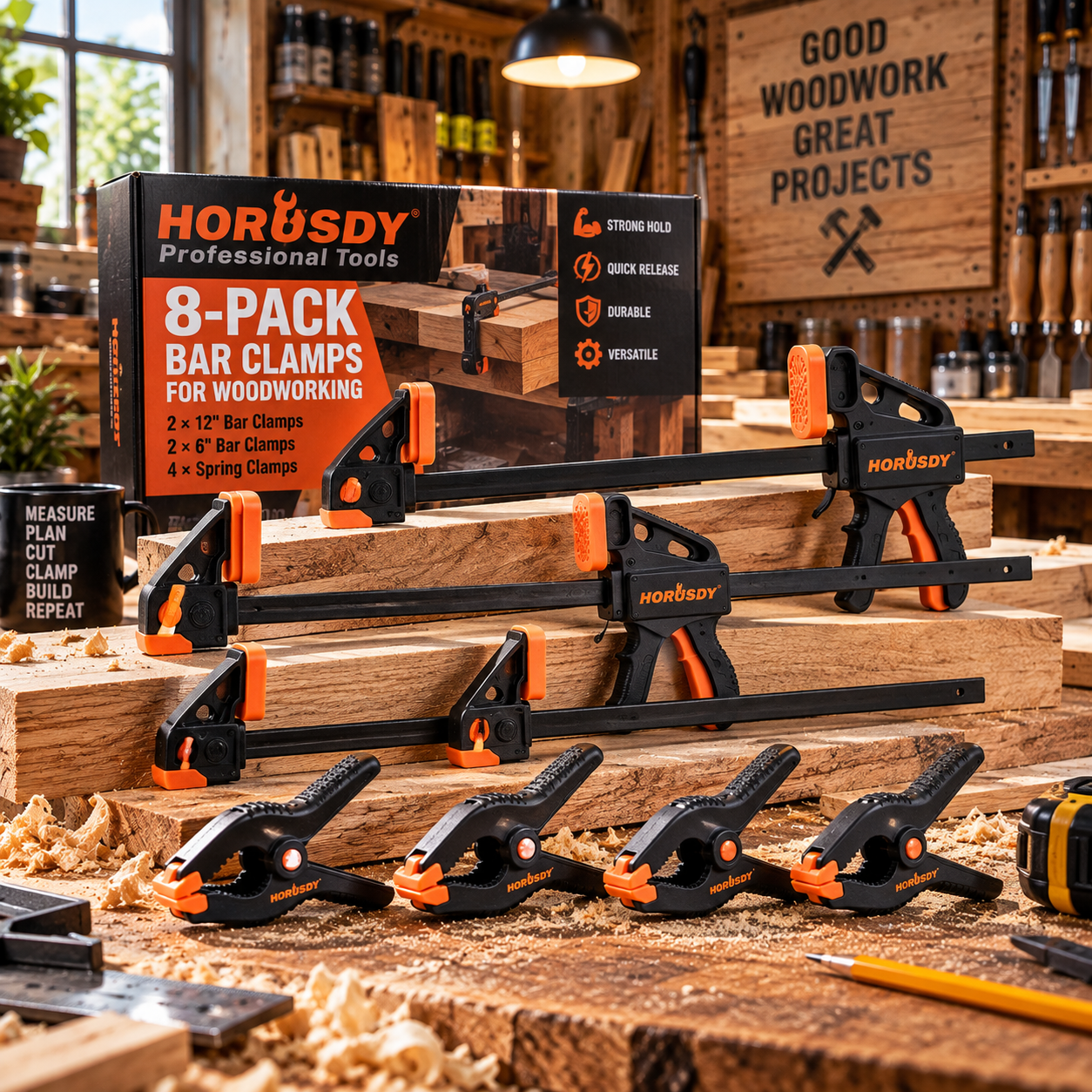
HORUSDY 8-Pack Bar Clamps
A multi-piece clamp set for holding workpieces during assembly, gluing, positioning, and other common woodworking tasks.
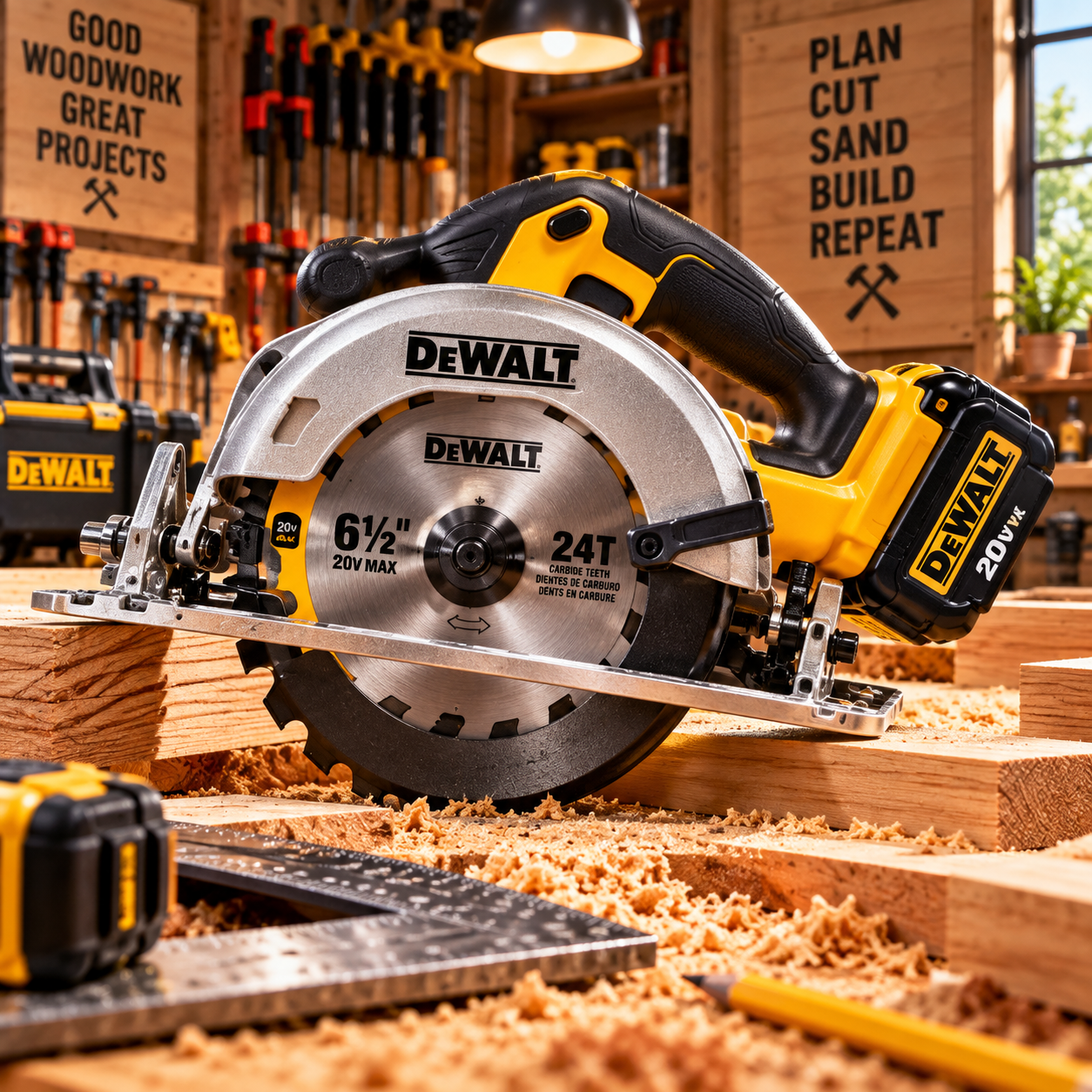
DEWALT 20V MAX Circular Saw DCS391B
A cordless circular saw option for making straight cuts in lumber, plywood, and other suitable woodworking materials.
1. Start With Measuring Tools
Accurate woodworking begins before the first cut. A tape measure is one of the simplest tools in a workshop, but it is also one of the most frequently used.
Choose a tape measure that is easy to read and comfortable to use. For smaller projects, a ruler or combination square can provide more precise measurements and make it easier to transfer dimensions onto a workpiece.
2. Use a Square for Accurate Layout
A square helps check and mark right angles, align components, and verify that assemblies are positioned correctly. Combination squares and speed squares are common options for general workshop use.
Learning to measure and mark accurately can reduce mistakes before material reaches a saw or drill.
3. Add Reliable Marking Tools
A pencil may seem basic, but clear marking is an important part of woodworking. Beginners should be able to identify cut lines, drilling locations, reference edges, and assembly positions before starting work.
Depending on the project, a woodworking pencil, mechanical pencil, marking knife, or other layout tool may be useful.
4. A Circular Saw Is a Versatile Cutting Tool
A circular saw can make straight cuts through many common woodworking materials when it is used with the correct blade and proper technique.
It can be particularly useful for cutting boards and sheet materials when a larger stationary saw is not available. Guides or straightedges can also help improve consistency on longer cuts.
5. Understand Circular Saw Limitations
A circular saw is versatile, but it does not replace every woodworking saw. Different projects may eventually benefit from a miter saw, jigsaw, table saw, hand saw, or other specialized cutting equipment.
Beginners should first learn how to make controlled cuts with the tools they own before expanding into additional saw types.
6. A Cordless Drill Handles Many Workshop Tasks
A cordless drill is useful for drilling holes, driving screws, assembling projects, and performing many routine workshop tasks.
When choosing a drill, consider its size, weight, chuck capacity, battery platform, speed settings, and the type of work you expect to perform.
7. Build a Practical Drill Bit Collection
A drill becomes much more useful when paired with appropriate bits. Beginners can start with a basic selection rather than purchasing a large specialized collection immediately.
Select drill and driver bits according to the material, fasteners, and hole sizes required by your projects. Replace worn or damaged bits rather than forcing them through the material.
8. Woodworking Clamps Are Essential
Clamps act like extra hands in the workshop. They can hold workpieces during assembly, keep components aligned while glue cures, and stabilize material during certain operations.
Different clamp styles are useful for different jobs, but beginners can start with several versatile clamps and expand their collection as project sizes and assembly requirements change.
9. Keep a Basic Set of Hand Tools
Power tools can make many tasks faster, but basic hand tools remain useful in almost every woodworking shop.
- Hammer or mallet
- Screwdrivers
- Utility knife
- Chisels
- Hand saw
- Pliers
- Files or rasps
You do not necessarily need every hand tool immediately. Choose tools according to the projects you intend to build.
10. Consider a Random Orbital Sander
Sanding helps prepare wooden surfaces for finishing and can remove minor surface imperfections. A random orbital sander is commonly used for general surface preparation because it can cover larger areas efficiently.
The appropriate abrasive grit depends on the material, surface condition, and stage of the finishing process.
11. Keep Sandpaper in Several Grits
Even if you use a powered sander, hand sanding remains useful for edges, corners, profiles, and areas that a larger sanding pad cannot reach easily.
Rather than relying on a single grit, keep several options available so you can move through the sanding process appropriately for the project.
12. Use a Stable Work Surface
A dedicated woodworking bench is useful, but beginners do not necessarily need an elaborate permanent workbench immediately.
The important requirement is a stable work surface that supports the material and allows tools and clamps to be used safely. The work surface should match the size and type of projects you plan to build.
13. Think About Workshop Organization
Organizing tools makes it easier to find equipment and can help keep the working area clear. Storage can be as simple as shelves, bins, wall-mounted organizers, cabinets, or a portable toolbox.
Frequently used tools should be easy to access while sharp tools, accessories, batteries, and small components should be stored appropriately when they are not being used.
14. Plan for Sawdust and Cleanup
Cutting and sanding wood can generate substantial dust and debris. Keeping the work area clean is part of maintaining a functional workshop.
Depending on the tools and workspace, cleanup may involve a shop vacuum, compatible dust collection, sweeping, or a combination of methods. Follow the tool manufacturer’s recommendations for dust-control connections and operation.
15. Make Safety Equipment Part of the Workshop
Safety equipment should be considered part of the basic woodworking setup rather than an optional accessory purchased later.
Appropriate eye protection, hearing protection, respiratory protection when required, suitable clothing, and good workshop lighting are important considerations. Always follow the safety instructions provided by the manufacturer of each tool.
16. Learn Each Tool Before Adding More
Buying many tools at once does not automatically create a better workshop. Beginners often benefit more from learning how to use a smaller number of versatile tools correctly.
As you complete projects, you will discover which operations take the most time and which specialized tools could genuinely improve your workflow.
Best Power Tools for Beginner Woodworkers
For many beginners, a cordless drill, a practical cutting tool, and a sander can cover a wide range of common tasks.
The exact combination depends on what you plan to build. Someone making small decorative projects may need different equipment than someone building shelving, outdoor furniture, cabinets, or larger workshop projects.
Best Hand Tools for Beginner Woodworkers
Useful beginner hand tools include measuring and marking equipment, a hammer or mallet, screwdrivers, a utility knife, a basic hand saw, and several chisels.
Quality and suitability matter more than simply owning a large collection. Start with tools you know you will use and expand when a project creates a genuine need.
How Much Should a Beginner Spend on Woodworking Tools?
There is no single budget that fits every beginner. The amount required depends on the projects you want to build, the tools you already own, and whether you choose corded, cordless, hand-powered, or stationary equipment.
A practical approach is to buy tools according to upcoming projects instead of trying to equip an entire workshop immediately.
Corded vs. Cordless Woodworking Tools
Cordless tools provide portability and can be convenient when moving around a workshop or working away from an electrical outlet. Corded tools provide continuous power without requiring battery charging.
Neither system is automatically better for every woodworker. Consider mobility, runtime, available outlets, tool type, battery compatibility, and how frequently the equipment will be used.
Should Beginners Buy Tool Kits?
Tool kits can be convenient when several included tools match your needs, particularly when they share a compatible battery platform.
However, a kit is not automatically a better value if it includes equipment you are unlikely to use. Compare the exact tools, batteries, chargers, accessories, and specifications before purchasing.
Common Beginner Woodworking Tool Mistakes
- Buying too many tools before completing the first projects
- Choosing tools without considering the projects they will be used for
- Ignoring measuring and marking equipment
- Trying to work without enough clamps
- Using the wrong blade, bit, or abrasive for the material
- Working on an unstable surface
- Ignoring dust and workshop cleanup
- Skipping appropriate protective equipment
- Failing to read the manufacturer’s instructions
How to Build Your First Woodworking Tool Kit
Start with measuring and marking equipment because every project depends on accurate layout. Next, choose a cutting tool appropriate for the materials and projects you intend to build.
Add a drill and basic bits for holes and fasteners, then several clamps for assembly. Include sanding supplies and the basic hand tools required by your first projects.
Finally, prepare a stable work surface, organize the tools, and make appropriate safety equipment part of the workshop from the beginning.
Frequently Asked Questions
What woodworking tools should a beginner buy first?
Start with measuring and marking tools, an appropriate saw, a drill, clamps, basic hand tools, sanding supplies, and safety equipment. The exact selection should match the projects you intend to build.
Does a beginner need a table saw?
Not necessarily. A table saw can be useful for many woodworking operations, but beginners can complete numerous projects with other cutting tools. Choose equipment according to the cuts and materials required by your projects.
Is a circular saw useful for beginners?
A circular saw can be a versatile option for making straight cuts in lumber and sheet materials. Beginners should learn proper setup and safe operating techniques and follow the manufacturer’s instructions.
Do I need a cordless drill for woodworking?
A drill is one of the most versatile workshop tools because it can drill holes and drive fasteners. Cordless models add portability, while corded drills may also be appropriate depending on the workspace and intended use.
How many woodworking clamps do I need?
There is no fixed number. The quantity and type of clamps depend on the size and complexity of your projects. A small assortment of versatile clamps is a practical starting point.
Should I buy all my woodworking tools at once?
Usually there is no need to build a complete workshop immediately. Buying tools as projects require them can help you understand what equipment is genuinely useful for the type of woodworking you enjoy.
Final Thoughts
The essential woodworking tools for beginners are the tools that allow you to measure accurately, make controlled cuts, drill and fasten components, hold workpieces securely, prepare surfaces, and work in an organized environment.
A beginner workshop does not need to contain every power tool available. A smaller collection of versatile equipment can support many projects while giving you time to develop your woodworking skills.
As your experience grows, you can add specialized saws, routers, planers, joinery tools, larger workbenches, dust collection, and other equipment according to the work you actually perform.
Build Your Beginner Woodworking Tool Kit
These three products represent useful equipment categories discussed in this guide: drilling and fastening, holding workpieces during assembly, and making straight cuts in common woodworking materials.
Disclosure: The product links below are paid affiliate links. As an Amazon Associate I earn from qualifying purchases.
DEWALT 20V MAX Cordless Drill/Driver Kit
A versatile cordless drill and driver kit for drilling holes, driving fasteners, assembling projects, and handling common workshop tasks.
HORUSDY 8-Pack Bar Clamps
A multi-piece clamp set for holding workpieces during assembly, gluing, positioning, and other common woodworking tasks.
DEWALT 20V MAX Circular Saw DCS391B
A cordless circular saw option for making straight cuts in lumber, plywood, and other suitable woodworking materials.
Start with the Woodworking Gear Hub, learn How to Choose a Cordless Drill, compare Circular Saw vs. Miter Saw, or use the PickRightGear Gear Advisor to narrow down the equipment that fits your projects.
Continue Learning
Explore Woodworking guides, compare Circular Saw vs. Miter Saw, learn How to Choose a Random Orbital Sander, plan a Basic Workshop Setup for Beginners, or use the PickRightGear Gear Advisor.
Affiliate Disclosure: As an Amazon Associate I earn from qualifying purchases.