
Choosing between an inverter generator and a conventional generator depends on how much power you need, where you plan to use it and which characteristics matter most for your application.
Both designs can provide portable electricity, but they approach power generation differently. Inverter generators are often selected for portability, quieter operation and changing loads, while conventional portable generators are commonly available with higher output for backup power, tools and demanding equipment.
What Is an Inverter Generator?
An inverter generator produces electricity through a system that electronically conditions the output before it reaches connected equipment.
Rather than operating exactly like a traditional portable generator under every load condition, many inverter designs can adjust engine speed as electrical demand changes. This can help reduce unnecessary fuel consumption and noise when power demand is relatively low.
Compact inverter generators are especially popular for camping, recreation, selected emergency loads and applications where portability matters.
What Is a Conventional Generator?
A conventional portable generator typically uses an engine connected directly to an alternator to produce AC electricity. These generators are available across a wide range of output levels and are commonly used for home backup, construction, workshops and outdoor projects.
Traditional open-frame designs can provide substantial power for their price, although they are generally larger and louder than compact enclosed inverter generators.
Two Generator Types to Compare
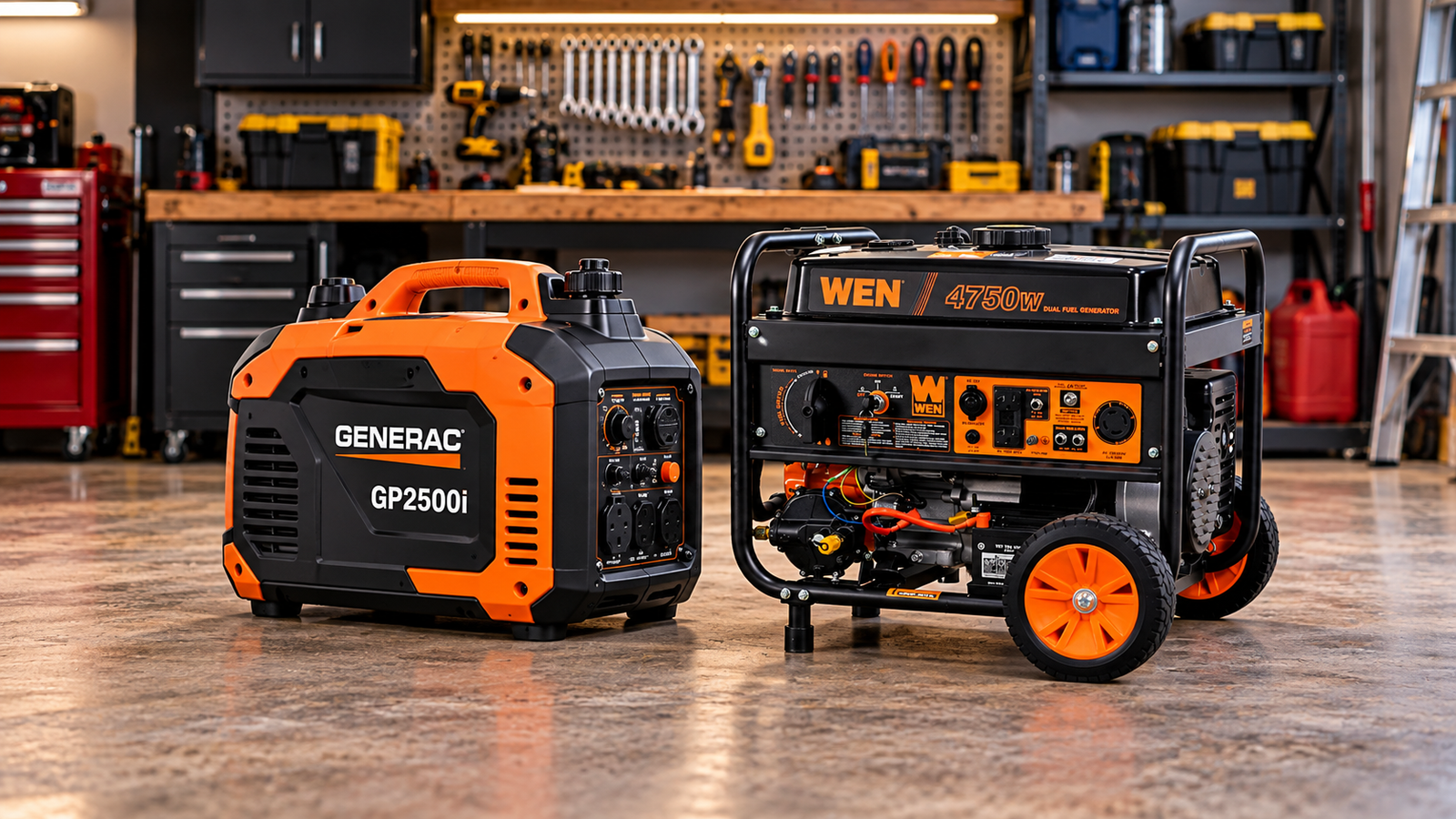
These two products illustrate the practical differences between a compact inverter generator and a higher-output conventional portable generator.

Generac GP2500i Portable Inverter Generator
A compact inverter generator designed for users who prioritize portability and convenient power for recreational, outdoor and selected backup applications.
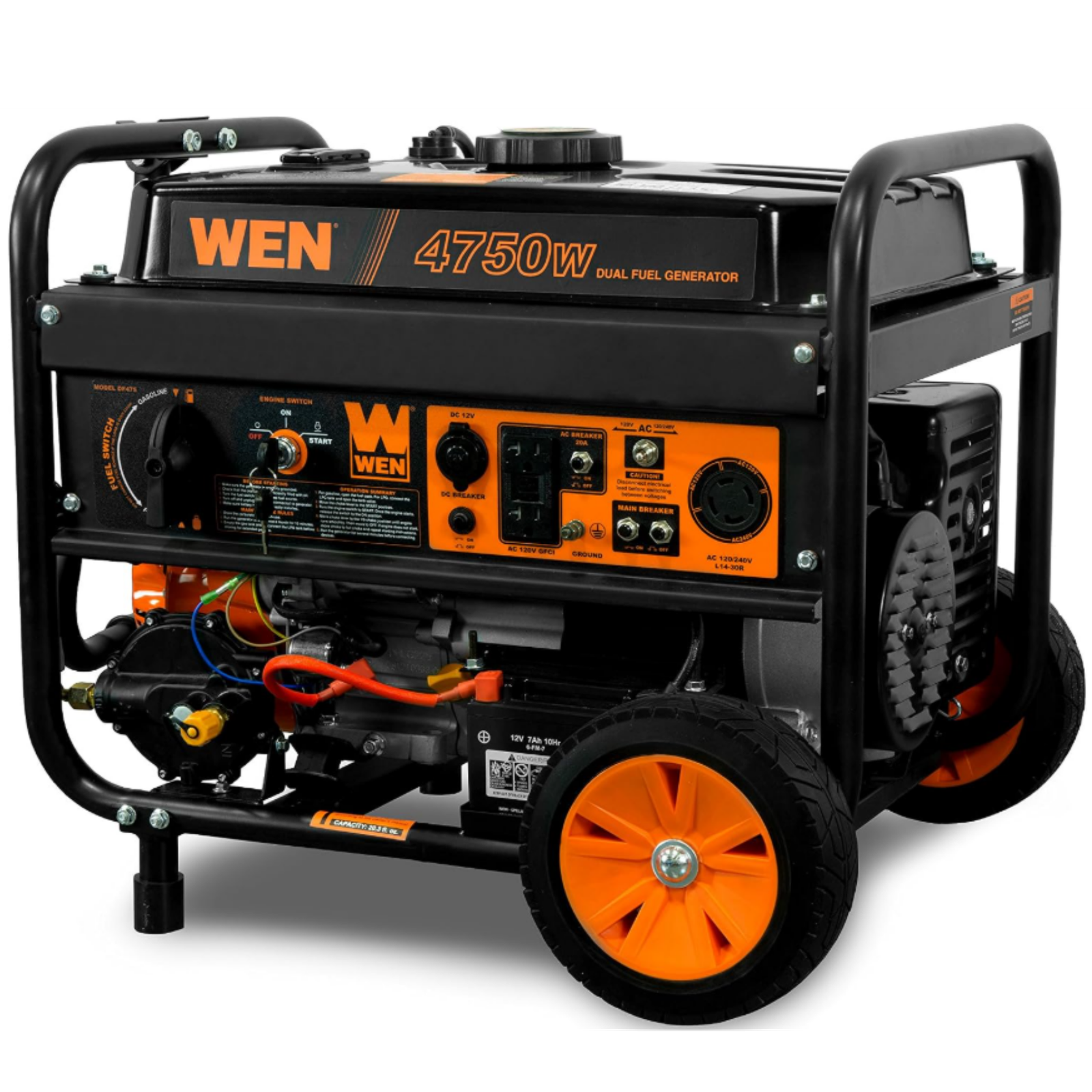
WEN 4750-Watt Dual Fuel Portable Generator
A conventional open-frame generator offering higher output and dual-fuel capability for users comparing home backup, projects and larger portable power requirements.
Disclosure: As an Amazon Associate I earn from qualifying purchases.
Power Output
Power requirements are one of the first considerations when choosing between generator types.
Compact inverter generators are commonly designed around lighter and moderate portable loads. Conventional generators are available in much larger output ranges, making them a common option when several appliances, larger tools or other demanding equipment need to operate.
Generator type alone does not determine capacity. Always compare the running and starting watt ratings of the specific models you are considering.
Noise
Noise can become especially important at campsites, around an RV or anywhere a generator will operate relatively close to people.
Many inverter generators use enclosed housings and variable engine operation to reduce noise, particularly under lighter loads.
Open-frame conventional generators typically expose more of the engine and mechanical components and may operate at a more consistent engine speed, which can make them noticeably louder.
Fuel Efficiency
Electrical demand is rarely constant. At one moment you may be powering several devices, while later the generator may be supporting only a small load.
Many inverter generators can adjust engine speed according to demand, which can improve fuel efficiency during lighter operation.
Fuel consumption for either design still depends on generator size, load, engine design, operating conditions and the fuel being used.
Portability
Compact inverter generators are often designed around portability. Enclosed housings, integrated handles and smaller overall dimensions can make them easier to transport and store.
Higher-output conventional generators tend to be heavier. Models such as the WEN use a wheeled open-frame design that helps with movement while accommodating a larger engine and fuel system.
Gasoline vs. Dual-Fuel Capability
Fuel flexibility is another factor that may matter more than generator architecture itself.
The WEN shown here is a dual-fuel model capable of operating on gasoline or propane. That flexibility can be useful when fuel availability changes during an outage or when users prefer to store propane for backup purposes.
Not every conventional generator is dual fuel, and inverter generators are also available in multi-fuel configurations. Fuel capability should therefore be evaluated model by model.
Which Is Better for Home Backup?
For home backup, the better choice depends primarily on the loads you need to support.
If the goal is to operate a limited group of essentials, a smaller inverter generator may provide enough capacity while remaining easier to transport and store.
If you need substantially more output for multiple appliances, pumps, tools or other larger loads, a higher-output conventional generator may be more practical.
Calculate your power requirements before selecting either type.
Which Is Better for Camping?
Inverter generators are often well suited to camping because compact dimensions, portability and lower operating noise can be valuable in recreational environments.
However, generator use may be restricted by campground rules, including operating hours and noise requirements. Always check the regulations for the location where you plan to use the equipment.
Which Is Better for RV Use?
Both generator types can be used in RV-related applications when properly matched to the RV’s electrical requirements.
An inverter generator can be attractive when portability and noise are priorities. A higher-output generator may be preferable when the RV has more demanding equipment.
Verify voltage, outlet compatibility, starting loads and total electrical demand before connecting a generator to an RV.
Which Is Better for Tools and Jobsites?
Conventional generators remain common on jobsites because higher-output models can support demanding tools and equipment.
An inverter generator can still be useful for lighter work, electronics, battery chargers and smaller tools when its output is sufficient.
The deciding factor should be the combined running and startup requirements of the equipment you expect to operate.
Inverter Generator Advantages
- Often quieter than open-frame conventional designs
- Typically compact and easier to transport
- Can operate efficiently under changing loads
- Well suited to camping and recreational use
- Useful for smaller and moderate portable power requirements
Conventional Generator Advantages
- Available in higher-output configurations
- Common choice for home backup and jobsites
- Can provide strong value when substantial wattage is required
- Many models include wheels and larger fuel tanks
- Dual-fuel and multi-fuel options are widely available
Important Safety Considerations
Regardless of generator type, fuel-burning generators produce carbon monoxide. Never operate a portable generator inside a home, garage or other enclosed or partially enclosed area.
Follow the manufacturer’s instructions for placement, ventilation, weather protection, fueling and electrical connections.
Never connect a portable generator directly to household wiring without appropriate transfer equipment and a properly designed installation. Professional electrical assistance may be required for home backup connections.
Choose an inverter generator when compact size, portability and lower noise are priorities. Consider a conventional generator when your application requires greater output or heavier-duty portable power. In either case, calculate your wattage requirements before buying.
Compare These Generator Options
The Generac and WEN represent two different approaches to portable power. Compare current specifications, wattage, fuel requirements, portability and intended use before deciding which design better matches your needs.
Generac GP2500i Portable Inverter Generator
A compact inverter option for users prioritizing portability, recreational power and selected backup loads.
WEN 4750-Watt Dual Fuel Portable Generator
A higher-output conventional generator with gasoline and propane capability for backup power, projects and other demanding applications.
Disclosure: As an Amazon Associate I earn from qualifying purchases.
Continue Learning About Generators
Next, compare gas vs. dual-fuel generators to understand how fuel availability, storage, runtime and flexibility can affect your generator choice.
PickRightGear may earn commissions from qualifying purchases made through affiliate links. Recommendations are designed to help readers research and compare gear before purchasing.