
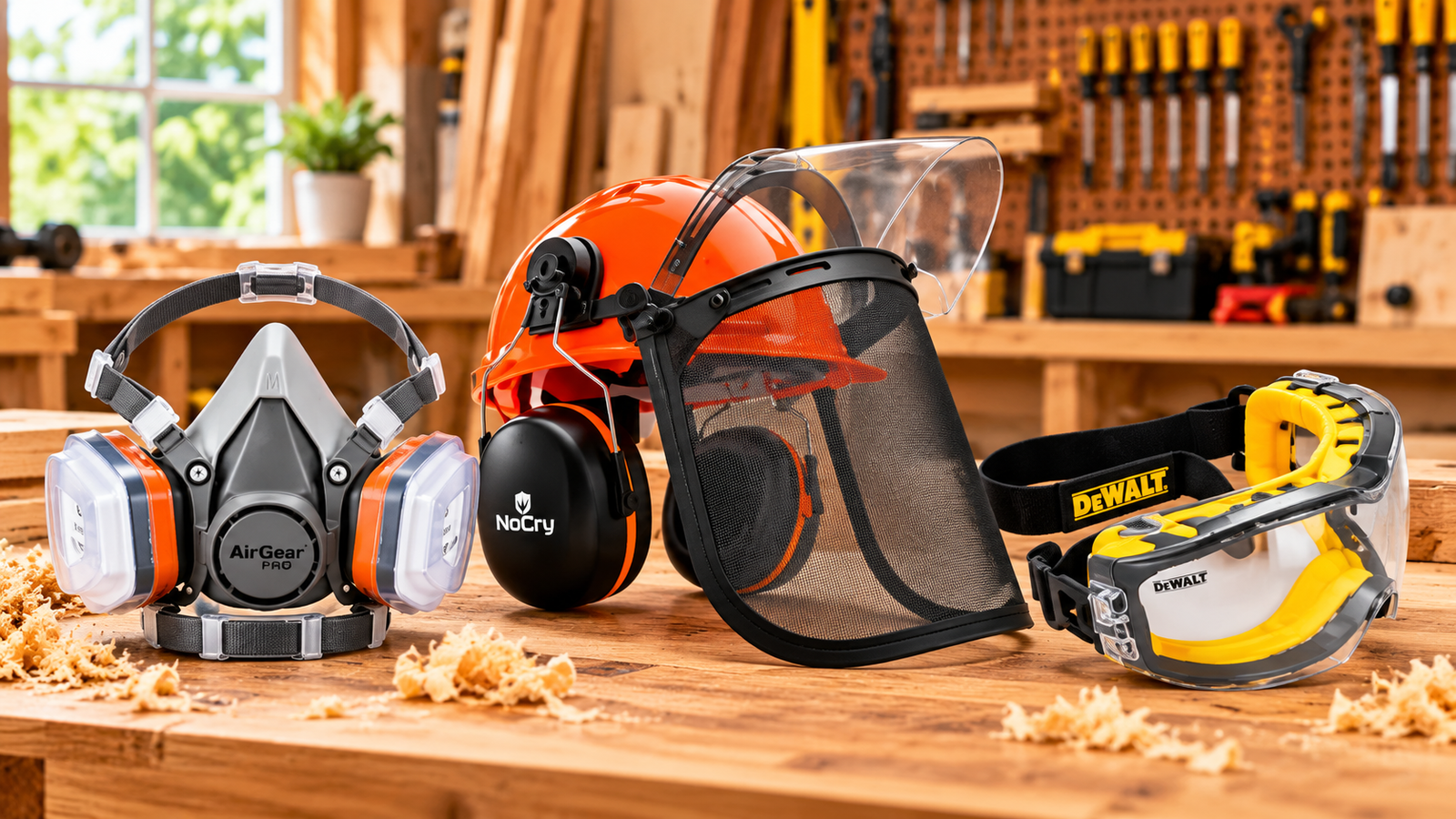
Woodworking can involve flying debris, fine dust, loud tools, sharp equipment, and other workshop hazards. Choosing appropriate safety equipment is therefore an important part of setting up and using a woodworking shop.
The protection you need depends on the tool, material, task, environment, and manufacturer instructions. Eye protection, hearing protection, respiratory protection, appropriate clothing, good lighting, dust management, and safe work habits should all be considered before beginning a project.
Woodworking Safety Gear Checklist
- Safety glasses or goggles
- Hearing protection
- Appropriate respiratory protection
- Face protection when required
- Suitable work clothing
- Appropriate footwear
- Dust collection or extraction
- Good workshop lighting
- First-aid supplies
- Clean and organized work areas
Personal protective equipment is only one part of workshop safety. Correct tool setup, proper technique, equipment maintenance, dust control, and following manufacturer instructions are equally important.
Woodworking Safety Gear to Consider
Disclosure: The product links below are paid affiliate links. As an Amazon Associate I earn from qualifying purchases.
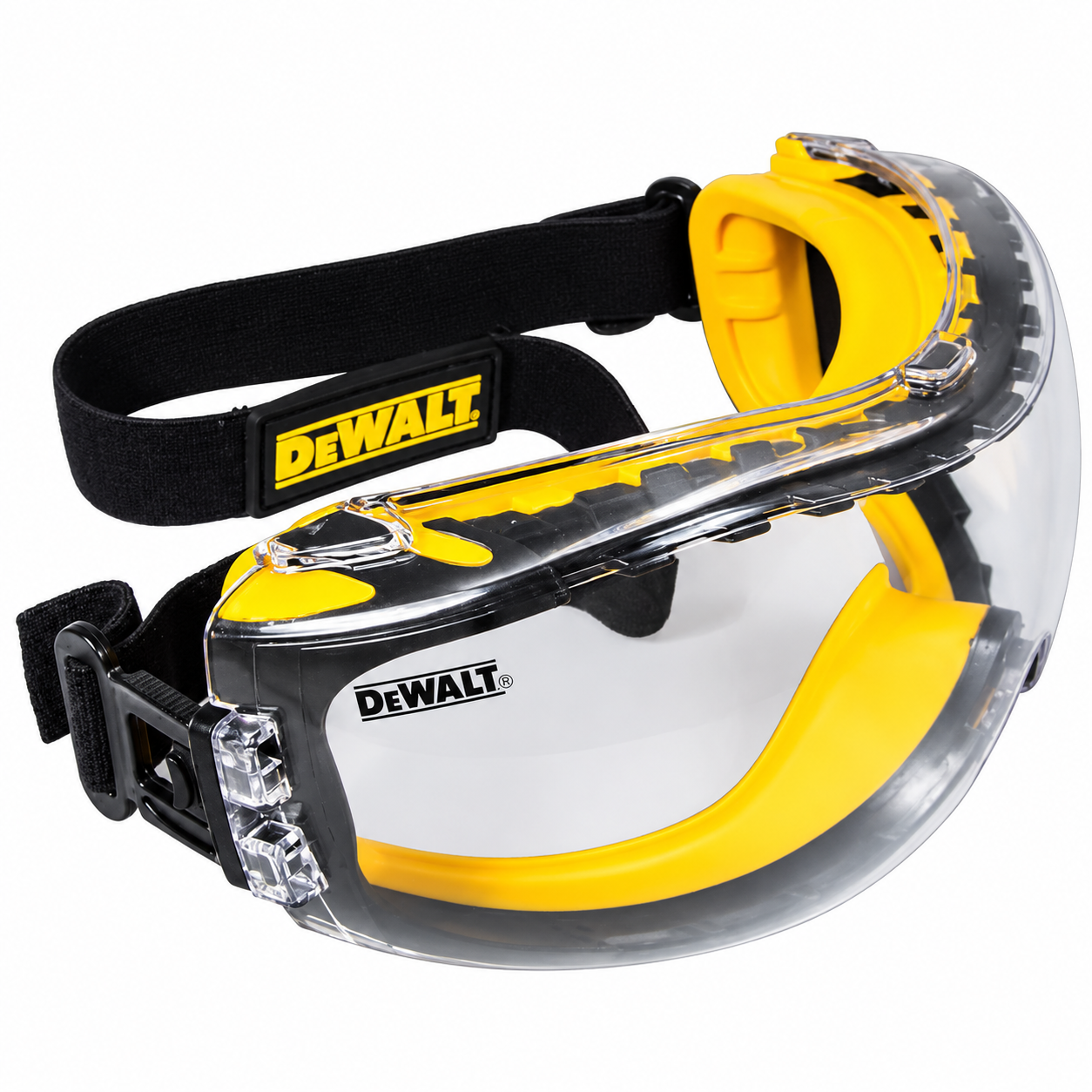
DEWALT DPG82 Concealer Safety Goggles
Protective goggles designed to provide eye coverage for workshop environments where dust and flying particles may be present.
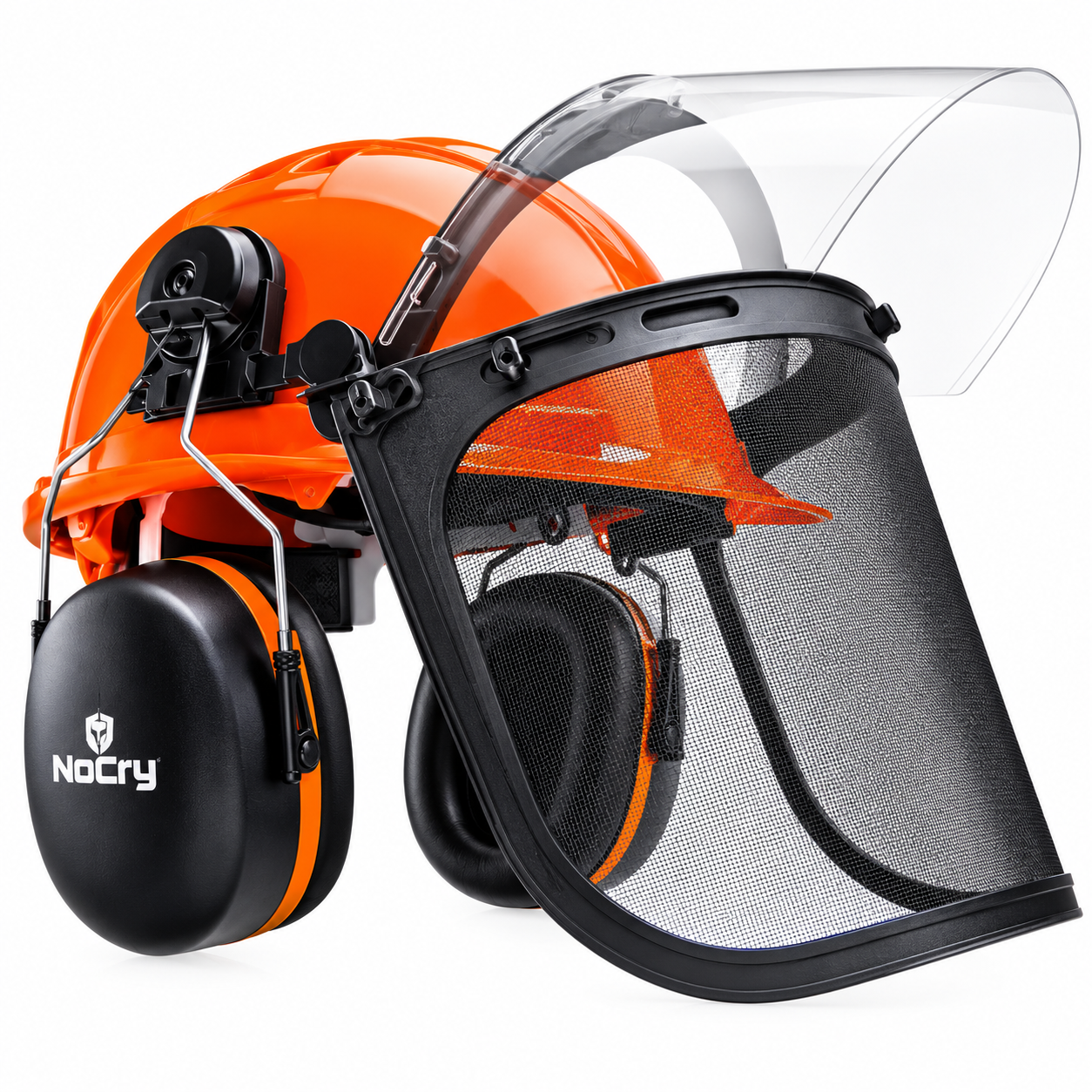
NoCry 6-in-1 Industrial Helmet
A protective helmet system combining head, face, and hearing protection components for appropriate workshop and outdoor applications.
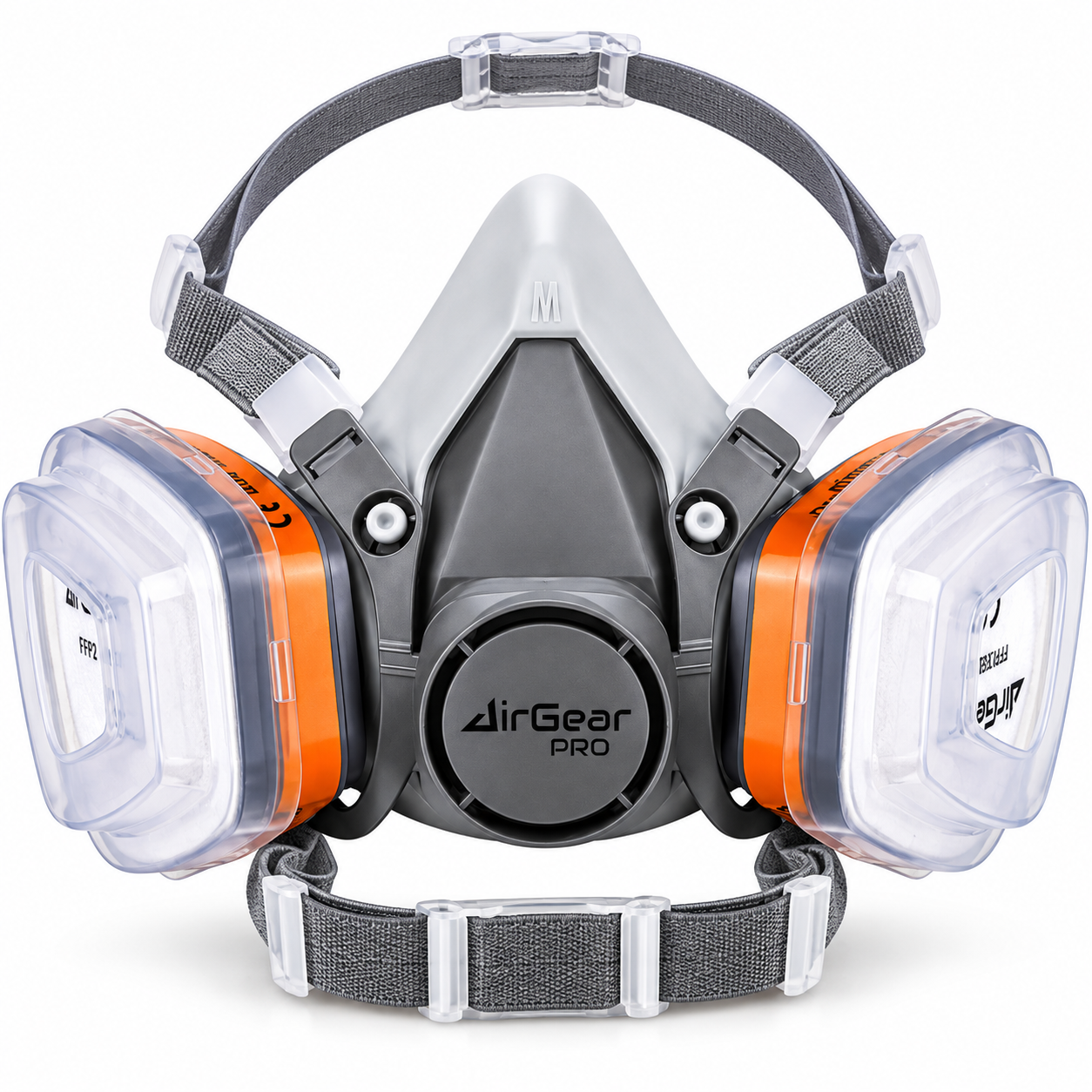
AirGearPro M-500 Reusable Respirator
A reusable respirator option intended for appropriate applications where respiratory protection is required, subject to filter selection, fit, and manufacturer instructions.
1. Protect Your Eyes
Cutting, drilling, routing, sanding, and other workshop operations can create chips, dust, fragments, and other airborne debris.
Appropriate safety glasses or goggles can help protect the eyes. The exact protection required depends on the task and equipment being used.
2. Safety Glasses vs. Safety Goggles
Safety glasses and goggles provide different levels and styles of coverage. Goggles can provide additional coverage around the eyes, while safety glasses may be more convenient for some general workshop operations.
Select protective eyewear appropriate for the hazard and verify applicable ratings and manufacturer specifications for the exact product.
3. Consider Face Protection
Some woodworking and related operations may require protection beyond basic eyewear. A face shield can provide additional facial coverage against certain flying debris.
A face shield should not automatically be treated as a replacement for required eye protection. Follow the recommendations for the specific operation.
4. Protect Your Hearing
Power tools and workshop machinery can generate significant noise. Repeated exposure to excessive sound levels can damage hearing.
Hearing protection should be selected according to the noise exposure and working environment.
5. Ear Muffs vs. Ear Plugs
Ear muffs and ear plugs are common forms of hearing protection. Comfort, fit, compatibility with other protective equipment, and required attenuation can influence which option is appropriate.
In some environments, additional protection may be required. Follow applicable safety guidance for the noise exposure involved.
6. Wood Dust Should Be Taken Seriously
Sawing, routing, and sanding can produce airborne wood dust. Dust should be managed using appropriate collection, extraction, ventilation, housekeeping, and respiratory protection where required.
The amount and type of dust can vary considerably depending on the material and operation.
7. Choose Respiratory Protection for the Hazard
Respirators are not interchangeable. Different filters and cartridges are intended for different contaminants and applications.
Before using respiratory protection, identify the hazard and verify that the respirator and filter configuration are suitable for that application.
8. Respirator Fit Matters
A reusable respirator must fit correctly to function as intended. Facial hair, incorrect adjustment, damaged sealing surfaces, and improper sizing can interfere with the seal of some respirator types.
Follow the respirator manufacturer’s fitting, inspection, use, and maintenance instructions.
9. Filters and Cartridges Require Maintenance
Reusable respiratory protection depends on appropriate filters or cartridges. These components have limitations and replacement requirements.
Do not assume a filter remains effective indefinitely. Follow the manufacturer’s replacement instructions and storage recommendations.
10. Dust Collection Is Part of Workshop Safety
Personal protective equipment should not be the only method used to manage wood dust.
Capturing dust near the source with compatible collection equipment can help reduce the amount of material that spreads through the workshop.
11. Keep the Workshop Clean
Sawdust, scrap wood, extension cords, tools, packaging, and other materials can create unnecessary obstacles.
Regular cleanup helps maintain clear walking and working areas and can make it easier to notice problems before they become hazards.
12. Wear Appropriate Clothing
Loose clothing, jewelry, unsecured long hair, and other items can create hazards around rotating or moving equipment.
Choose clothing appropriate for the work being performed and follow the tool manufacturer’s safety instructions.
13. Consider Appropriate Footwear
Woodworking involves tools, lumber, hardware, and materials that may be dropped or moved around the shop.
Choose footwear appropriate for the workshop environment and the tasks being performed.
14. Gloves Are Not Appropriate for Every Operation
Gloves can be useful for some material-handling and finishing tasks, but they may create additional hazards around certain rotating or moving machinery.
Follow the equipment manufacturer’s guidance and use gloves only when appropriate for the specific operation.
15. Use Good Workshop Lighting
Accurate cutting and tool control depend partly on being able to see the workpiece, markings, blade area, controls, and surrounding workspace clearly.
Combine general workshop lighting with task lighting where additional visibility is required.
16. Inspect Tools Before Use
Before operating a tool, check its general condition and make sure required guards and safety components are correctly installed and functioning.
Damaged cords, batteries, blades, bits, guards, switches, or other components should be addressed according to manufacturer recommendations before use.
17. Use the Correct Blade or Bit
Cutting accessories should be appropriate for both the tool and material.
Check compatibility, condition, installation direction, operating limits, and manufacturer instructions before using blades, bits, discs, or other accessories.
18. Secure the Workpiece
A workpiece that shifts unexpectedly can make a woodworking operation difficult to control.
Use appropriate workholding methods, clamps, supports, fixtures, or other techniques when the operation requires them.
19. Disconnect Power Before Adjustments
Tool adjustments, accessory changes, blade changes, maintenance, and clearing certain obstructions may require the tool to be disconnected from its power source.
Follow the manufacturer’s procedures for preventing unintended startup.
20. Battery Tools Also Require Startup Precautions
Cordless tools eliminate the power cord but still contain an energy source.
Follow manufacturer instructions regarding battery removal or other procedures before servicing, adjusting, or changing accessories.
21. Do Not Remove Required Guards
Guards and other safety components are designed for specific purposes. Removing or defeating them can expose the operator to hazards the tool was designed to help control.
Use the equipment in the configuration specified by its manufacturer.
22. Maintain a Stable Working Position
Position the workpiece and tool so you can maintain balance and control throughout the operation.
Avoid reaching unnecessarily across cutting paths or operating equipment from unstable positions.
23. Keep Hands Away From Cutting Areas
Know the path of the blade, bit, disc, or other moving component before starting the tool.
Use appropriate workholding devices, push devices, fixtures, or other manufacturer-recommended methods when the operation requires them.
24. Allow Tools to Stop Properly
After switching off a power tool, moving components may continue rotating for a period of time.
Maintain control of the tool until moving parts have stopped as directed by the manufacturer.
25. Avoid Working When Distracted
Woodworking requires attention, especially when using cutting equipment and power tools.
Stop the operation if you become distracted or cannot maintain appropriate control and concentration.
26. Keep Other People Away From Active Work Areas
Visitors, children, pets, and other people should not enter hazardous working areas while tools are operating.
Anyone who must be present should follow the applicable safety requirements for that environment.
27. Keep First-Aid Supplies Accessible
A workshop should have appropriate first-aid supplies in an accessible location.
Know how to obtain emergency assistance and address serious injuries promptly rather than relying only on workshop first-aid supplies.
28. Read the Manual for Every Tool
Different tools can have different operating procedures, safety features, accessory requirements, and limitations.
Read and follow the manufacturer’s instructions rather than assuming that experience with one tool automatically applies to another.
Beginner Woodworking Safety Checklist
- Inspect the work area before starting
- Use appropriate eye protection
- Use hearing protection when required
- Use suitable respiratory protection when required
- Secure loose hair and clothing
- Inspect tools and accessories
- Secure workpieces appropriately
- Keep the floor and workbench clear
- Manage dust at the source when possible
- Know where first-aid supplies are located
- Follow the manufacturer’s operating instructions
Safety Gear for Sanding
Sanding can generate significant amounts of fine dust. Appropriate dust extraction and respiratory protection may be required depending on the material and working environment.
Eye protection can also help prevent airborne particles from reaching the eyes.
Safety Gear for Sawing
Sawing can expose the operator to noise, airborne debris, wood dust, and moving cutting components.
Use appropriate eye and hearing protection, manage dust, secure materials correctly, and follow all saw-specific safety instructions and guarding requirements.
Safety Gear for Drilling
Drilling operations can create chips and debris. Eye protection is therefore an important consideration.
Secure the workpiece appropriately and use bits suitable for the material and tool.
Safety Gear for Wood Finishing
Finishing products can introduce hazards different from those created by cutting and sanding.
Review the product label and safety information for the exact finish, solvent, adhesive, or chemical being used and follow its ventilation, protective-equipment, handling, storage, and disposal requirements.
Common Woodworking Safety Mistakes
- Skipping eye protection for quick cuts
- Ignoring hearing protection
- Using unsuitable respiratory filters
- Allowing dust to accumulate
- Removing or defeating guards
- Using damaged blades or accessories
- Working with loose clothing or jewelry
- Changing accessories without following shutdown procedures
- Using tools while distracted
- Ignoring manufacturer instructions
Frequently Asked Questions
Do I need safety glasses for woodworking?
Eye protection is an important part of woodworking because many operations can create flying particles, chips, or dust. Select eye protection appropriate for the specific hazard.
Do I need hearing protection when woodworking?
Hearing protection may be required when noise exposure reaches hazardous levels. The appropriate protection depends on the tool, exposure duration, environment, and measured or expected noise level.
Do I need a respirator for sanding wood?
Sanding can create fine airborne dust. The need for respiratory protection and the appropriate respirator or filter depend on the material, dust concentration, ventilation, extraction system, and applicable safety requirements.
Is a face shield enough for woodworking?
A face shield provides facial coverage for certain hazards but should not automatically be considered a substitute for required safety glasses or goggles. Match PPE to the specific operation.
Can I wear gloves while using woodworking machinery?
Gloves are not appropriate for every operation and can introduce entanglement hazards around some moving equipment. Follow the manufacturer’s instructions for the specific tool and task.
What is the most important woodworking safety equipment?
There is no single piece of equipment that addresses every woodworking hazard. Eye, hearing, respiratory, face, clothing, footwear, dust management, guarding, workholding, and safe operating practices may all be important depending on the task.
Final Thoughts
Woodworking safety starts before the tool is switched on. Identify the hazards associated with the material, tool, and operation, then choose protective equipment and work practices appropriate for those hazards.
Eye protection, hearing protection, respiratory protection, dust management, proper clothing, good lighting, organized work areas, correctly functioning guards, and careful tool operation all contribute to a safer workshop.
Protective equipment works best as part of a complete safety approach rather than as a substitute for correct tool setup and operating technique.
Woodworking Safety Gear to Consider
These three products represent different categories of workshop protection: eye protection, combined head/face/hearing protection, and respiratory protection.
Disclosure: The product links below are paid affiliate links. As an Amazon Associate I earn from qualifying purchases.
DEWALT DPG82 Concealer Safety Goggles
Protective goggles designed to provide eye coverage for workshop environments where dust and flying particles may be present.
NoCry 6-in-1 Industrial Helmet
A protective helmet system combining head, face, and hearing protection components for appropriate workshop and outdoor applications.
AirGearPro M-500 Reusable Respirator
A reusable respirator option intended for appropriate applications where respiratory protection is required, subject to filter selection, fit, and manufacturer instructions.
Explore the Woodworking Gear Hub, review Basic Workshop Setup for Beginners, learn about Essential Woodworking Tools for Beginners, or use the PickRightGear Gear Advisor.
Continue Learning
Explore Woodworking guides, review Basic Workshop Setup for Beginners, learn How to Choose a Cordless Drill, learn How to Choose a Random Orbital Sander, or compare Circular Saw vs. Miter Saw.
Affiliate Disclosure: As an Amazon Associate I earn from qualifying purchases.